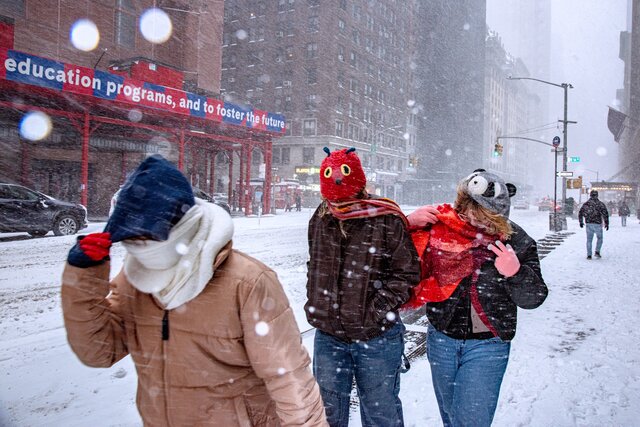

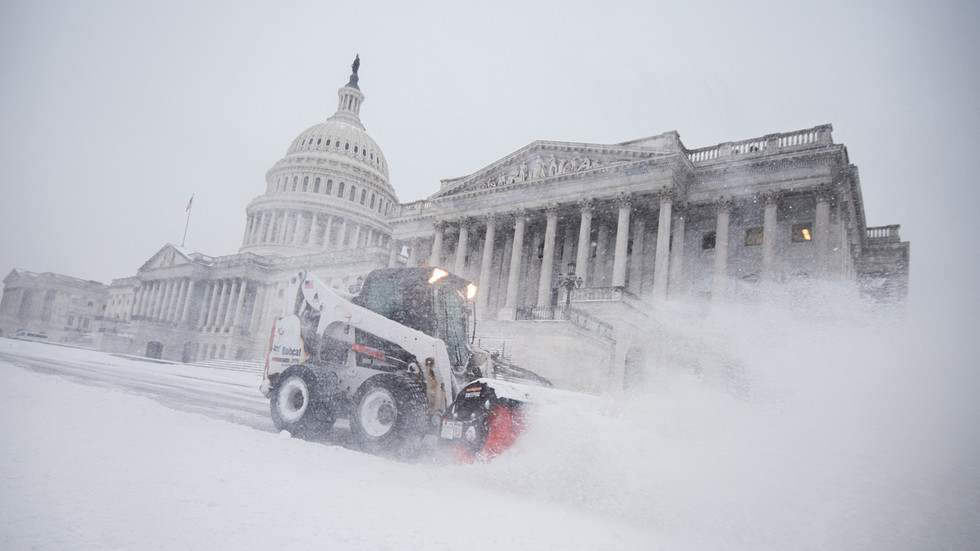
A major winter storm system has swept across large areas of the United States from the South through the Midwest and into the Northeast, bringing heavy snow, ice, and dangerously low temperatures. Both government-aligned and opposition outlets report multiple fatalities, with figures ranging from at least 11 deaths in early coverage to over 40 as the storm progressed, spread across states including Texas, Kansas, Missouri, Tennessee, Louisiana, New York, Michigan, and others. Power outages have affected hundreds of thousands to more than a million customers at various points, with Tennessee repeatedly cited as one of the hardest-hit states, alongside significant impacts in Texas, Mississippi, Louisiana, Alabama, and Georgia. Air travel has been severely disrupted, with tens of thousands of flights cumulatively delayed or canceled, and emergency declarations have been issued in roughly 20 to more than 20 states as authorities warn residents to stay indoors and avoid travel.
Across outlets, the storm is framed as a historic or powerful winter weather event that tests infrastructure and emergency preparedness in parts of the US less accustomed to prolonged extreme cold. Government and opposition reports alike emphasize the role of national and state emergency management systems, including states of emergency, activation of local authorities, and public advisories about staying warm and safe. They converge on the idea that climate patterns are bringing more frequent or intense winter extremes to regions with vulnerable power grids and transportation networks, and that insurers and public institutions are bracing for billions in economic losses. The shared context underscores the dependence of modern urban life on resilient energy systems, functioning transportation hubs, and coordinated emergency response, while noting that individual preparedness and practical safety measures remain critical on-the-ground defenses against such severe weather.
Points of Contention
Framing of government competence. Government-aligned sources stress that federal and state authorities have declared emergencies in over 20 states, highlight presidential assurances that emergency services are prepared, and foreground ongoing rescue, utility repair, and coordination efforts. Opposition outlets acknowledge these formal steps but pay less attention to official statements of readiness, instead implying that the scale of outages and travel chaos exposes systemic weaknesses. Where government reports emphasize command-and-control visibility and readiness, opposition coverage subtly questions how prepared authorities truly were by focusing on the lived consequences of failures in power and transport infrastructure.
Emphasis and tone of human impact. Government-oriented coverage presents casualties and outages primarily as statistics within a national disaster narrative, moving quickly to counts of dead, numbers of customers without electricity, and anticipated insurer losses. Opposition outlets, while citing similar numbers, dwell more on the everyday experience of people caught in the cold, including those unused to such temperatures, and provide concrete survival advice. This leads to a tonal difference in which government stories feel more institutional and macro-level, whereas opposition reporting foregrounds individual vulnerability and practical coping strategies over official messaging.
Attribution to structural problems. Government-aligned media largely treat the storm as an extreme but mostly natural event, with limited probing of structural causes beyond occasional references to grid strain and widespread damage. Opposition sources more strongly suggest that chronic underinvestment and poor planning in energy and transportation infrastructure amplify the storm’s toll, implicitly criticizing authorities for failing to harden systems despite recurring severe weather. As a result, government coverage leans toward describing an unavoidable catastrophe managed by institutions, while opposition coverage links the disaster’s severity to preventable infrastructural and policy shortcomings.
International and geopolitical angle. Government-aligned outlets keep the narrative almost entirely domestic, focusing on US states, insurers, and federal responses, treating the storm as an internal emergency. Opposition media, particularly those based abroad, frame the storm partly as a window into American vulnerability, juxtaposing US conditions with experiences in traditionally colder countries and suggesting that wealth does not guarantee resilience. This contrast allows government sources to reinforce internal solidarity and administrative control, while opposition sources use the event to illustrate perceived discrepancies between America’s global image and its capacity to protect residents from extreme weather.
In summary, government coverage tends to highlight official preparedness, numerical impacts, and institutional responses to an extreme but largely natural disaster, while opposition coverage tends to stress everyday hardship, infrastructural fragility, and implied policy failures that exacerbate the storm’s human and economic costs.
Story coverage