government
Is peace in Gaza possible without Russia?
Moscow was invited to join the US president’s new Board of Peace, but Putin’s reply has left Washington with a political puzzle
4 months ago
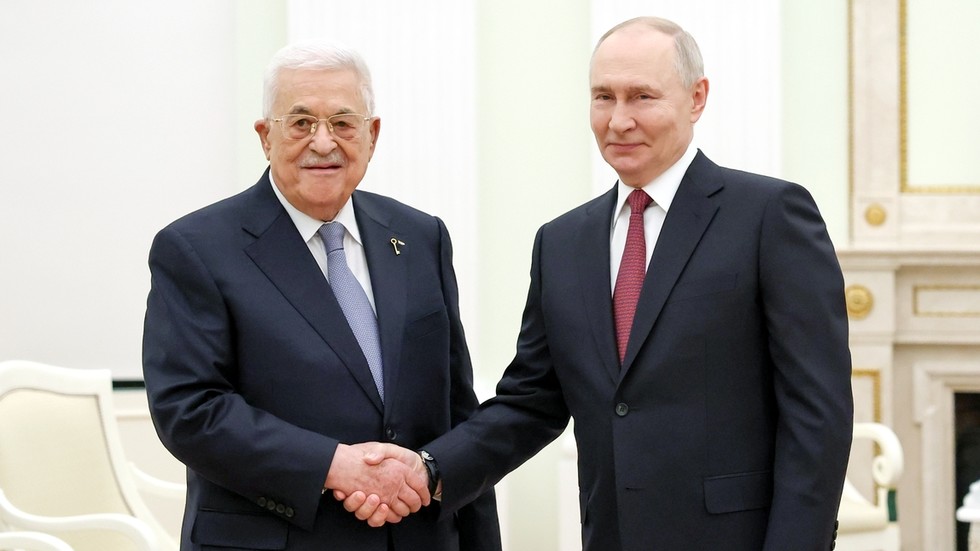
Russian President Vladimir Putin has publicly stated that Russia is ready to allocate $1 billion from Russian state assets frozen in the United States to Donald Trump’s newly proposed “Board of Peace,” an international body envisioned as part of a plan to address the Israeli-Palestinian conflict and manage Gaza in a transitional period after a ceasefire. Both government-aligned and opposition outlets agree that the $1 billion figure would come out of a frozen pool of just under $5 billion, that Putin has linked the payment to supporting Gaza’s reconstruction and Palestinian humanitarian needs, and that the transfer is contingent on U.S. consent and legal arrangements to unblock or re-channel the frozen funds. They also converge on the fact that Putin has been discussing the idea with U.S.-linked envoys Steve Witkoff and Jared Kushner in Moscow, that Palestinian Authority President Mahmoud Abbas was present for related talks in the Kremlin, and that other invited states such as Belarus (and, in some government accounts, Hungary and Morocco) have already signaled willingness to participate in the Board. Both sides report that a $1 billion contribution is treated as a de facto membership threshold for permanent participation in Trump’s Board of Peace, even as the precise legal mechanism and institutional design remain vague.
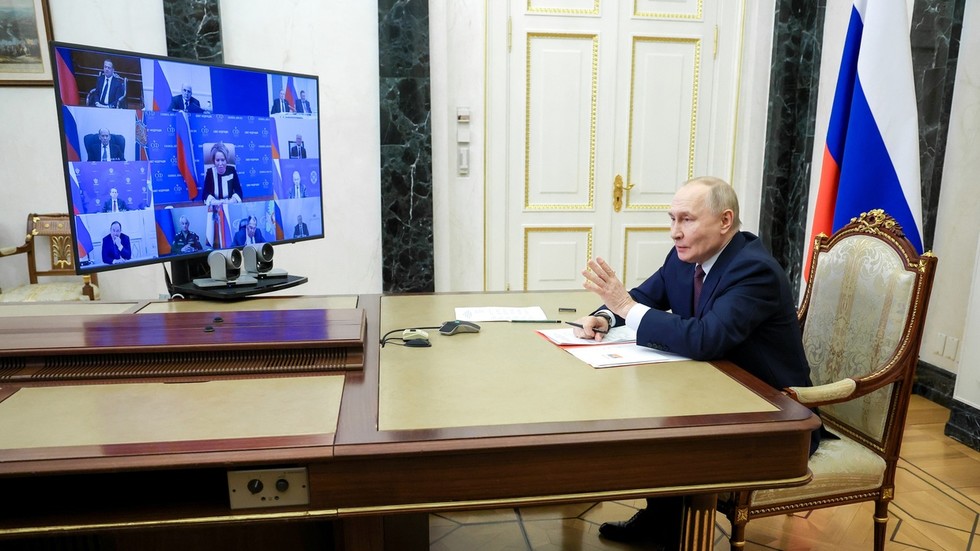
Coverage from both camps presents this initiative within a shared context of long-standing Russian-Palestinian ties, including education and training programs for Palestinian students and Moscow’s positioning as a supporter of Gaza reconstruction after the recent conflict. Outlets agree that Putin has floated broader use of frozen Russian assets for post-conflict rebuilding beyond Gaza, including territories damaged in the Russia-Ukraine war once a peace agreement is reached, and that these potential reallocations are under discussion within Russia’s Security Council and with American representatives. There is also consensus that the Board of Peace is framed as an international council with broad, not yet fully specified powers to oversee Gaza’s transition in cooperation with a Palestinian technocratic administration, and that the proposal connects to wider debates over how frozen Russian assets might legally be repurposed for humanitarian or reconstruction aims under international scrutiny.
Motives and strategic intent. Government-aligned sources portray Putin’s $1 billion offer primarily as a humanitarian and diplomatic gesture aimed at supporting Gaza’s reconstruction and reaffirming Russia’s historic solidarity with the Palestinian people, emphasizing goodwill and constructive engagement with Trump’s initiative. Opposition outlets, while acknowledging the humanitarian framing, stress that the move is also a calculated attempt to convert frozen assets into political leverage, restore some control over these funds, and curry favor with Trump-aligned circles in the U.S. They frame the plan as less altruistic and more as an opportunistic bid to reposition Moscow internationally after sanctions.
Legal and institutional framing. Government coverage tends to describe the transfer as a legitimate reallocation of Russia’s own frozen property for peaceful, humanitarian purposes, stressing that legal details will be worked out in discussions with the U.S. administration and that Russia is acting as a responsible stakeholder. Opposition outlets underline the legal ambiguity and potential risks, highlighting that Russian assets are currently under sanctions due to Moscow’s actions and questioning whether channeling them into a Trump-linked, loosely defined Board complies with international and U.S. law. They also stress the opacity of the Board’s powers and financing rules, warning of possible conflicts of interest and backroom arrangements.
Link to Ukraine and broader conflicts. Government-aligned media mentions the idea of using remaining frozen assets to rebuild territories affected by the Russia-Ukraine conflict mainly as a forward-looking peace dividend, suggesting that once a treaty is reached these funds could facilitate reconstruction and reconciliation. Opposition coverage focuses more sharply on this linkage, arguing that it implicitly acknowledges long-term damage from Russia’s own military actions and may be an attempt to pre-empt harsher asset seizures or reparations mechanisms. They emphasize that promising reconstruction money while the war and sanctions continue raises doubts about sincerity and feasibility.
Domestic and geopolitical implications. Government sources frame participation in Trump’s Board of Peace as an opportunity for Russia to shape a post-conflict order in the Middle East, showcase its commitment to Palestine, and cooperate pragmatically with various international actors, including U.S.-connected intermediaries, despite broader tensions. Opposition outlets are more likely to see the move as reinforcing Russia’s dependence on personalistic foreign-policy channels and on Trump’s political fortunes, warning that tying national assets to a partisan-aligned structure could deepen Russia’s international isolation if U.S. politics shift. They also hint that committing $1 billion abroad while domestic economic pressures persist may be controversial inside Russia, even if framed as humanitarian.
In summary, government coverage tends to cast the $1 billion proposal as a humanitarian, peace-oriented use of Russia’s own frozen funds within a cooperative international framework, while opposition coverage tends to depict it as a politically motivated, legally murky maneuver that leverages sanctioned assets for influence and gambles on Trump-aligned networks.