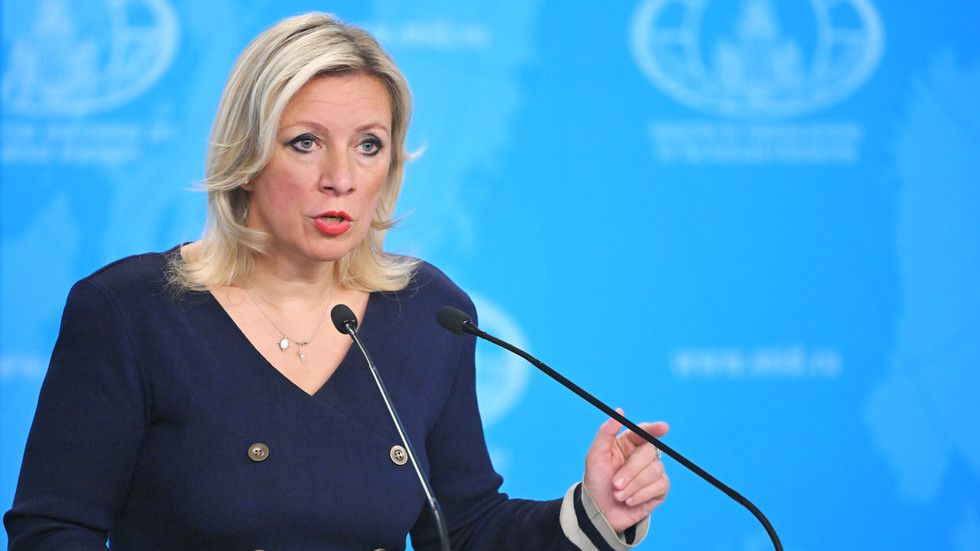
Russia’s Foreign Ministry, through spokeswoman Maria Zakharova, accuses the US State Department of automatically and "forcibly" assigning US citizenship to children born in the United States to Russian diplomatic and consular staff. Government-aligned coverage reports that this practice, described as recently revived under the Biden administration, allegedly applies to newborns of Russian diplomats despite their parents’ diplomatic status and associated immunities, and is said to contradict both US federal law and past Supreme Court interpretations on birthright citizenship. These reports state that Moscow intends to seek formal confirmation from Washington that such children are not considered subject to US jurisdiction and that Russia will take steps to protect its personnel and their families from what it calls coercive naturalization.
Government sources further agree that this dispute is rooted in the intersection of US jus soli citizenship rules and the internationally recognized special status of diplomats under the Vienna Convention on Diplomatic Relations. They note that diplomatic immunity generally removes foreign envoys from normal host-country jurisdiction and that children born to accredited diplomats are typically excluded from automatic birthright citizenship, making any US insistence on conferring citizenship appear, in their telling, as a legal and diplomatic anomaly. Within this shared context, the coverage frames the issue as part of a broader pattern of US–Russia tensions, in which administrative and consular measures become tools of political pressure, and anticipates that the episode may spur new diplomatic démarches and demands for clearer bilateral understandings on the status of diplomats’ families.
Areas of disagreement
Nature and intent of US policy. Government-aligned outlets portray the alleged forced citizenship as a deliberate, politically motivated policy revived under the Biden administration to pressure Russian diplomats and gain leverage over them and their families. In the absence of detailed opposition reporting, critical or independent voices would be more likely to question whether there is any new, targeted policy at all, suggesting instead that any registration or paperwork reflects routine bureaucratic application of US birthright rules rather than a coordinated coercive strategy. Government narratives emphasize continuity with a broader pattern of US hostility toward Russia, whereas opposition-leaning or critical media would likely frame the claim as part of Moscow’s ongoing information confrontation with Washington.
Legal interpretation and international norms. Government coverage claims that the practice violates US federal law, contradicts Supreme Court precedents that exempt diplomats’ children from automatic citizenship, and breaches international conventions on diplomatic immunity, implying clear-cut illegality by Washington. Opposition or independent commentators, by contrast, would be expected to scrutinize these legal assertions, asking for specific legal citations, documentation of cases, and clarification about whether US authorities are actually compelling acceptance of citizenship or simply recording births. While government narratives cast Russia as defending international law, more critical outlets would likely stress ambiguities in both US and international rules and highlight the lack of verifiable public evidence so far.
Scale and evidence of the problem. Government-aligned media report the issue in sweeping terms, suggesting a broader systemic practice targeting Russian consular and diplomatic families, but they offer few concrete cases, names, or numbers beyond Zakharova’s statements. Opposition sources, if covering the story, would probably demand specific examples and independent corroboration, questioning whether this is a widespread policy or a handful of consular disputes being politically amplified. The government side frames verbal briefings from the Foreign Ministry as sufficient proof, while critics would likely call for documentary evidence or testimony from affected families before accepting the scale of the alleged abuse.
Broader political framing. Government narratives situate the dispute within a familiar storyline of Western double standards and anti-Russian measures, linking it rhetorically to sanctions, visa restrictions, and other alleged pressure tactics against Russian officials. Opposition or critical media would tend to interpret the strong rhetoric as serving domestic political goals, reinforcing a siege narrative and rallying public support against the United States, rather than as a purely legal or humanitarian concern. Where government outlets stress Russian victimhood and principled defense of its citizens abroad, critical voices would likely stress the propaganda dimension and the absence of symmetrical concern for other categories of Russians facing legal issues in foreign jurisdictions.
In summary, government coverage tends to depict a clear, politically motivated US violation of law and diplomatic norms backed primarily by official Russian statements, while opposition coverage tends to question the novelty, scale, and evidentiary basis of the claims and frame the story as part of the Kremlin’s broader information and domestic messaging strategy.