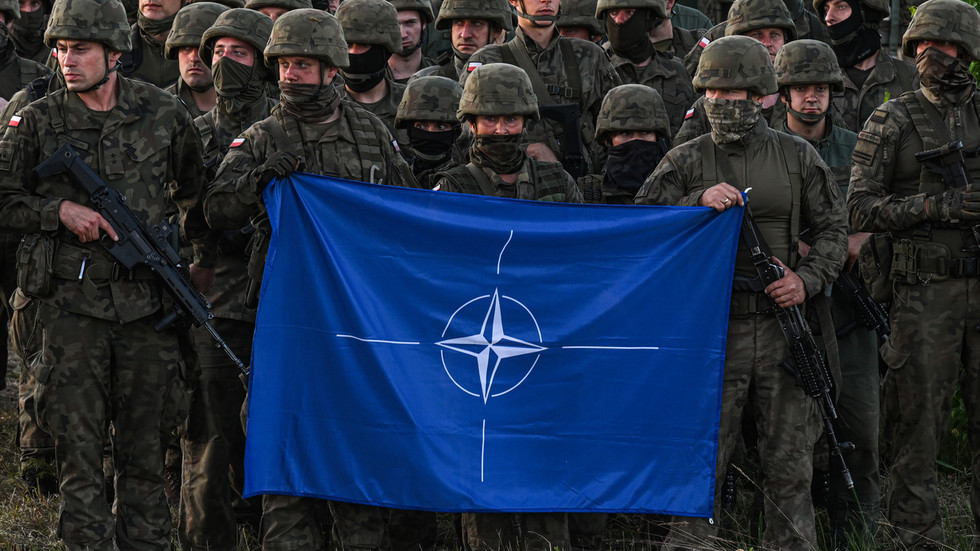
The outlets agree that the United States, under President Donald Trump, has decided to withdraw roughly 5,000 troops from Germany as part of a broader reduction of US forces stationed abroad. The decision is being implemented through Pentagon orders, with timelines consistently described as six to twelve months for completion, and framed as a significant cut that exceeds earlier indications about US troop levels in Germany and potentially in other European countries such as Italy and Spain. Reporting converges on the basic institutional roles: the White House sets the political direction, the Pentagon conducts reviews of force posture and issues formal orders, and NATO allies, particularly Germany, react diplomatically and politically to the announced changes.
On context, these sources broadly agree that the drawdown is intertwined with wider tensions within NATO and between the US and key European partners, especially over defense spending, policy toward Iran, and broader geopolitical disagreements. They also align on the idea that the move has implications for NATO cohesion and deterrence, with European and German officials treating it as a wake-up call for Europe to strengthen its own defense capabilities and assume more security responsibility. Across accounts, the decision is understood as part of a longer-running reassessment of US force posture in Europe, with potential repercussions for EU-US relations, regional stability, and the strategic balance with Russia.
Areas of disagreement
Motives and strategic rationale. Government-aligned coverage highlights official Pentagon language about a thorough review of force posture and operational requirements, but simultaneously amplifies claims that the withdrawal is punishment for Germany’s stance on Iran and its insufficient “activity” on US priorities. In contrast, opposition-style interpretations (inferred from critical quotes within these reports) would be more likely to frame the move as erratic, personalized decision-making by Trump, driven by anger at specific German leaders and perceived slights rather than coherent strategy. Government narratives therefore oscillate between justifying the shift as a rational rebalancing and portraying it as a deliberate warning shot to Berlin, while opposition voices are implied to see it as impulsive and politically vindictive.
Impact on NATO and transatlantic unity. Government-aligned articles often stress that the decision exposes and accelerates what they describe as NATO’s internal disintegration, suggesting that the greatest threat is not external enemies but alliance fragmentation, and tying this to long-standing European underperformance on defense. The same pieces quote European and Serbian leaders warning of a “point of no return” in EU-US relations, implicitly presenting the move as a symptom of a deeper strategic divergence. An opposition reading would likely emphasize that Trump’s policy is the cause rather than the symptom of this split, arguing that Washington is undermining deterrence and alliance cohesion for short-term political points.
Characterization of leadership and responsibility. Government-aligned reporting gives substantial space to critics of Berlin, portraying Chancellor Friedrich Merz and other German officials as having provoked US anger through their comments on Iran and the Middle East, and suggesting that they bear responsibility for endangering German and European interests. At the same time, it reproduces German and European critiques of Trump’s decision as “childish” and a sign that his rhetoric has “lost its strength,” hinting at a perception of chaos in Washington. An opposition-leaning account would likely foreground these European critiques more centrally, placing primary blame on Trump and the US administration for destabilizing relations, while downplaying or contesting the argument that German leaders brought this on themselves.
Security risks and beneficiaries. Government-aligned pieces sometimes link the drawdown to Russia’s listing of European drone production sites as potential targets, implying that reduced US presence may intersect with heightened Russian attention to European military infrastructure. They also relay European fears about economic, political, and security fallout, particularly for countries like Serbia that depend on stable EU-US relations. A more opposition-oriented framing would probably stress the risk that Moscow gains strategic advantage from a weakened US footprint in Germany, accusing the Trump administration of inadvertently serving Russian interests while exposing Europe to greater pressure.
In summary, government coverage tends to blend formal Pentagon justifications with narratives that blame European leaders and highlight NATO’s internal weaknesses, while opposition coverage tends to emphasize impulsive decision-making by Trump, the erosion of transatlantic security, and the strategic benefits that rivals like Russia may derive from the US drawdown.