

opposition
"It's up to the family." Human rights activists asked the PACE to evaluate Ruslan Kutaev's words about "honor killings." "Novaya-Europe" talked to the politician
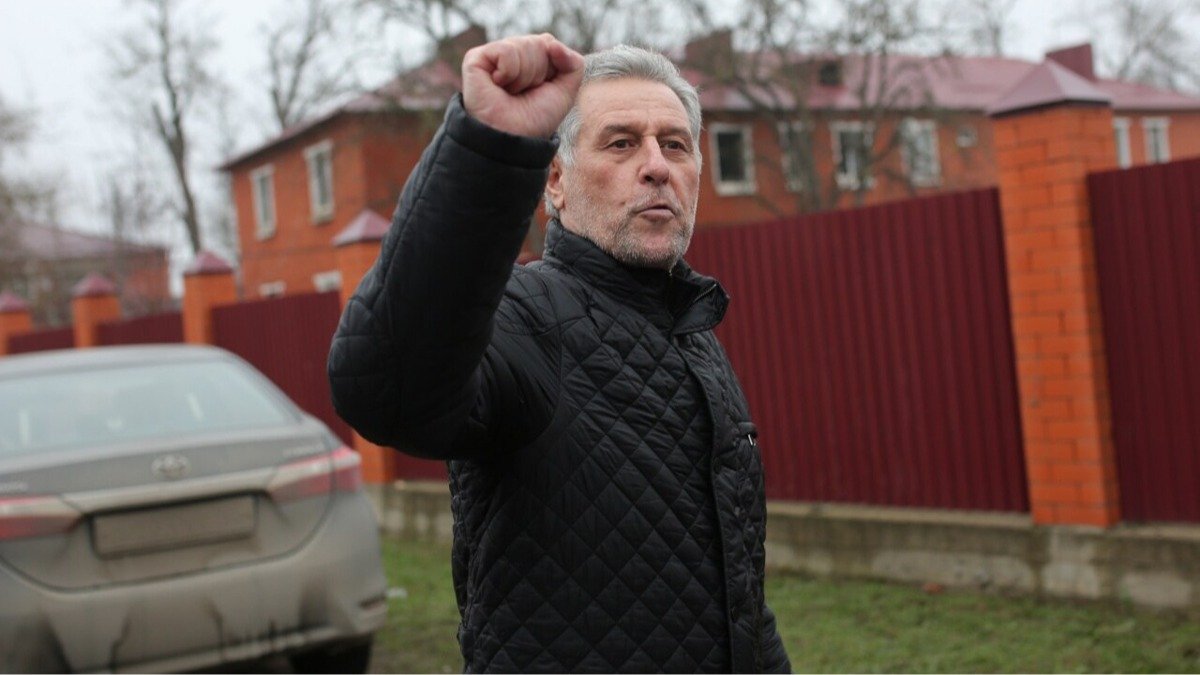
Ruslan Kutaev, a member of the Russian opposition platform at the PACE, stated in an interview with The Breakfast Show that in Chechnya, decisions about a person's fate, including in situations related to so-called "honor killings," are made by the family. These words caused a sharp reaction from the human rights organization SK SOS, which helps women and LGBT people from the North Caucasus fleeing violence and persecution. The organization appealed to the PACE leadership with a request to assess whether Kutaev's statements are compatible with the values of the Council of Europe and the criteria for participation in the platform. "Novaya Gazeta Europe" correspondent spoke with Alexandra Miroshnikova, a representative of SK SOS, about the reasons for the appeal to the PACE, and then with Kutaev himself. He claims that his words were misunderstood. Ruslan Kutaev. Photo: Radio Marsho. On April 25, Chechen politician Ruslan Kutaev gave an interview to the YouTube channel The Breakfast Show. During the broadcast, he was asked about his work on the Russian opposition platform at the PACE, his relationships with other participants, and his views on the role of the Muslim diaspora in Moscow. At the end of the interview, the hosts asked Kutaev if he dealt with the problems of women from Chechnya facing domestic violence and the threat of "honor killings," as well as LGBT people forced to flee the republic due to persecution. Kutaev replied that no one had approached him with such requests, and he himself does not deal with this issue and "does not want to deal with it." He called himself a representative of the "conservative part of Chechen society" and said that such behavior in Chechnya is perceived "very, very seriously." According to Kutaev, there is a "compromise" solution in Chechen society: if a person "behaves or positions themselves in some way," they should "mind their own business quietly" and not speak publicly about their Chechen identity. According to Alexandra Miroshnikova, press secretary of SK SOS, Kutaev's thesis that it is enough for LGBT people in Chechnya to "lie low" does not correspond to the reality faced by human rights defenders. "Maybe Kutaev has some idea that gays in Chechnya are now walking around with LGBT flags in squares and are being caught there. But that's not true. People live as quietly as possible; they are caught on sting dates, lured into traps," Miroshnikova told "Novaya-Europe." One of the most famous cases is the disappearance of Chechen singer Zelimkhan Bakayev. He disappeared on August 8, 2017, in Grozny, where he came from Moscow for his sister's wedding. Human Rights Watch reported that, according to available data, security forces approached Bakayev in the center of Grozny and forced him into a car; human rights activists linked his disappearance to the campaign of persecution of gays in Chechnya. In 2023, SK SOS announced that, according to the organization's sources, Bakayev was killed by Chechen security forces on the orders of Ramzan Kadyrov. According to human rights defenders, the singer was monitored due to suspicions of homosexuality, and after his death, his body was handed over to the family with orders to "bury him like a dog." Chechen authorities denied their involvement in Bakayev's disappearance, and no official investigation has been conducted to establish the circumstances of his disappearance. "What does honor mean to a Chechen? It's higher than life. It's not a play on words or some high-flown rhetoric. People give their lives for honor because we will all die anyway, and the loss of honor is an inherited humiliation for the entire clan. For the entire family. Everyone wants to avoid this," Kutaev continued. Then the host Alexander Plyushchev directly asked Kutaev if he supported the forced return of women who fled their families if they might disappear afterward. Kutaev replied that he "does not support" it but then stated that such decisions are made within the family. "Each family makes its decision independently: father, mother, uncle, brother, son. It's their decision, and they bear [responsibility for it] equally. I am not a judge here, and no one in Chechen society is a judge in this case; no one is agitating anyone, no one is calling anyone to anything. This decision ripens within the family. This decision ripens there, and they make it," Kutaev said. The host clarified whether Kutaev believes that the life of an adult person is "a family matter." Kutaev answered affirmatively, explaining that he was describing not his own attitude towards such actions but a mechanism that, according to him, exists within Chechen society. "Yes, I believe so. [...] You asked the question: what is really happening? Right? Why is it happening? I am trying to explain it to you. It happens because this is precisely the family. The family makes such a decision. These processes occur within the family," Kutaev said. In this answer, Kutaev did not directly state that he supports violence against women or LGBT people. However, he also did not condemn the practice where relatives can decide the fate of an adult, and repeatedly emphasized that such decisions "ripen" and are made within the family. It was this that the human rights defenders of SK SOS considered incompatible with the values of the Council of Europe: in their opinion, a member of the PACE platform should not only describe such practices but also unequivocally condemn violence, torture, and extrajudicial killings. "On April 25, during the broadcast of the YouTube channel The Breakfast Show, Ruslan Kutaev, a member of the Russian democratic platform at the PACE, stated that he does not want to and will not deal with the problems of Chechen women and LGBTQ+ people who have fled. He called them 'outcasts and perverts.' Responding to a question about 'honor killings,' Kutaev stated that decisions about a person's fate – 'to kill, send home, or marry off' – are made by the family, and no one has the right to condemn them for it. We believe that such statements effectively legitimize extrajudicial killings, contribute to violence and impunity, and are incompatible with the basic principles of human rights, including the right to life and the prohibition of torture," SK SOS wrote. However, in a conversation with "Novaya Gazeta Europe," Kutaev stated that his statement was misinterpreted. According to him, he was not justifying "honor killings" on the air but trying to explain how the decision-making mechanism works in similar conflicts in Chechen society. "I was asked as an expert about the situation there. I didn't say what I thought. I didn't talk about the position of the 'Assembly of Peoples of the Caucasus.' The question was: what is the situation in Chechen, Caucasian society? I tried to explain as honestly as possible what the situation is, what categories they think in," Kutaev told the "Novaya-Europe" correspondent. He emphasized that he himself is against taking a person's life. "No one has the right to encroach on another's life. My position is: adults have the right to live their lives as they see fit. And taking a life is the right of the Lord who created us. As a religious person, I believe that no one has the right to take anyone's life," he added. Ramzan Kadyrov and Zelimkhan Bakayev. Photo: Bakayev's Instagram page. Who is Ruslan Kutaev? Ruslan Kutaev is a Chechen public and political figure, former official of the government of the Chechen Republic of Ichkeria, recognized as a "terrorist organization" in Russia, and president of the public organization "Assembly of Peoples of the Caucasus." Before the first Chechen war, he was involved in business, then participated in the political life of Ichkeria: he served as deputy prime minister in the governments of Dzhokhar Dudayev and Aslan Maskhadov. In January 2026, Kutaev became a member of the Platform of Russian Democratic Forces at the PACE as one of the representatives of indigenous peoples and national minorities of Russia. In the Russian and international human rights agenda, Kutaev is known primarily for the criminal case in 2014. He was detained after organizing a conference in Grozny dedicated to the deportation of Chechens and Ingush in 1944. The Chechen authorities had already moved the official Day of Remembrance and Grief from February 23 to May 10, and human rights activists linked Kutaev's persecution to an attempt to hold an independent commemorative event. Kutaev himself was accused of drug possession; he denied guilt and claimed torture. In July 2014, a court in Chechnya sentenced Kutaev to four years in a penal colony. Amnesty International declared him a prisoner of conscience and stated that the trial was unfair and the charges fabricated to punish him for his public activities. Later, the Supreme Court of Chechnya reduced his sentence by two months. Kutaev was released in December 2017. After his release, he continued to act as a representative of the Chechen and Caucasian political emigration, criticized the regime of Ramzan Kadyrov and Russian policy in the North Caucasus. In June 2025, the Russian Ministry of Justice added Kutaev to the registry of "foreign agents." Public reaction SK SOS sent an official letter to the PACE, asking the organization to assess Kutaev's statements for compliance with the Council of Europe's standards and the criteria established in paragraph 8 of Resolution 2621, and to consider his immediate removal from the platform. Alexandra Miroshnikova, a representative of SK SOS, told "Novaya Gazeta Europe" that the appeal to the PACE is related not only to the resonant statement itself but also to the criteria for participation in the platform. According to her, in public discussions, often only one criterion is recalled – signing the Berlin Declaration – but the resolution has other requirements. "There is a whole range of requirements for participants in this platform, including a clause obliging any participant in the platform to share the values of the Council of Europe and promote them in some way. These values quite precisely include basic human rights such as the value of life, the right to privacy, the right to dignity," Miroshnikova said. According to her, SK SOS does not demand that Kutaev abandon his conservative views. "No one is forcing Kutaev to advocate for parades or fight for LGBT marriages. We just wish that a person representing the interests of this people would protect the representatives of the people from torture and murder," she says. Miroshnikova believes that the position of "not supporting LGBT" and the position of "not condemning murder and torture" are not the same thing. In her opinion, a significant part of Chechen society rather shares the idea that people should not be tortured and killed, regardless of their attitude towards their sexuality or behavior. Ruslan Kutaev. Photo: Radio Marsho. Another claim by SK SOS relates to how Kutaev explains the role of family and authorities in the persecution of women and LGBT people from Chechnya. According to Miroshnikova, when he talks about a "family decision," he effectively shifts responsibility from the Chechen authorities and security forces to the victims' relatives. Miroshnikova claims that in such cases, the authorities often not only observe what is happening but also pressure families. According to her, security forces may demand that relatives "cleanse their blood" or "preserve the honor" of the clan. "Security forces come and say: your son has been caught, you must kill him so that he does not disgrace himself and so that there are no questions for you. This is imposed on them. And he [Kutaev] does not defend this family and this person within this family. He says it is their private choice," Miroshnikova said. In a conversation with "Novaya Gazeta Europe," Kutaev, on the contrary, insisted that he was misunderstood again. According to him, he was not absolving the Kadyrov authorities of responsibility, but trying to distinguish between different types of situations. Some, he believes, indeed arise within the family, while others become possible because relatives have access to power and security resources. At the same time, Kutaev added that the most high-profile cases of persecution of women and LGBT people are often associated with families whose members are themselves in power or close to it: "When there is some high-profile persecution, know for sure that these people are connected with power. They use the tools of this power." Kutaev separately spoke about cases where, according to him, Kadyrov's structures themselves use accusations of homosexuality as a tool for reprisal or discrediting. He claims that such accusations can be leveled against people who are not LGBT but have become undesirable to the authorities for one reason or another. According to Kutaev, he did not try to defend Ramzan Kadyrov or Chechen security forces. He claims that he himself defended people against whom they fabricated cases. "Kadyrovites commit their atrocities, murders. And, of course, I defend their victims," Kutaev said. Miroshnikova believes that if Kutaev was indeed misunderstood, he should publicly and unequivocally clarify his position. According to her, even if he meant that specific cases of violence are not always directly initiated by the Chechen leadership but often occur within families, this is not enough without direct condemnation of murder. "If he expressed himself incorrectly for some reason, he can clarify his position without any problems. A person who promotes the values of the Council of Europe, including the right to life, is obliged to condemn when someone kills someone," she said. In its letter, SK SOS also notes that the PACE resolution provides for a procedure for removing a participant if they do not meet the organization's criteria. According to Miroshnikova, if the complaint is deemed justified, the platform participant may be temporarily suspended, after which the PACE Bureau must make a final decision. At the same time, Miroshnikova emphasizes that Kutaev's case does not exhaust the problems of the platform's composition at the PACE. According to her, there are people within it to whom representatives of various communities may have serious claims. But SK SOS deals with the North Caucasus – primarily helping LGBT people and women facing violence and persecution in the region's republics. Therefore, the organization publicly reacted specifically to Kutaev's words: they concerned Chechen society, "honor killings," and the groups with which SK SOS works directly. For instance, in the Caucasian human rights community, claims are most often made against Mikhail Khodorkovsky. In the Chechen diaspora, Khodorkovsky is criticized for his own accounts of indirect involvement in the first Russian-Chechen war. In an interview with Yuri Dud, he said that he spent money to buy out Russian soldiers from captivity and that he supplied rations for the Russian army in Chechnya and helped the Tomsk OMON. In particular, the publication Waynakh Online reported that Khodorkovsky was associated with the enterprise "Kolos," which produced rations for the Russian armed forces, and also "arranged with the institute of special equipment of the Russian Ministry of Internal Affairs" for the supply of weapons to the Tomsk OMON and pushed this decision through his company's board of directors. Mikhail Khodorkovsky. Photo: Vasily Krestyaninov / SOPA Images / Sipa USA / Vida Press. Khodorkovsky is also reminded of his statements about the North Caucasus after his release from prison. In an interview with The New Times, he said that if given a choice between the secession of the North Caucasus and war, he would choose war, and when asked if he himself was ready to "go to war" for the North Caucasus, he replied: "I will go." "This is our land. We conquered it. There is no unconquered land in the world today. All land was once conquered by someone. So, the North Caucasus was conquered by us. I am a nationalist to a certain extent," Khodorkovsky said then. "Novaya-Europe" asked Ruslan Kutaev, a Chechen, what he thought about working with Khodorkovsky, who holds such a position. "If he comes [to Chechnya] with a machine gun in his hands, I will meet him with a machine gun," Kutaev said, adding that he now considers such approaches unacceptable and advocates for peaceful discussion of conflicts. "I have lived a long life already. What I thought categorically ten years ago, with the passage of time, I realize: it was youth, a misunderstanding of the situation. Therefore, everything should be resolved peacefully, without the use of violence. Any issue – at the negotiating table, at the discussion table and for decision-making exclusively peacefully," Kutaev said. Another participant in the Russian delegation to the PACE, who is criticized for his past, is Mark Feygin. For example, feminist activist Daria Serenko calls him a "war criminal." The fact is that Feygin himself confirmed his participation in the Bosnian War on the side of the Bosnian Serbs, i.e., in the armed forces under the command of Ratko Mladić. Mladić was subsequently convicted by the International Tribunal for genocide in Srebrenica, crimes against humanity, and war crimes. Feygin himself denied participation specifically in the events in Srebrenica, citing that he was an "ordinary soldier." Another example is Vladimir Kara-Murza. In April 2025, his speech in the French Senate caused sharp criticism from representatives of national and decolonial movements. Kara-Murza said that it was allegedly "easier" for representatives of national minorities to kill Ukrainians due to cultural differences, while for Russians it was psychologically difficult due to their closeness to Ukrainians. Later, Kara-Murza stated that he was relaying not his own position but the logic of his acquaintances, and that his words were distorted. Meeting of the Platform of Russian Democratic Forces at the Parliamentary Assembly of the Council of Europe, January 29, 2026. Photo: Vladimir Kara-Murza / Telegram. PACE reaction After the statement by SK SOS was published, Mikhail Khodorkovsky reacted to the situation. He wrote that Kutaev's interview "has many different aspects that are worth discussing," but opposed the logic of immediate exclusion of a participant from dialogue. According to Khodorkovsky, the European model of decision-making is based on the principle that "everyone's opinion must be heard," and the task of the platform at the PACE was not to create unity of views but to gather their spectrum and try to establish dialogue. "We are there to learn to coexist and solve common issues despite categorical disagreement on a whole range of other problems," he wrote. Vladimir Kara-Murza told "Novaya-Europe" that "honor killings are a terrible crime, a relic of the wild Middle Ages, which has no place and cannot have a place in the 21st century." At the time of writing, there was no public reaction from PACE President Petra Bayer or other high-ranking representatives of the organization.
2 days ago