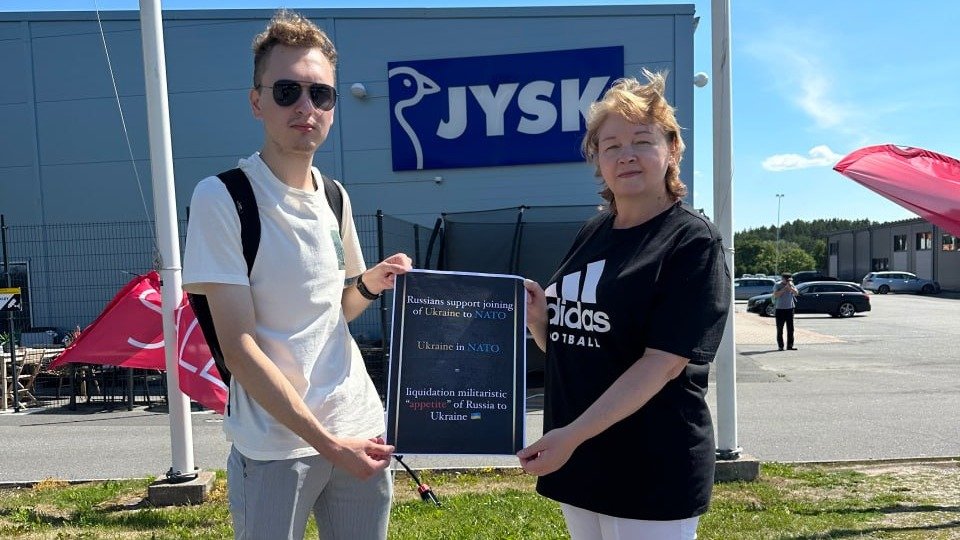
Olga and Nikita Belov, a Russian couple known for their anti-war stance and for assisting Ukrainian refugees and soldiers, fled Russia for Finland after the full-scale invasion of Ukraine and applied for asylum there. Both government-aligned and opposition-oriented coverage agrees that Finnish authorities have now denied their asylum claims, that their appeals through the Finnish courts have been exhausted, and that deportation proceedings are underway, with the couple currently detained pending a court hearing on continued detention. Both sides report that the Belovs face criminal charges in Russia for activities linked to aiding Ukraine, and that Finnish decision makers characterized these activities as small-scale. It is also common ground that Finland is acting within its domestic asylum framework and EU procedures, and that the case has drawn attention due to the intersection of Russian political repression, the Ukraine war, and European asylum rules.
Across outlets, the shared context emphasizes Finland’s role as an EU and NATO member bordering Russia, whose asylum system must balance security concerns, international protection obligations, and pressure from increased arrivals after the war began. Coverage from both sides notes that Russian citizens can seek asylum in Finland but are assessed individually under Finnish and EU law, including criteria for refugee status and protection against return to persecution. It is also agreed that Russia’s legal environment criminalizes various forms of anti-war activism and assistance to Ukraine, creating potential legal jeopardy for returnees, and that Finnish authorities explicitly considered whether the Belovs’ conduct would expose them to serious harm. Both perspectives describe the case against the backdrop of broader debates over how European states should treat Russian draft dodgers, dissidents, and war opponents in the context of the ongoing conflict in Ukraine.
Areas of disagreement
Risk assessment and persecution. Government-aligned sources tend to frame the Finnish authorities’ view that the Belovs’ assistance to Ukraine was limited in scale and therefore unlikely to subject them to the most severe forms of persecution upon return, portraying the risk as serious but manageable within Russian legal processes. Opposition sources argue that any documented support for Ukraine in the current Russian climate can trigger harsh punishment, stressing that even small-scale activism is treated as a grave political crime, and they highlight the couple’s specific charges as evidence that the risk has been underestimated. Government narratives emphasize the legality and technical rigor of the risk assessment, while opposition narratives emphasize the unpredictability and severity of Russian repression.
Legal process and standards. Government coverage generally underscores that Finland followed established asylum and appeals procedures, with multiple layers of review and judicial oversight, and presents the deportation order as a lawful outcome of applying EU and national criteria. Opposition outlets, by contrast, question whether those legal standards are being interpreted too narrowly for Russian anti-war activists, suggesting that formal compliance with procedure can still produce substantively unjust outcomes. While government-aligned reporting stresses institutional competence and the need for consistency across cases, opposition coverage foregrounds potential gaps between legal formalism and the real-world dangers facing dissidents.
Moral and political framing. Government-aligned sources are likely to situate the case within broader concerns about maintaining credible asylum policies, preventing abuse of the system, and managing security and migration flows, casting the decision as part of a neutral, rules-based approach. Opposition media instead frame the Belovs as emblematic anti-war figures whose deportation to a belligerent authoritarian state carries a strong moral charge, arguing that Finland risks betraying pro-Ukrainian and democratic values. Government narratives often minimize emotive language and focus on institutional responsibilities, whereas opposition narratives stress moral responsibility, solidarity with Ukraine, and the symbolism of sending war opponents back to Russia.
Implications for broader policy. Government-aligned coverage tends to treat the case as a specific, fact-bound decision that should not be overgeneralized, suggesting that Finland remains open to genuine refugees while retaining discretion in borderline cases. Opposition accounts portray it as part of a worrying pattern in which Western states are tightening entry and protection for Russians fleeing the regime, potentially discouraging defection and resistance inside Russia. Where government narratives highlight the need for predictable rules and state control over borders, opposition narratives stress the chilling effect on other activists who might otherwise seek refuge.
In summary, government coverage tends to emphasize the legality, procedural correctness, and policy consistency of Finland’s asylum decision, while opposition coverage tends to highlight the acute personal risk, moral stakes, and potential hypocrisy in returning anti-war activists to a repressive Russian system.