opposition
The lies about Chernobyl destroyed the USSR. What do people in a warring Ukraine think about it 40 years after the ChNPP disaster?
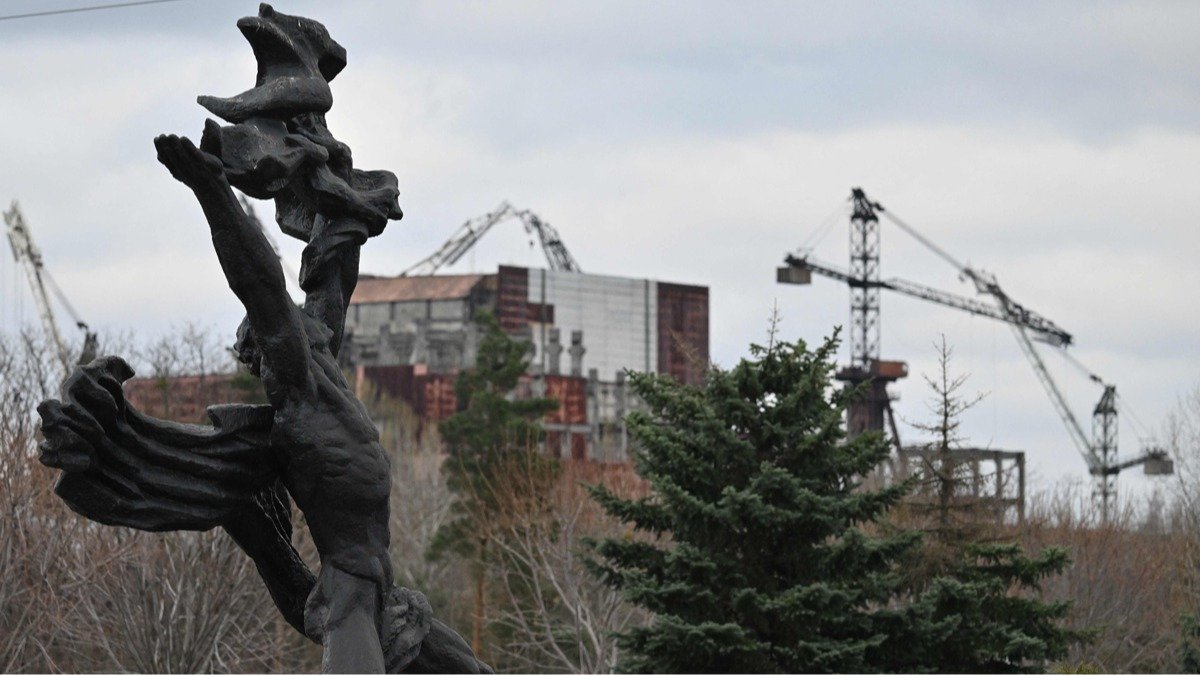
On April 26, 1986, the Chernobyl disaster occurred. The liquidators of the accident at the ChNPP numbered between 600,000 and 800,000 people, with no precise records. There was a preference not to discuss the consequences, especially the long-term ones. The lies about Chernobyl ultimately blew up the USSR. At the same time, the Ukrainian Green Party, born at the peak of public interest in ecology, never grew into the country's main political force. The correspondent for 'Novaya-Evropa' in Ukraine, Olga Musafirova, has been writing about Chernobyl since the 1990s. On the eve of the 40th anniversary, she met with an accident liquidator who discusses why the Russian army occupied the Chernobyl exclusion zone in 2022; a politician who was at the forefront of the Ukrainian green movement and hints at the 'man-made' nature of the reactor explosion; and recalls the fate of a scientist, the hero of her 1990s publication, who collected a menagerie of mutant animals after the accident and whose scientific work proved useless in modern Ukraine. The worldview of the characters in this text, who survived the terrible catastrophe, reveals traces of conspiracy theories. Their stories reflect the dramatic path of a country struggling to emerge from Chernobyl for 40 years. A monument to Prometheus, erected during the construction of the Chernobyl NPP, against the backdrop of the station's industrial site, Ukraine, April 9, 2026. Photo: Genya Savilov / AFP / Scanpix / LETA. Liquidator and deputy of the first convocation of the Verkhovna Rada, Volodymyr Usatenko. Photo: Olga Musafirova / 'Novaya Gazeta Yevropa'. Liquidator For four decades, the closed, guarded space of the Chernobyl exclusion zone has attracted thrill-seekers – stalkers, commercial tourists, and looters alike. Already on the first day of the full-scale war, Russian occupiers burst into it. The personnel servicing the decommissioned station found themselves hostages, spending 600 hours on shift under the muzzles of automatic weapons instead of the standard 12. Russian troops searched not only the immediate territory of the nuclear facility but the entire Zone. The occupation of the Chernobyl zone lasted just over a month, after which the Russian army left it. — I am convinced that they were tasked with finding evidence that Ukraine was preparing a 'dirty bomb' in Chernobyl, — claims Volodymyr Usatenko. — Why dig trenches in the Red Forest? Who were they defending against if there were no people around at all? I meet with Volodymyr Ivanovych in Kyiv in April 2026; my interlocutor is 77 years old. We talk in the office of the National Union of Journalists of Ukraine on Khreshchatyk. Usatenko has an explanation why the Chernobyl Nuclear Power Plant with its dangerous RBMK reactors was not shut down until 2000: the construction of the 'Shelter' facility over the fourth unit became a perfect umbrella for national and international corruption. Funds allocated for the sarcophagus disappeared into the abyss without a trace. But attempts at investigation were met with promises of further bad news from the station. Now, they say, the old structure will collapse, and what happened in 1986 will be repeated! — Angela Merkel, from 1994 to 1998, served as Federal Minister for the Environment [Nature Conservation and Nuclear Reactor Safety] in Helmut Kohl's government, — Usatenko recalls. — And, of course, she knew that after the explosion, Germany's territory was also heavily contaminated by decaying Chernobyl radioactive materials. The Germans approached Moscow: let's sort this out, the accident happened during the USSR, decisions were made in the Kremlin. Moscow replied: 'We are aware of the situation. We propose to discuss and resolve the problems without an international scandal.' The plan was: Russia would settle the issue with Germany, and German specialists would help Ukraine. They would make efforts to talk about it less in the world! And they also wanted to get the Germans to influence the IAEA and WHO, suggesting that nothing fatal had happened to Ukraine. Volodymyr Usatenko ironically remarks: — Then experts came to Kyiv from Berlin with fancy pens, fancy dosimeters, measured everything, and concluded: 'We are dealing with radio-phobia! Chernobyl's problems are practically resolved. Except for the truly psychotropic influence of panic rumors.' Subsequently, as a parliamentarian, he often received confirmation from Bundestag deputies with whom he communicated: the secrets of Chernobyl were guarded by the Kremlin. Contrary to official data and the IAEA's position (before the accident, the reactor contained about 180–190 tons of nuclear fuel, and after the explosion, about 95% remained, with only 3–5% released into the atmosphere), Usatenko insisted and continues to insist: less than one percent of the fuel remained in the reactor after the explosion – 1.8 tons out of 190, with about 20% scattered across the station. The main content, however, went into the environment. The IAEA, according to him, influenced the viewpoint of the then-leadership of Ukraine so that the world would not panic and abandon nuclear energy altogether. He also has a special opinion regarding the Chernobyl zone: — There are about a thousand localization sites for radioactive waste in this territory. What was the administration of the Zone created for, mainly? To get a map: where exactly radioactive waste is buried, in what quantity, and what its activity is. They supposedly made maps. After some time, as a commission consultant and expert, I inquired, wanting to see them. 'Oh, we lost them,' they told me. Over time, lush vegetation covered everything… Liquidators prepare to enter an area of extremely high radiation near the destroyed fourth reactor of the Chernobyl NPP, helping each other put on protective suits made of lead and rubber, May 1986. Photo: Novosti / Sipa / Scanpix / LETA. Scientist Journalists write more intensely about the consequences of the Chernobyl disaster on the eve of another anniversary, especially round dates. However, in the first decade, such publications appeared much more frequently. In March 1995, I traveled on assignment to Zhytomyr to meet Professor Viacheslav Konovalov, who had recently been the Vice-Rector for Science at the local agricultural institute. Konovalov had already started working at a new place, at the Institute of Animal Breeding and Genetics of the National Academy of Agrarian Sciences of Ukraine, located in the village of Chubynske near Kyiv. As for Zhytomyr, where he moved after Chernobyl by his own scientific volition, calling it 'like a dacha' in his words, and where he spent eight years, he was saying goodbye and completing his affairs. (Some districts of Zhytomyr Oblast are still considered among the most unfavorable after the ChNPP explosion.) Biology Professor Viacheslav Konovalov in his laboratory in Zhytomyr demonstrates a stuffed foal with mutations, March 11, 1996. Photo: Efrem Lukatsky / AP / Scanpix / LETA. That period severely strained his nerves. 'As a result, at the genetics department, Viacheslav Sergeevich was given a symbolic quarter-time position. The management cited several reasons. Although the real reason, stated verbally, was: 'Unhealthy interest in Chernobyl mutations.' A classic altruist and an enthusiastic researcher, Konovalov cared little about the daily bread for his family. But he feared for his collection, which he called the 'Museum of the Chernobyl Warning,' and for his other brainchild – the Laboratory of Engineering Biological Problems and New Technologies. The Zhytomyr Engineering Technological Institute provided a home for the laboratory. The museum situation was worse. Rats devoured two mutant calves in the basement, despite the formalin. Some exhibits had to be moved home: an unpleasant, to say the least, neighbor and a bad omen. The eight-legged foal was placed with his daughter, in a box on the balcony of their Kyiv apartment. Some items remained on display in his former office. And the rest, Viacheslav Sergeevich, placed in glass containers, preserved with formalin, conserved, and... buried in the garden. He buried them for better times, he explained to me. View of the destroyed fourth power unit of the Chernobyl Nuclear Power Plant after the disaster, Ukraine, April 26, 1986. Photo: Novosti / Sipa / Scanpix / LETA. The photographer who came with me 'to capture the horror' had little to do. And the professor was irritated: the press only wanted to speculate! He covered his tracks, telling other journalists that he had buried his findings in the forests, near the farms where he found them, and marked the locations on a map. He feared they would be destroyed. Post-Chernobyl public education, including shock therapy, impossible in Soviet times and implemented at the very beginning of independence, was again labeled 'pseudo.' The birth of mutant animals in radiation-contaminated areas could lead to a connection with the disaster. I was not the first to write about Konovalov. In 1992, the professor became one of the heroes of the 23-minute documentary film 'We Are Still Alive…' by Georgiy Shklyarevsky. Gray-haired, imposing, in a white coat and rubber gloves, Viacheslav Sergeevich shows one exhibit after another to the camera (all this takes place in the Zhytomyr Regional Veterinary Laboratory in the presence of colleagues) and concludes: 'Thus, the environment affects cellular differentiation.' I decided to find out how modern scientists view his work. Denys Vishnevsky, head of the scientific department of the Chernobyl Radiation and Ecological Biosphere Reserve, has been in the Zone since 2000. He writes engagingly about biodiversity and helps film crews capture herds of Przewalski's horses, deer, and even unruly wild cows during peak visitor season. He trolls on his Facebook page those who try to see one eight-legged moose instead of two in a camera trap photo. And with the humor typical of Zone inhabitants, he posts an Easter card: against the backdrop of the sarcophagus chimney and a trefoil, 'Radiation!' is written on a basket with a candle and a dosimeter, and next to it, a rabbit with phosphorescent eyes… Head of the Scientific Department of the Chernobyl Radiation and Ecological Biosphere Reserve, Denys Vishnevsky, releases a beaver into the forest in the exclusion zone, Ukraine, April 13, 2021. Photo: Evgeniy Maloletka / AP / Scanpix / LETA. I asked Denys Vishnevsky what he thought about the value of Professor Konovalov's efforts. — There's a thing called hyperdiagnosis. In animal complexes, defective animals are sometimes born, and they are simply disposed of, — answered Vishnevsky. — But then Chernobyl happens. A professor arrives, and what was discarded begins to be collected, exhibited, and the fact of pathogenesis is highlighted. Of course, it's great that a screening was done, even by partisan methods. Yes, radiation works. But not that pronouncedly! Our scientists have not encountered such a level of genetic anomalies since then. Denys also noted: — Radiation has a tendency to inspire ontological fear, the fear of a curse. Something invisible that will lead to your premature death or strike your descendants. That's why people readily accept and pay attention to such information. — I am not familiar with Professor Konovalov's scientific articles. An old newspaper publication is not enough, — responded Yevhen Turenko, Candidate of Biological Sciences, senior researcher at the Department of Radiobiology and Radioecology of the Institute for Nuclear Research of the National Academy of Sciences of Ukraine, to a similar request. However, he indicated that the problem of assessing the medical consequences of Chernobyl is complicated by the fact that this issue is also social and political – it was like that during the Soviet era, and it is like that now during independence: — If Ukrainian doctors point out that radiation is unequivocally bad, harmful, then the international community denies much of it. And points precisely to a lack of scientific evidence. Empty containers for storing spent nuclear fuel in the Chernobyl exclusion zone, September 2022. Photo: Leo211 / Wikimedia (CC BY-SA 4.0). According to Yevhen Turenko, only the link between thyroid cancer and the consequences of the disaster is not disputed. There are certain disagreements regarding leukemias. „ — Everything else is interpreted by Ukrainian doctors as the influence of radiation in general. While foreign scientists say the cause is stress, 'tied' to resettlement from contaminated territories, and the screening effect, — Turenko continued. — If you are looking for some pathology, you will find it, because it wasn't looked for before. The same applies to Konovalov's research, in my opinion. After all, before the accident, such work was not conducted in these areas, right? What does the presence of a certain number of mutated specimens mean from a scientific point of view? Nothing. There are no comparisons. I sent emails to Professor Viktor Kunakh, President of the Ukrainian Society of Geneticists and Breeders, as Konovalov was on his council and headed the Kyiv regional organization of the society, and to Professor Ostap Zhukorsky, Director of the Institute of Animal Breeding and Genetics, where Konovalov worked for many years. I found obituaries from ten years ago listing the scientist's achievements and mentioning that very collection of mutants. Unfortunately, neither Professor Kunakh, nor Professor Zhukorsky, nor their staff knew anything about the fate of the 'Museum of the Chernobyl Warning.' Radiation warning sign in the territory of the temporary localization site of radioactive waste 'Red Forest' in Kyiv Oblast, Ukraine, April 14, 2026. Photo: Kyrylo Chubotin / Ukrinform / Sipa / Scanpix / LETA. Politician Co-founder of the Green Party of Ukraine (GPU), its 'face,' deputy of the Verkhovna Rada of the third convocation, Vitaliy Kononov, suggests recording an interview in a coffee shop. There have been no elections in the country for a long time, and paying rent for the party office is expensive. — Chernobyl itself became the destroyer, the destroyer of the Union, a state that was 'held' by the communists, — he states. — At that moment, the struggle for power between the KGB and the Central Committee of the CPSU intensified to the limit. Chernobyl ultimately blew up Gorbachev too, if one can put it that way. The first thirty-six hours, critical, the most important ones, were missed. No evacuation from Pripyat, no public notification, no adequate medical response. By and large, we still don't know why it exploded. I talked a lot with Bryukhanov (Director of ChNPP in 1970–1986 - Ed.). We held a press conference together. He also had no idea, admitting guilt only partially. As the state commission established, a complex of reasons influenced it: design flaws of the RBMK reactor, human factors, an experiment. The USSR concentrated all information, valuable materials ended up in Moscow. Ukraine and even more so Belarus inherited the consequences of the disaster. Chernobyl is now forty years old, and nuclear Russia is at war with Ukraine; the principle has not changed. We return to the conversation about the 1990s, when sociologists predicted almost forty percent support for the Ukrainian greens. True, mandates in parliament under the banner of environmental protection were taken by much more organized national democrats, who immediately cooled down to 'their not-so-important' issue. Moreover, Ukraine had a chance to get its first president from the Minister of Environmental Protection, Yuriy Shcherbak, a former epidemiologist, Doctor of Medical Sciences, writer, author of the documentary novel 'Chernobyl.' Kononov headed Shcherbak's election headquarters. He still feels guilty about what happened: — Yuriy Nikolaevich refused to use the ministry's administrative resources. We had no experience, the party had just been created, not yet registered. We invited students to collect signatures to nominate the candidate. And then they slipped us 'dead souls.' When the situation came to light, Shcherbak did not seek a way out but said: 'That's it, we're ending the campaign.' Although a politician with his intellect, principles, passion, and diplomatic talent combined would have been the very European choice for Ukraine. The majority would have voted for him: after all, he's a person against radiation! Not the party apparatchik Kravchuk, and not the nationalistic 'Rukh' member Chornovil, who was still viewed with prejudice in 1991. Co-founder of the Green Party of Ukraine, Vitaliy Kononov. Photo: Olga Musafirova / 'Novaya Gazeta Yevropa'. — Conditional mood? My interlocutor recalls the context: — At that time, citizens demanded not only regular information about radioactivity but also about the nitrate content in beets in grocery stores. But this was the environmental consciousness of Soviet people released into freedom. Kononov was elected to the Verkhovna Rada in 1998, when the greens' rating had dropped to seven percent, but it was enough to overcome the barrier. His signature black jacket, hair tied in a ponytail, bicycle as a means of transport. Protests against the 'Energy Strategy of Ukraine until 2030,' which envisioned the construction of new nuclear power units and opposition to the appearance of nuclear waste dumps in the country. Accusations of lobbying for the business interests of sponsors, criticism: 'They arrived on bicycles – they left in Mercedes!', internal strife. Pro-Russian one-day political projects that pushed the greens out of the electoral field. The GPU never made it back to parliament. — And now Zelensky's supporters are generally called 'greens,' — Vitaliy laughs. Kyiv
3 days ago