April 26, 2026
"The only protection we had were iodine tablets." Former Latvian President Valdis Zatlers was a liquidator 40 years ago. He told hromadske about Chernobyl, health consequences, and the nuclear threat today
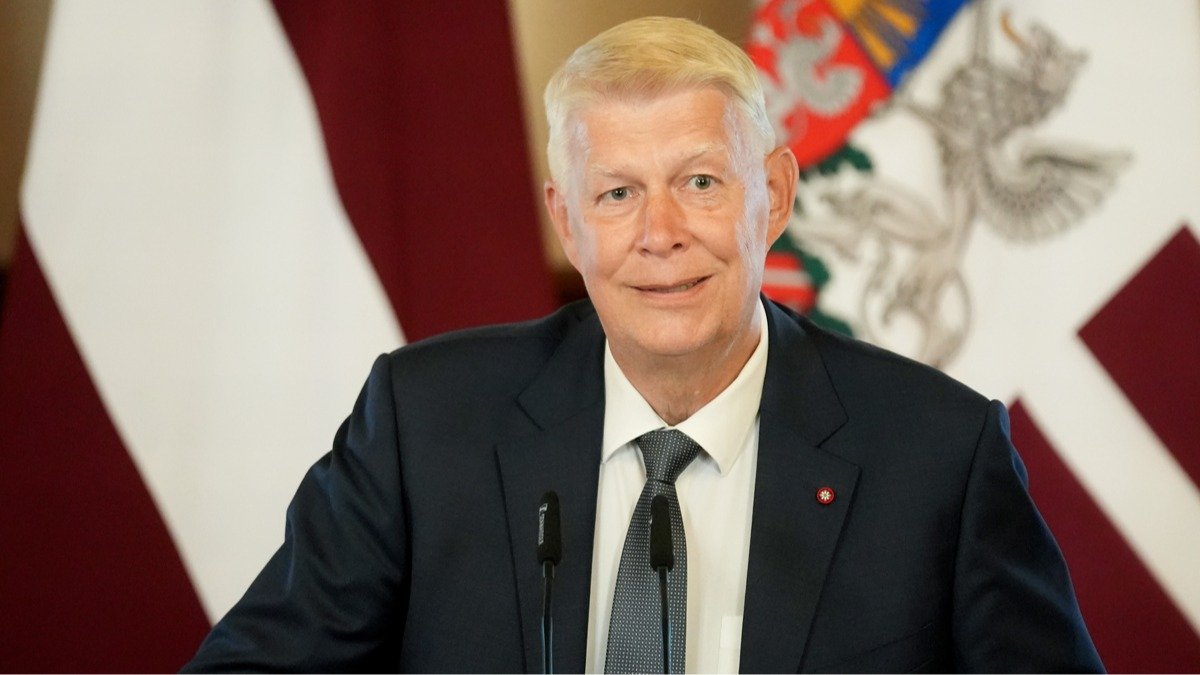
On the 40th anniversary of the Chernobyl NPP accident, the Ukrainian publication hromadske spoke with former liquidator and ex-President of Latvia Valdis Zatlers. In 1986, while working as a trauma surgeon in a Riga hospital, he served in the zone as a senior lieutenant of the medical service. "I, along with other medics from our unit, pushed for personal dosimeters to be issued to personnel. We finally got them, but they were non-functional. Neither I nor my fellow servicemen ever found out how much radiation we received in Chernobyl," recalls Zatlers. Two months later, he returned to Riga with negative changes in his blood count, and one indicator, according to him, did not normalize even after decades. Zatlers told hromadske how this experience influenced his views on nuclear weapons, how he assesses the threat of attacks on nuclear power plants, and what, in his opinion, depends on Ukraine's and Europe's security today. Valdis Zatlers. Photo: Paula Čurkste / LETA. Editorial Note: The interview was published on the hromadske website. With the permission of our colleagues, we are publishing its full translation, with minor editorial changes. Drank perfume against radiation - Mr. President, how did you become a liquidator? - The military enlistment office informed me about the call-up of reservists for two months for military retraining at a training ground. By the way, I was lucky that on May 8, 1986, I, like others, was not taken directly from work because I was in the operating room. In the evening, I arrived at the military enlistment office, and on May 9, we were put on a train, and the next day we were already in the 30-kilometer Chernobyl zone. We were a regiment - 700 servicemen. Soon, reservists from Estonia camped near us. We even said among ourselves that the Soviet authorities were thus organizing genocide against Latvians and Estonians. - What did you know about the scale of the accident upon arrival in the zone? - I knew about the accident before our train departed – information was leaking into Latvia from Sweden. After all, the Swedes registered an increased radiation level and determined that the cloud from the Chernobyl NPP had reached them, including through Latvia. And when we were loading onto the train, I understood that we were being taken to Chernobyl – where else could we have been taken in this situation? - Were you given any protective equipment for the journey? - We, the medical service officers, tried to recall everything we knew about radiation from our institute while on the train to give adequate advice to others. But the only protection we had was iodine tablets in our individual first-aid kits. And that was very good, they really saved us, because in the first month after the accident, the level of radioactive iodine was catastrophically high. After a month, the iodine began to decay, and its negative impact on the body significantly decreased. - How did you settle in the zone and what did you do as a liquidator? - The first night we slept on the ground, in a clearing in the forest. Then, right on the border of the 30-kilometer zone, we built a camp for ourselves. And we only went into the zone to work. Obviously, neither our commanders nor the authorities understood what and how we should do. The USSR was not prepared for a nuclear power plant accident. Sometimes it even seemed that we were just being loaded with something so that we wouldn't sit idle. For example, in two months, we rebuilt the camp three times. In general, our job was to shovel the 2-4 cm top layer of radioactive soil. It was then transported somewhere. We dug up the earth with shovels, the wind raised radioactive dust, and it settled on the soil and on us again. There was also work on decontaminating transport leaving the zone. The vehicles were washed with some aerosols. And the pits where the used water was discharged were nearby. And the people who carried out the decontamination received very high radiation doses. - What protective equipment did you have? - We were given respirators, which became unusable after a day or two because they were clogged with dust. After a week, we were given chemical protection suits, which were impregnated with some chemical substance. It was incredibly hot, and the body in these suits developed rashes. And no one gave us any instructions on how to reduce our individual radiation dose. As a senior lieutenant, I had nine subordinates. I advised them not to eat or drink anything other than what the kitchen provided. June-July, there were plenty of berries in the forest, I explained that berries absorb radiation, that they are dangerous. But it was very difficult to convince people not to eat them, not to take off their respirators and surgical masks. Our main protection was moonshine from nearby villages – after we drank all the alcohol from the medical unit. We quickly bought all the cologne and perfume in the nearest store. We drank "Lily of the Valley." Alcohol relaxed us, and we also perceived it as a prevention against various diseases. Only one bath in two months in the zone - After work, did you wash before entering your tent? - In two months of work in the zone, I bathed only once – there was no opportunity more often. Water was brought to us from somewhere – I don't know how radiation-free it was. We returned from the zone and entered the camp, our tents, in the same clothes and shoes we worked in. In two months in the zone, our uniforms were never changed. You could bring a microscopic piece of graphite on the sole, and it would multiply the radiation level in the tent several times. We wiped our shoes of dust with some rags, grass, but we threw these scraps here, in the camp, what else could be done with them? A general view of the Chernobyl NPP after the disaster, Ukraine, October 1, 1986. Photo: EPA. - Did the political instructors tell you about the consequences of the accident for the country? - For the first time, we were in absolute informational isolation. A television was placed for us about a month later. We could write home, but not all letters reached their destination. We ran to nearby villages to call home, to talk to people, but commanders punished us for it. Our political instructors said nothing about the accident. Instead, they promised us a paradise life upon our return home – a vacation in Sochi, payments, housing. They even manipulated these promises. For example, they said that people who accumulated a certain level of radiation would be sent home immediately. People went to do very dirty work, received high doses of radiation, and no one let them go because no one measured their individual doses. - Were you forced to stay in the zone longer? - When we were called up, they said it was for two months. In the zone, they explained to us that we were here for six months. At the same time, our command changed approximately every three weeks. But we very rudely, with physical threats, told our commanders that we would not stay. And they allowed us to return after two months. By the way, they didn't even change our clothes before sending us home, they didn't wash us – they put us on a military plane and delivered us to Latvia with all our radiation. I told my comrades then to go home even naked, but not to bring radiation home to their families. I, for example, first washed in a Finnish bath, changed into clothes I had just bought in a store, and then went to my parents. And I simply threw my Chernobyl uniform in the trash. - What was written in your military documents about your service as a liquidator and the radiation dose received? - My documents state that I was on military training for 60 days. And I received the official status of a liquidator of the Chernobyl accident only later. - After returning home, did anyone inquire about your health? - Many scientists spoke with me, who knew only the theory of nuclear power plant accidents. We, the liquidators, knew more than them. As for my health, I, a surgeon with an inherently strong nervous system, developed a nervous twitch of my eyelids, trembling in my hands, and blood problems. I treated the latter with folk remedies – red wine. At that time, there was an anti-alcohol campaign in the USSR, and my grandmother had to stand in long queues to buy one or two bottles of wine for me. Although there was no exact proof then, and there is none now, that it helps to increase, for example, leukocyte levels. - How many Latvians became liquidators? - I think about three to four thousand. For a small country, this is a significant number. We meet every year. We have a monument to Chernobyl victims, Chernobyl pensions, and corresponding benefits. A memorial stone dedicated to the victims of the Chernobyl tragedy on the grounds of Riga Clinical University Hospital, Latvia, April 26, 2017. Photo: Zane Bitere / LETA. By the way, when in 2010, as President of Latvia, I met with the then Russian President Dmitry Medvedev, I brought up Chernobyl issues. His position shocked me. The Russian President replied that the consequences of Chernobyl are Ukraine's problem, and Ukraine should deal with it. - Have you been to the Chernobyl zone after 1986? - Yes, twice. The first time as President of Latvia, by the way, the only president who visited the zone. I wanted to show Latvia's solidarity with Ukraine. Because the USSR brewed the Chernobyl mess, and Ukraine had to deal with the problems on its own. But I was constantly prevented from walking where I wanted – they were protecting the president. I asked a guard to show me his radiometer – funny readings, nothing serious, but everyone present was worried anyway. And then I visited the zone for the 30th anniversary of the accident as a participant in a Chernobyl conference. And I moved around more freely there. - In your opinion, how real is the threat of a Russian strike on Ukrainian nuclear power plants today? - Such a strike is a nuclear catastrophe. Overcoming its consequences could take decades – the Chernobyl accident showed this. And the victims of such strikes will not only be Ukrainians – Russians too, as they will not be able to prevent the spread of radiation towards their country. This should deter them. - By this logic, will Russians never use nuclear weapons? - Thanks to Chernobyl, I realized that nuclear weapons have no use on the battlefield. They are for deterrence and intimidation of the enemy. No one can predict which territory will be contaminated after an atomic bomb. And Russians cannot predict whether they themselves will suffer from it. Against Russia? So, a Russophobe - In 1986, the Soviet authorities concealed the scale of the Chernobyl disaster from citizens. Similarly, in late 2021 – early 2022, the Ukrainian authorities reassured citizens about the threat of a Russian invasion. You, a person who was a liquidator and head of state, understand the motives of the authorities? - In April 1986, the authorities truly did not know or comprehend the scale and consequences of the catastrophe, because it was the first accident. At that time, it was about the ignorance of the Soviet leadership. As for the start of the full-scale war in 2022, you understand, President Zelensky did not want to scare citizens. Because panic could have very much weakened Ukrainians. On the other hand, your (Ukrainian. – Ed.) president, like Europe, still had hope to somehow calm the Russians. At the end of 2021, I was at a closed conference in Great Britain, where they were discussing this very thing – the possibility of finding common ground with the Russians. - Did you personally believe in a dove of peace? - No, I said there would be a war. And that it would be in February – Russians like their February 23rd. By the way, it was in February, just before the start of the war, that Latvia supplied Ukraine with weapons: Stingers, Javelins – everything we had. - Wasn't Latvia afraid of being left without weapons – after all, Russia is nearby? - The map with the disposition of Russian troops showed that there was no threat to Latvia at that moment, but there was a real threat to Ukraine. - Today, Russian drones fly into Latvia's airspace. What reaction to them do you consider optimal for your country? - And what reaction would you like to see? That we declare war on Russia? Unfortunately, there is a war going on next door, and isolated drones from both sides accidentally fall in the Baltics, Poland, Romania. When 20 drones immediately flew into Poland, it was no longer an accident. If such a situation occurs in Latvia, we will shoot down these drones – with the help of Ukrainians (laughs). - Russia explained its invasion of Ukraine by its desire to prevent our accession to NATO. Why, then, did it not start aggression against Latvia, which became a member of NATO in 2004? - Because Ukraine's membership in NATO is just a pretext for war. The reason is to prevent Ukraine from following the European path of development, adopting European values, and breaking free from Russia's influence. - And how did Latvia manage to break free from Russia's influence in 2004? - We realized back then that our statehood and security completely depended on whether we would break free from Russia. And we made appropriate efforts. For example, to join the European Union, we adopted over 250 laws in a year to harmonize our legislation with European law. In addition, it was a time when NATO and the EU were developing cooperation with former USSR countries. Russia was also considering joining NATO and the EU at that time. And we were able to take advantage of this window of opportunity. Latvian President Valdis Zatlers, Lithuanian President Valdas Adamkus, and Estonian President Toomas Hendrik Ilves at the Freedom Monument in Riga, Latvia, November 18, 2008. Photo: Inga Kundzina / EPA. - You were the President of Latvia when, at the 2008 Bucharest Summit, Ukraine was denied prospects of joining the Alliance. Why weren't we accepted then? - At the Bucharest Summit (NATO Summit in April 2008. – Ed.), Latvia, Poland, and Romania supported the idea of Ukraine joining NATO. But it was considered that Ukraine was not yet ready for membership in the Alliance. The Russians dominated that summit. Unfortunately, no one in the West took Putin's speeches at the time seriously, which spoke of a redistribution of the world on Russian terms. And a few months later, in August 2008, Russia attacked Georgia. But then the West did not understand who they were dealing with. - Why did Europe keep convincing itself that Russia posed no threat? - Perhaps because everyone in Europe was accustomed to peace, Europeans did not think in terms of narratives that someone could attack someone. They thought in terms of collective security, collective defense, guarantees of NATO membership. And when countries like Latvia, Poland, and Estonia spoke about the Russian threat, we were called Russophobes. NATO – and without the US NATO - Now, when the US is undermining NATO, are you sure that NATO membership is still a guarantee of security for Ukraine? - America's position will not destroy NATO. The US is an important player in NATO, but only one of many. Every NATO member can behave... strangely, but because of this, NATO will not fall apart. Do not forget that most of its members are European countries, for whom NATO's eastward expansion has brought stability and prosperity. - Periodically, the question arises in Ukraine about creating a new security alliance in Eastern Europe, of which Ukraine would become a member. For example, it could include the Baltic states, Scandinavia, and Poland. What is your opinion on such prospects? - Why create some alternative to NATO and disperse forces when NATO, a successful security organization, already exists? Ukraine is not yet admitted to NATO. But Ukraine now has the most modern army in Europe. And it is a big mistake to keep Ukraine outside of NATO. For Ukraine, there is no other path than NATO, and for NATO, there is no other path than to accept Ukraine. There are no other security guarantees except military ones. And this is NATO membership. Because throughout the history of the Alliance, no one has attacked its members precisely because it concerns their collective security. This is not blackmail: NATO in exchange for territories - What do you think about the possibility of NATO troops participating in the war with Russia on Ukraine's side? - A good question. But participation – when? I think this is only possible after Ukraine becomes a member of NATO. - But, according to NATO's charter, a country at war cannot become a member. - Because everything must happen gradually. A ceasefire between Russia and Ukraine occurs on the line of contact. Negotiations take place, which end the war. Ukraine joins NATO and the EU within the territories it will control. A protest against Russia's military invasion of Ukraine outside the Russian embassy in Riga, Latvia, February 24, 2022. Photo: Toms Kalnins / EPA. - But this is forcing Ukraine to abandon its legitimate territory, a kind of blackmail. - This is not blackmail. This is a real way out. It is not about you forever abandoning your territories that are currently occupied by Russia. It is about free territories coming under NATO protection. And you can regain the currently occupied territories later. It will be a long process. Latvia, for example, was occupied by the Soviet Union for 50 years. Few believed that we would restore our statehood. And your situation is better than ours: you have preserved your statehood and a large part of your territories. - But in 2007, you had to permanently cede part of Latvia – the Abrene district – to Russia. - A country to which other countries have no territorial claims can become a NATO member. Therefore, we abandoned disputes with Russia regarding Abrene, which began back in the 1920s. Now this territory is part of Russia's Pskov region. The majority of its population has always been Russians; it is realistically the Russian hinterland. We decided that the game was not worth the candle and eliminated any reason for territorial disputes. By the way, Germany was putting a lot of pressure on us then to make this decision. - Is it naive to think that Russia, after a ceasefire, will not make territorial claims on us? Moreover, it considers the occupied territories of Ukraine to be part of Russia, even included it in its constitution, resettled people from its hinterland there, essentially colonized them. In such conditions, Ukraine may not have enough 50 years to regain these territories. - Any situation is not forever. I repeat: you have preserved your statehood. Russia took parts of territories from you, Georgia, Estonia, Latvia, Finland. But Ukraine can become so strong in the territory it controls that it can regain the currently occupied lands – I do not rule this out. It is already very powerful militarily, it has a developed civil society. Triangle Ukraine – Europe – Russia - Why do you think peace negotiations between Ukraine, the US, and Russia cannot break the deadlock? - Firstly, they are not being conducted by specialists on the American side: President Trump turned negotiations into his family business. Secondly, these negotiations should be conducted in a new format: Ukraine – Europe – Russia. At some point, Europe relied too heavily on America in these negotiations and gave her the initiative. This initiative needs to be returned. This requires bold and decisive European leaders. Perhaps the Chancellor of Germany [Friedrich Merz] will manage to rise to the required level. However, it is difficult to conduct negotiations when Putin really does not want them. Stylized image of Vladimir Putin outside the Russian embassy in Riga, Latvia, January 24, 2023. Photo: Toms Kalnins / EPA. In my opinion, Europe made its biggest mistake in 2022-2023, at the beginning of the war. At that time, Ukraine had the military initiative, and then Europe should have given you all the weapons, without restrictions, without conditions or discussions, simply given them so that you could develop your initiative. Europe did not do this because it was afraid of conflict with Russia. Europe was late in solving the problem with lesser means. The war has escalated. By the way, I think another mistake of Europe was the policy of ignoring Putin after the start of the full-scale war. Because you should always leave room for dialogue, quality communication channels. - Europe is still not very bold, let's be honest. In your opinion, how can Ukraine draw Europe into more decisive action? - You must become good partners for every European country. Find common ground with your neighbors so as not to have Russia to the east and Hungary and Slovakia to the west. And resolve issues with European countries quietly and calmly. - Do you, even for a moment, consider the possibility that Russia might attack the European Union? - I can't imagine that. But every threat from Russia must be taken seriously and prepared to counter it. So that the "little green men" do not repeat themselves. I think if in 2014 in Crimea Ukrainians had offered armed resistance, Russia would have stopped. It was not prepared for it. And so, first Ukraine missed the moment, and then – Europe. But this can be understood: everyone hoped until the last that they would not have to fight. - Mr. President, in your opinion, how will the situation in the Ukraine – Europe – Russia triangle develop in 2026? - A very difficult question. Russia perceives all attempts to find common ground as weakness. What can be offered to it? In Anchorage, Donald Trump offered Putin a war-ending option that would help Russia save face. Putin did not accept it because he did not need it. I think as long as Putin's inner circle agrees to fight, the war will continue. We need to ensure that Putin can no longer fight. What that might be – I don't know. Although I think about it all the time. Author: Maya Orel
TL;DR
- Valdis Zatlers, a former liquidator of the Chernobyl disaster and ex-President of Latvia, shares his personal experiences from the exclusion zone.
- He highlights the lack of essential protective equipment, such as functional dosimeters and adequate protective clothing, and the insufficient information provided to liquidators.
- Zatlers discusses the long-term health issues he experienced, including blood problems, and his view that nuclear weapons are primarily for deterrence, not battlefield use.
- He assesses the current threat of Russian attacks on Ukrainian nuclear power plants as a catastrophic risk to both Ukraine and Russia.
- Zatlers advocates for Ukraine's swift membership in NATO and criticizes Europe's past hesitancy in dealing with Russian aggression, urging for more decisive action.
- He draws parallels between the Soviet authorities' handling of the Chernobyl disaster and the early responses to the threat of the full-scale invasion of Ukraine.
Continue reading the original article