government
Trump Rushed Off Stage After Press Dinner Shooting: As It Happened (Photos, Videos)
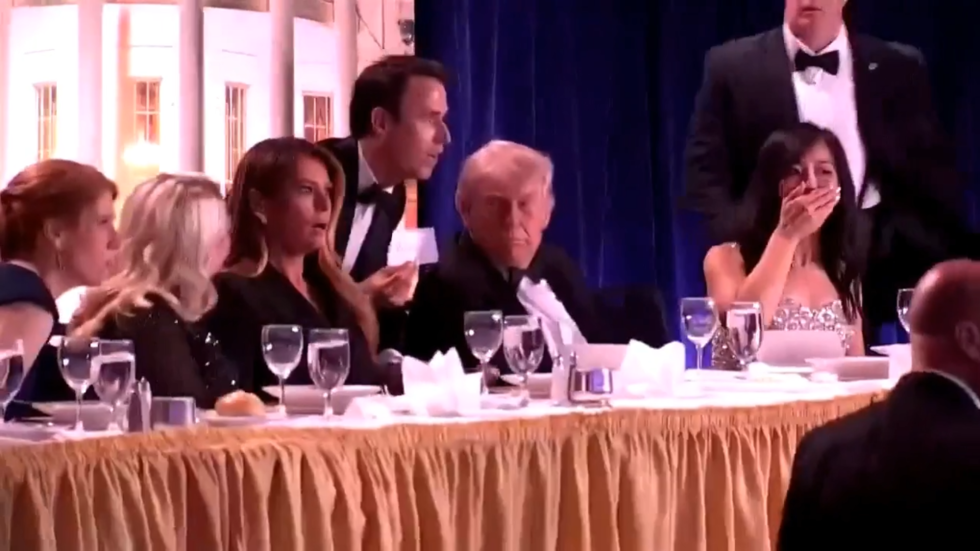
President Donald Trump was abruptly evacuated from the White House Correspondents’ Dinner at the Washington Hilton in Washington on Saturday
3 days ago
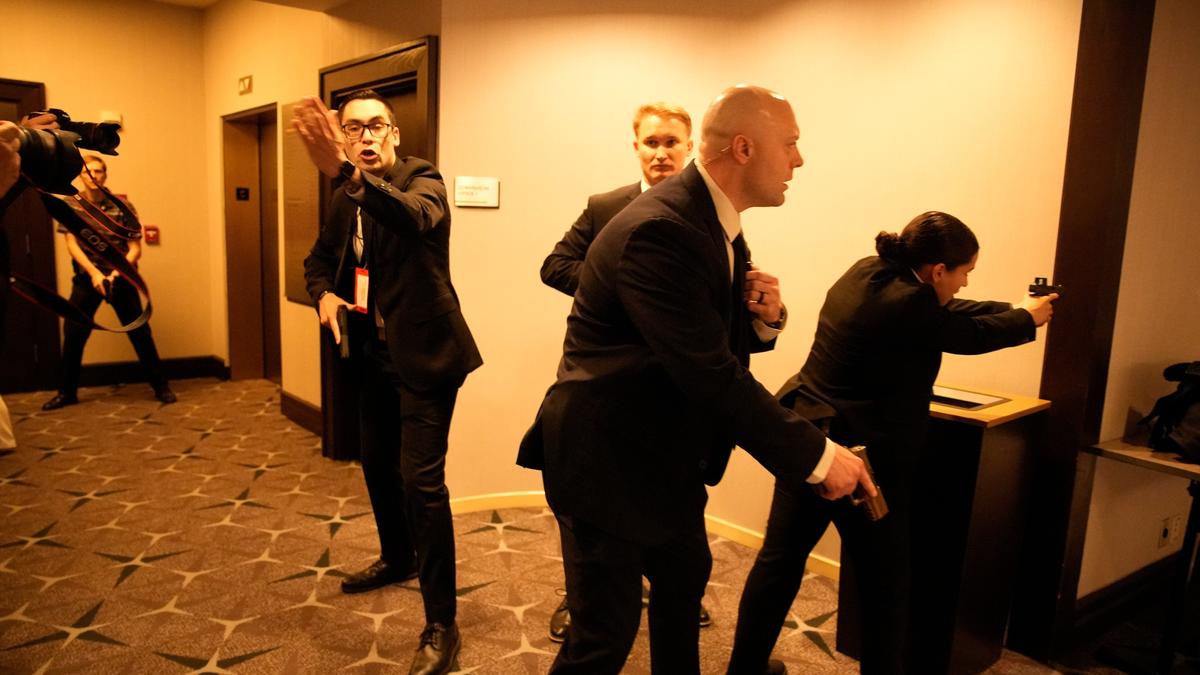
A shooting took place at or near the White House Correspondents’ Association reception/dinner at the Washington Hilton in Washington, D.C., attended by President Donald Trump, Vice President JD Vance, and other senior administration officials. Both government-aligned and opposition sources agree that shots were fired around a lobby security checkpoint area, that Secret Service agents rapidly engaged the gunman, and that Trump and other top officials were unharmed; some reports note that Trump remained at the venue for a period before departure, while others emphasize evacuation of high-ranking attendees. The suspect is consistently identified as Cole Thomas (or Cole Tomas) Allen, approximately 31 years old, who exchanged fire with the Secret Service before being subdued and taken into custody. One Secret Service agent was shot but suffered only non-life-threatening injuries thanks to a ballistic vest, was treated, and later released from the hospital, and federal authorities have since announced firearms and assault-on-federal-officer charges against the suspect.
Across both sets of outlets, the incident is framed as an attack intersecting with a major media-political institution: the White House Correspondents’ Association and its annual dinner/reception, long known for bringing together journalists, government officials, and the sitting president. Coverage agrees that the event’s high-profile nature heightened concern about the security implications and that the Secret Service’s protective mission centers on preventing threats to the president and senior officials during such gatherings. Both sides acknowledge that the suspect appears to have acted alone and that early law-enforcement briefings point to a potential intent to target Trump administration officials, prompting condemnation of political violence from figures across party lines. There is also shared reference to the formal investigative process now underway, with federal agencies leading the probe and reviewing security procedures around presidential events.
Nature and emphasis of the threat. Government-aligned sources stress that President Trump and Vice President Vance were never in direct danger, highlighting the rapid neutralization of the attacker and the limited injuries as evidence that security systems worked as intended. Opposition sources, while acknowledging the same outcome, underline how close the suspect came to a key checkpoint and focus more on the potential that he intended to target Trump officials, framing the incident as a narrowly averted tragedy rather than a fully controlled situation. As a result, government coverage sounds more reassuring and procedural, while opposition coverage sounds more alarmed about what might have happened.
Portrayal of security performance. Government outlets foreground the effectiveness and professionalism of the Secret Service, emphasizing the agent’s ballistic vest, the swift apprehension of Cole Allen, and the orderly management of the president’s movements. Opposition accounts acknowledge these actions but devote more space to questions about how an armed individual reached the lobby checkpoint area in the first place, implicitly raising concerns about possible security gaps. This leads government narratives to treat the event as a test that the system passed, while opposition narratives treat it as a warning signal that security around politically charged events may still be vulnerable.
Framing of political implications. Government-aligned coverage largely treats the shooting as a criminal attack against federal officers and a disruption of a high-profile reception, avoiding extended speculation about political motives or broader polarization. Opposition coverage more readily situates the incident within the climate of hostility surrounding Trump-era politics, explicitly noting that the suspect "may have intended" to target Trump officials and highlighting bipartisan condemnation of violence as a political tool. Consequently, government reporting tends to compartmentalize the event as a security incident, whereas opposition reporting connects it to the wider narrative of political extremism and threats to democratic institutions.
Communication about the president’s movements. Government sources emphasize that Trump remained at the venue for some time and later addressed reporters, using this to project calm and continuity of leadership after the shooting. Opposition sources focus more on the evacuation of high-ranking officials and the disruption to the event, implying that the situation was serious enough to require immediate protective action for the president and his entourage. This creates a contrast between government portrayals of composed resilience and opposition portrayals of abrupt emergency procedures underscoring the gravity of the threat.
In summary, government coverage tends to underscore control, institutional competence, and the absence of serious harm, while opposition coverage tends to stress the near-miss quality of the incident, potential political targeting, and lingering questions about security and the broader climate of violence.