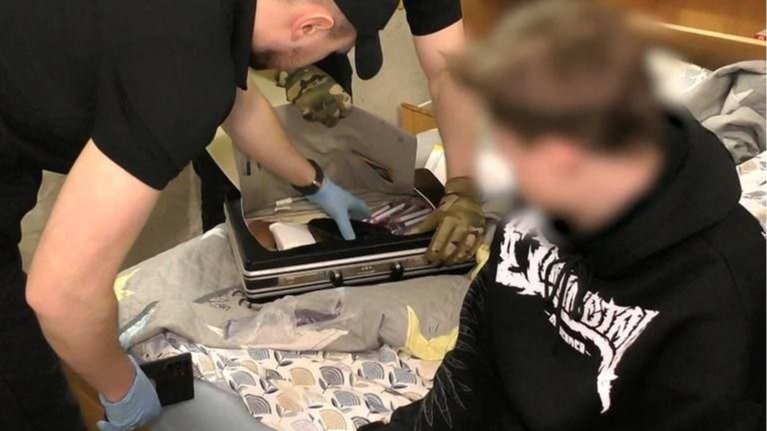
Russian and international coverage broadly agree that Russia’s Federal Security Service announced it had foiled a planned bombing targeting the leadership of Roskomnadzor, the state body that regulates and censors the internet, around April 18, 2026. Reports from both government-aligned and opposition outlets say the FSB linked the suspects to a neo-Nazi or far-right network allegedly connected with Ukrainian special services, that seven individuals were detained in coordinated raids across several cities including Moscow, Ufa, Novosibirsk, and Yaroslavl, and that explosives, weapons, and extremist symbols were said to have been seized, with at least one suspected organizer killed during an attempted apprehension in Moscow.
Both sides also agree that the purported motivation behind the plot was Roskomnadzor’s role in blocking or restricting foreign-based apps such as Telegram, that the FSB claims the suspects were recruited and coordinated via online platforms, and that the alleged attack was meant to target high-level Roskomnadzor officials personally. Coverage notes that the foiled bombing comes after the earlier assassination of a senior Roskomnadzor figure involved in internet blocking, and that the episode occurs amid broader state efforts to tighten control over the digital sphere and justify enhanced internet censorship in the name of national security.
Areas of disagreement
Nature of the network. Government-aligned outlets frame the suspects as a Kiev-backed neo-Nazi terrorist cell, emphasizing ideological extremism and alleged Ukrainian intelligence guidance to validate the terrorism narrative. Opposition and rights-focused sources instead suggest the detainees may be associated with Alyi lebed, an anti-censorship movement that had tried to organize legal protests against internet restrictions, casting doubt on whether they were genuine extremists or primarily activists opposing Roskomnadzor’s policies.
Evidence and credibility. Government coverage largely presents the FSB’s account, including references to seized explosives and extremist paraphernalia, as established fact and offers minimal scrutiny of the investigation’s transparency. Opposition outlets stress the lack of independently verifiable evidence, highlight the FSB’s pattern of announcing spectacular foiled plots with limited public proof, and cite factors like voice-analysis links and the simultaneous disappearance of Alyi lebed members to question whether the case may be partially fabricated or politically manipulated.
Motives and political context. Government narratives interpret the plot as confirmation that hostile foreign actors and radical ideologues are targeting Russia’s information infrastructure because of its efforts to block tools allegedly exploited by Ukrainian intelligence, reinforcing the legitimacy of tightening controls on digital platforms. Opposition media place the episode in the context of President Putin’s recent security rhetoric and expanding censorship regime, arguing that dramatized terrorism claims serve to justify further repression of online freedoms and to discredit domestic movements challenging Roskomnadzor’s authority.
Characterization of Roskomnadzor. Pro-government sources portray Roskomnadzor primarily as a security-critical regulator defending Russia’s information sovereignty against foreign influence and extremism, implying that attacks on its leadership are attacks on the state itself. Opposition outlets describe Roskomnadzor as a federal censorship agency curbing free expression and blocking popular platforms, suggesting that associating its critics with terrorism helps normalize harsh crackdowns on dissent and expand the boundaries of what is labeled “extremist” activity.
In summary, government coverage tends to treat the FSB’s version as authoritative, emphasizing a Ukrainian-backed neo-Nazi terrorist threat to justify strengthened internet control, while opposition coverage tends to question the evidence, link the suspects to anti-censorship activism, and frame the case as part of a broader pattern of securitizing dissent and expanding digital repression.