April 24, 2026
FSB claims Ukraine was preparing a terrorist attack against Roskomnadzor leadership to disrupt Telegram blocking
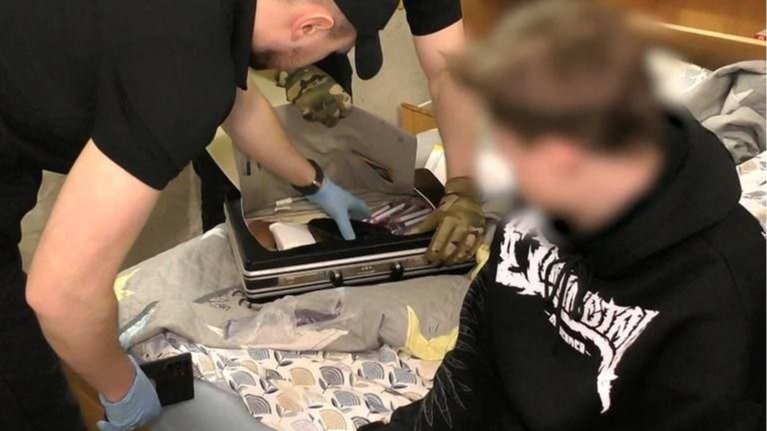
On April 18, security forces prevented a terrorist attack against the leadership of Roskomnadzor, according to the FSB's Public Relations Center. Ukrainian authorities have not commented on this information. According to the FSB, a 21-year-old Moscow resident was preparing to blow up the car of one of Roskomnadzor's leaders and was killed on the spot. The FSB reported the detention of seven "supporters of right-wing radical and neo-fascist ideology" in Moscow, Ufa, Novosibirsk, and Yaroslavl. According to the agency, Ukrainian special services recruited them via Telegram to commit the crime. During searches, homemade explosive devices weighing 1 kg, an F-1 grenade, a PM pistol with a silencer, two gas pistols, radios, "neo-Nazi paraphernalia," Ukrainian military symbols, and "instructions for joining a banned Ukrainian terrorist organization in the Russian Federation" were allegedly seized from the detainees. Criminal cases have been initiated. "Ukrainian special services are seeking to disrupt Roskomnadzor's measures to ensure the security of the information space, including the blocking of Telegram, which is widely used by the enemy for sabotage-terrorist, extremist, cyber-fraudulent, and other serious crimes," the FSB stated. The FSB constantly reports on planned terrorist attacks. The FSB's Public Relations Center regularly reports on thwarted terrorist attacks organized by Ukraine, but provides no real evidence. In addition, the special service often reports the killing of suspects during attempted arrests. As "Important Stories" notes, today the FSB reported the killing of the 82nd suspect. Is Ukraine really behind the preparation of all terrorist attacks? Ukrainian authorities have not commented on the FSB's press release today. It is unknown whether Kyiv is involved in this and other similar attacks. At the same time, Ukraine confirms most of the successful attacks on military and industrial infrastructure, as well as on high-ranking Russian officials. Putin stated the need for internet blocking. The FSB press release appeared the day after Vladimir Putin's speech, where he explained communication outages as work to prevent "terrorist attacks" and indicated that security is a Kremlin priority. "Of course, if it is related to operational work to prevent terrorist acts - and we know that, unfortunately, we sometimes miss such blows - then, of course, ensuring the safety of people, our children, loved ones, every citizen of Russia will always be a priority," Putin said. The FSB is the main proponent of internet blocking in Russia. The FSB is the only structure in the Russian government that advocates for internet shutdowns and blocks, Faridaily project previously reported, citing sources. According to journalists, Russian officials are dissatisfied with the restrictions and the forced transfer of citizens to the Max messenger, but they can do little against the FSB's influence, and no one dares to ask Putin for leniency.
TL;DR
- FSB claims to have thwarted a terrorist attack targeting a Roskomnadzor leader on April 18.
- The alleged plot was linked to Ukrainian special services aiming to disrupt Roskomnadzor's efforts to block Telegram.
- Seven individuals with "right-wing radical and neo-fascist ideology" were reportedly detained in Moscow, Ufa, Novosibirsk, and Yaroslavl.
- The FSB claims to have seized homemade explosives, firearms, and "neo-Nazi paraphernalia" from the detainees.
- Ukrainian authorities have not commented on the FSB's claims.
- The FSB frequently reports foiled terrorist attacks, often resulting in the death of suspects, with "Important Stories" noting this is the 82nd such reported death.
- President Putin recently emphasized security and internet restrictions as a priority to prevent "terrorist acts."
- The FSB is described as the primary advocate for internet blocking in Russia, facing little opposition from other officials.
- Ukraine acknowledges successful attacks on Russian military and industrial infrastructure, and on high-ranking officials.
Continue reading the original article