government
We're not afraid of war with US
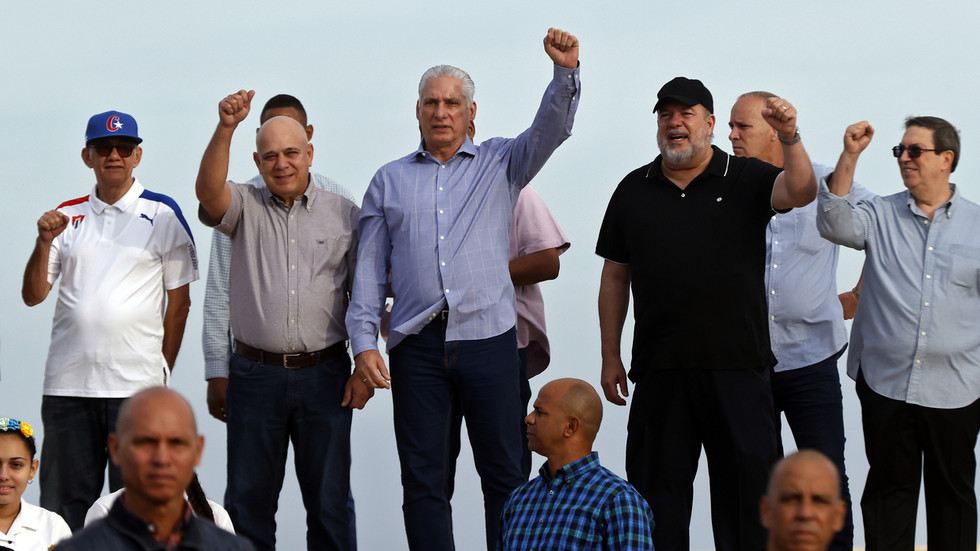
Cuba is a peaceful nation, but it will use all means to defend itself in case of a US aggression, Caribbean country’s president, Miguel Diaz-Canel, has told RT
4 days ago
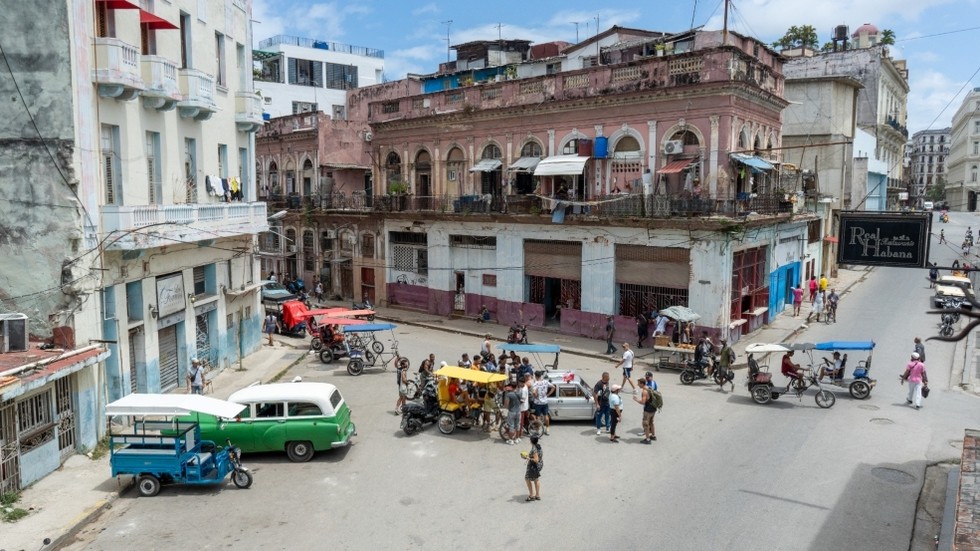
US and Cuban officials are reported to have met in Havana to discuss Cuba’s economic direction, with agreement across aligned and critical coverage that the talks centered on possible reforms to Cuba’s state-run system, expansion of the private sector, and foreign investment. Both sides acknowledge that US representatives pressed Havana on issues including compensation for previously seized assets, release of political prisoners, and broader political freedoms, while Cuban President Miguel Díaz-Canel publicly stated that Cuba is open to dialogue with Washington on an equal footing. Reports concur that US officials framed Cuba’s economy as struggling and in need of structural change, and that the visit was part of a broader US diplomatic agenda in the region that has also included negotiations on Iran.
Shared context across narratives portrays Cuba as a country under significant economic strain, shaped by decades of state control, US sanctions, and recent tightening measures such as restrictions on fuel and financial flows. Both perspectives refer to Cuba’s socialist system and its limited but growing private sector, as well as longstanding disputes over expropriated US-linked property following the Cuban Revolution. They agree that the US has historically sought market-oriented reforms and political opening on the island, and that the Cuban leadership insists any changes must respect national sovereignty, self-determination, and the existing political system. There is also convergence that national defense and security calculations weigh heavily on Havana’s approach to any economic reform discussions.
Motives and framing of the visit. Government-aligned coverage depicts the US visit as part of a broader pattern of pressure and interference, presenting Washington’s push for market reforms and political changes as attempts at regime change dressed in economic language. By contrast, opposition-oriented narratives tend to frame the same visit as an overdue opportunity for Cuba to secure relief and modernization, portraying Washington’s demands as conditions tied to normalization and better economic prospects for ordinary Cubans.
Characterization of Cuba’s system and crisis. Government sources stress Cuba’s identity as a peaceful but embattled socialist nation whose economic difficulties are primarily driven by the US embargo, oil and financial blockades, and external threats. Opposition coverage generally accepts that sanctions matter but highlights internal mismanagement, one-party rule, and rigid state control as central causes of the crisis, arguing that structural change in Havana—rather than only sanctions relief—is necessary.
Nature of economic reforms. Government-aligned outlets describe reforms as a sovereign decision, emphasizing cautious, selective opening to private initiative and foreign capital under state guidance and without abandoning socialism or central pillars like public ownership in key sectors. Opposition sources, however, tend to argue that the reforms pushed by US officials—deeper marketization, broader private sector space, and protections for foreign investors—are essential and overdue, framing the government’s incremental approach as an obstacle that preserves elite control while limiting real opportunity.
Security and political concessions. Government narratives link the economic discussions to national defense, warning that calls for releasing political prisoners and expanding political freedoms form part of a destabilization agenda that Cuba must resist even while talking with Washington. Opposition coverage portrays these same demands as basic democratic and human-rights conditions, arguing that without substantial political liberalization and legal security for dissent and private enterprise, any economic package will be cosmetic and fail to deliver meaningful change.
In summary, government coverage tends to cast the US visit as high-pressure diplomacy that must be carefully managed to protect Cuba’s sovereignty and socialist model, while opposition coverage tends to present it as a critical chance for deep economic and political transformation that the current leadership is reluctant to fully embrace.