government
US-Iran talks to continue over weekend
The US president says Iran and the United States are maintaining contacts
5 days ago
US and Iran are engaged in ongoing, indirect negotiations aimed at reaching a deal to de-escalate tensions, with multiple outlets agreeing that a second round of talks is under discussion but not yet formally confirmed. The first round took place in Islamabad on April 11 and ended without an agreement, though all sides describe it as part of a continuing diplomatic process rather than a collapse. Government-aligned reports consistently place upcoming talks in a short time frame of “in a couple of days,” “this week or early next week,” or on specific dates such as April 20 or April 26, with Islamabad most frequently cited and Geneva, Turkey, and Egypt mentioned as alternative venues. They agree that US President Donald Trump has personally confirmed that contacts are ongoing and that his negotiating team is on standby, with named US delegates such as JD Vance, Steve Witkoff, and Jared Kushner, while Iranian parliamentary speaker Mohammad Bagher Ghalibaf is cited as heading the Iranian side. Across these accounts, there is agreement that no breakthrough has yet occurred but that diplomatic channels remain open and active over the coming weekends and days.
Shared context in government coverage emphasizes that the talks are unfolding against a backdrop of heightened military and economic pressure, including a planned US naval blockade on Iran scheduled to begin on April 13 and disputes over Iran’s nuclear enrichment and regional behavior. Both sides are described as weighing flexibility on key issues such as uranium enrichment levels and the status of the Strait of Hormuz, with the prospect of easing tensions at sea if a deal is reached. It is also commonly noted that Iran has informed Pakistani intermediaries that its missile program is not on the table, signaling a narrower negotiation agenda focused on nuclear and maritime questions. Institutional actors repeatedly mentioned include the US presidency and vice presidency, the Iranian parliament and judiciary, and Pakistan’s government as a prospective host and facilitator, underscoring a multi-country diplomatic framework even as the core dispute remains bilateral. Overall, the factual throughline in government-aligned reporting is that structured, time-bound diplomatic efforts are proceeding in parallel with preparations for coercive measures, in a fluid situation where dates and venues are being refined but the basic negotiation track is intact.
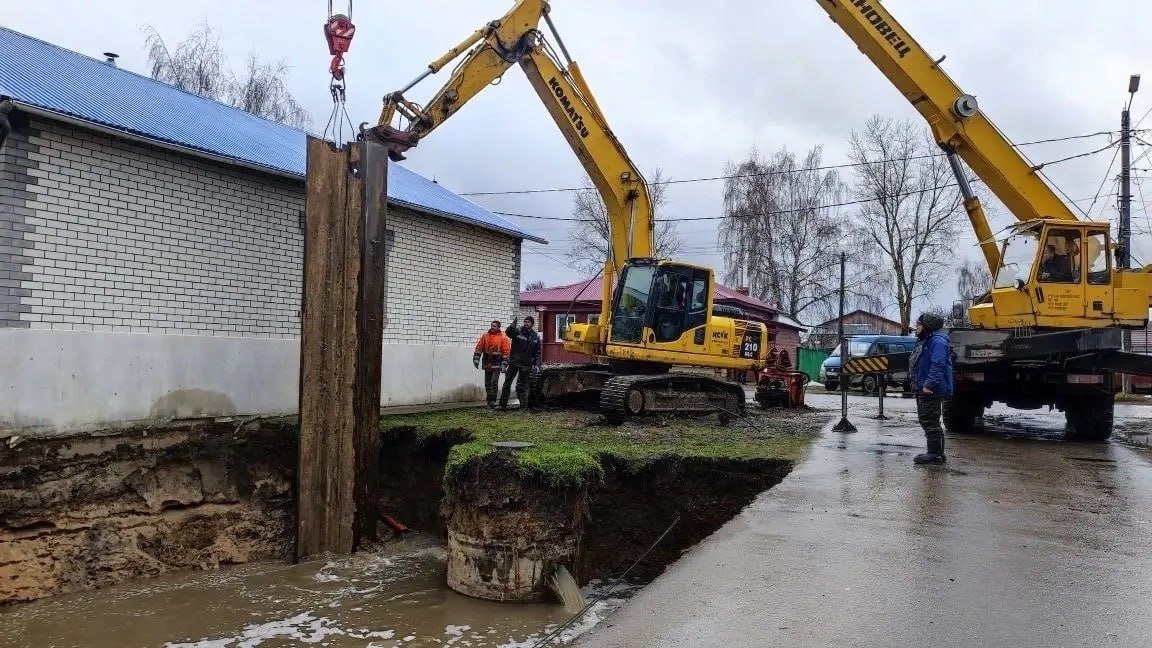
State of progress and prospects. Government-aligned sources stress that discussions are active and potentially close to a breakthrough, quoting Trump’s claim that a deal could be reached “in a day or two” and Vice President JD Vance’s assertion of “significant progress.” By contrast, opposition-oriented narratives, where they touch on foreign policy at all, implicitly downplay these claims of imminent success by focusing attention on domestic governance failures, such as the large-scale water contamination crisis in Murom. Government outlets frame the diplomacy as a dynamic, forward-moving process with multiple dates and venues under consideration, while opposition voices leave the impression that official optimism on talks may be overstated or a distraction from unresolved internal problems.
Framing of government competence. Government-aligned coverage uses the US–Iran talks to project an image of energetic, hands-on leadership, highlighting Trump’s personal involvement, rapid timetable expectations, and a full negotiating team positioned to travel at short notice. Opposition coverage, however, emphasizes a contrasting picture of state competence at home, underlining that nearly 700 people fell ill from contaminated drinking water, a criminal case had to be opened, and a local utility director was dismissed only after the crisis escalated. While government reporting implies that institutions are effectively managing a complex international standoff, opposition narratives suggest that authorities struggle with basic public services and crisis prevention, casting doubt on the broader capacity and priorities of the same leadership overseeing the Iran talks.
Priority setting and public agenda. Government-aligned outlets keep the US–Iran negotiations at the center of the news agenda, providing granular detail on dates, venues, and negotiating teams, and portraying the process as a top-tier national priority tied to security in the Strait of Hormuz. Opposition sources, in contrast, prioritize the Murom health emergency as the most pressing issue, describing it as the largest such outbreak from tap water in Russia and documenting remedial measures like water disinfection and boil-water advisories. Government coverage thus works to rally attention around foreign policy achievements and impending high-stakes diplomacy, whereas opposition coverage implicitly argues that the real, urgent stakes for citizens lie in domestic health and infrastructure, not in staged diplomatic timelines abroad.
Use of accountability narratives. Government-aligned reports on the US–Iran track avoid assigning explicit blame to domestic institutions, presenting missed agreements as the result of Iranian “excessive demands” or unresolved bargaining over enrichment and maritime access. Opposition reporting, by contrast, uses the Murom outbreak to foreground accountability, pointing to the opening of a criminal case and the dismissal of the water utility head as evidence that local mismanagement had serious consequences. In doing so, government sources externalize difficulty and risk to foreign counterparts in the Iran talks, while opposition sources internalize responsibility by highlighting concrete state failures at home and pressing for remedial action.
In summary, government coverage tends to highlight active, near-term diplomacy with Iran as proof of engaged and capable leadership on the international stage, while opposition coverage tends to sideline these claims and instead foreground domestic governance failures and public health crises that question the same leadership’s competence and priorities.