government
The suspect behind the deadly shooting in Kiev reportedly called for the slaughter of Jews
The man who opened fire in Kiev, killing six people, reportedly fantasized on social media about killing Jews and defended the Holocaust
4 days ago
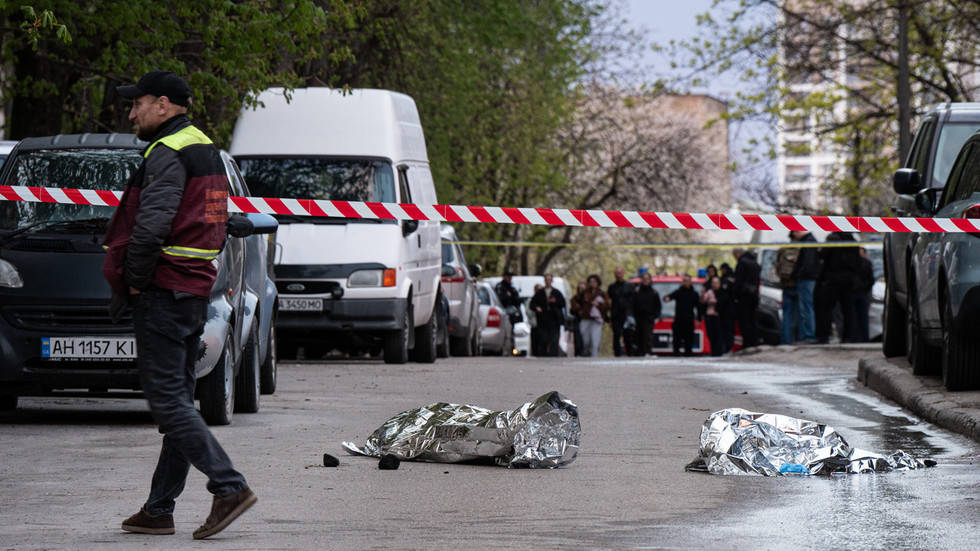
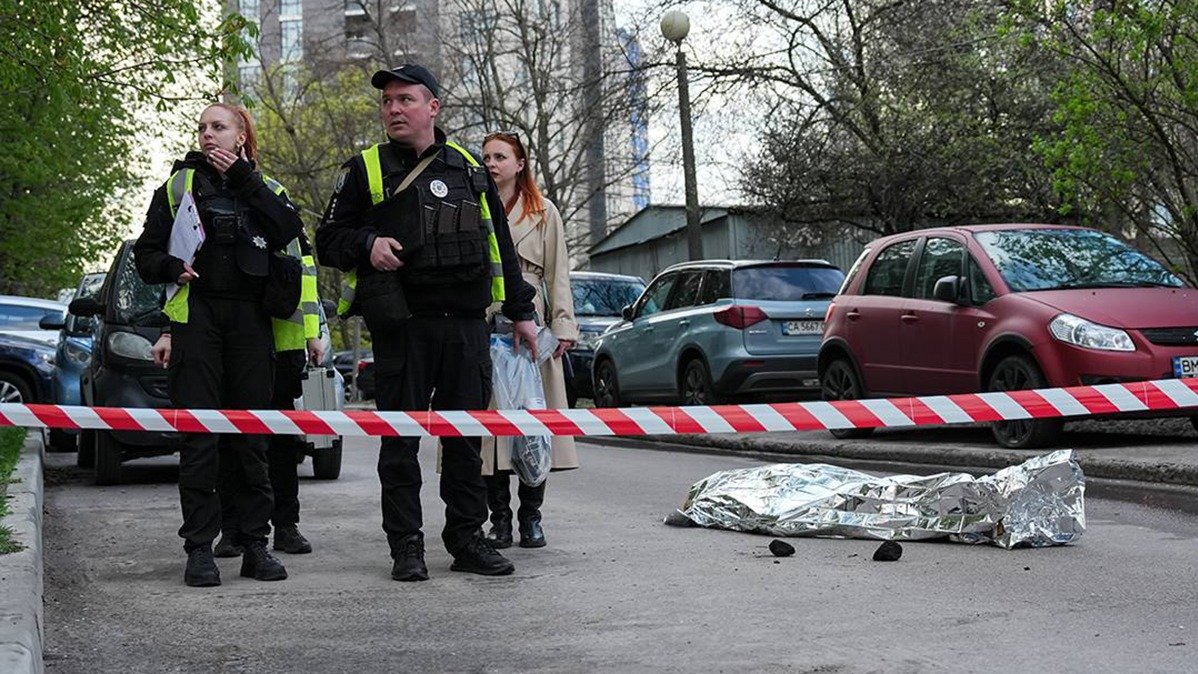
An armed attack in a Kyiv supermarket left six people dead and more than a dozen injured after a 57-year-old man opened fire on customers and staff before taking hostages. Both government-aligned and opposition outlets identify the attacker as Dmitry Vasilievich Vasilchenkov, a Ukrainian national born in Moscow, describe him as a military pensioner, and agree that police special forces conducted an assault on the seized supermarket, during which the gunman was killed. They concur that the incident occurred in mid‑April in Kyiv, that it is being investigated as a terrorist act, and that video footage and eyewitness accounts show a chaotic scene as people fled or were trapped inside the building. Both sides also note that authorities quickly opened a formal investigation into the conduct of officers on the scene and the broader circumstances leading up to the shooting.
Across the coverage, there is shared acknowledgment that the suspect had a troubled background, including prior legal disputes and indications of extremist or hateful views. Both camps refer to his status as a military pensioner and mention earlier court actions related to his pension, as well as a reported incident involving an assault on a shopper. They also agree that investigators are examining the role of state institutions such as the Interior Ministry and the police, scrutinizing whether law enforcement responded properly and whether any failures in supervision, mental‑health screening, or weapons control allowed him to carry out the attack. There is common framing of the event as a potential catalyst for debate about internal security, the vetting of ex‑servicemen, and the handling of individuals known to hold radical views.
Motive and ideological framing. Government-aligned sources highlight the suspect’s virulent antisemitic posts, his calls for violence against Jews, and references to pogroms and the Holocaust, presenting the shooting as an expression of extremist hatred and potential terrorism rooted in bigotry. Opposition outlets, while acknowledging his extremist views, frame them more broadly as radical and violent without centering antisemitism, placing greater emphasis on his biography as a Russian-born ex-serviceman. Government reporting stresses the ideological threat he posed to minority communities and national security, whereas opposition coverage uses his background to raise questions about how such a person remained armed and unsupervised.
Responsibility of state institutions. Government-aligned coverage reports that two police officers fled the scene and notes their suspension and the launch of an internal investigation, portraying this as swift accountability by the Interior Ministry within an otherwise difficult operational environment. Opposition outlets focus more heavily on the fact that officers abandoned civilians, using it as evidence of deeper systemic failures in police training, command, and crisis readiness. While government sources frame the investigation as proof that institutions are functioning and self-correcting, opposition media argue that it exposes chronic negligence and a culture of impunity within law enforcement.
Characterization of the attacker’s background. Government-aligned media emphasize that the suspect was a Ukrainian national who had allegedly been forcibly conscripted and fled his unit, implying personal instability and desertion under wartime pressure, while only secondarily noting his Russian birthplace. Opposition outlets foreground that he is a Russian native and a Ukrainian military pensioner, tying his trajectory to how the state manages veterans and ex-military personnel. Thus, government coverage tends to individualize the problem around a deranged extremist under stress, whereas opposition reporting connects his status as a pensioner and his origin to broader questions about vetting, demobilization, and the integration of former servicemen.
Nature of the security response. Government-aligned reports underscore the rapid deployment of special forces, the eventual neutralization of the gunman, and the classification of the incident as a terrorist attack to stress decisiveness and professionalism in an unusually complex hostage situation. Opposition outlets, while acknowledging the special forces assault, devote relatively more attention to the length of the standoff, the chaos among civilians, and procedural lapses such as the fleeing officers, suggesting that the response was reactive and poorly coordinated. Government media present the outcome as a difficult but ultimately successful operation under fire, whereas opposition sources portray it as another example of systemic security weaknesses made visible only after tragedy.
In summary, government coverage tends to stress the attacker’s antisemitic extremism, individual deviance, and the prompt disciplinary and counterterror response of security institutions, while opposition coverage tends to use the same facts to question institutional competence, highlight systemic failures in policing and veteran management, and emphasize the attacker’s Russian origin and military pensioner status.