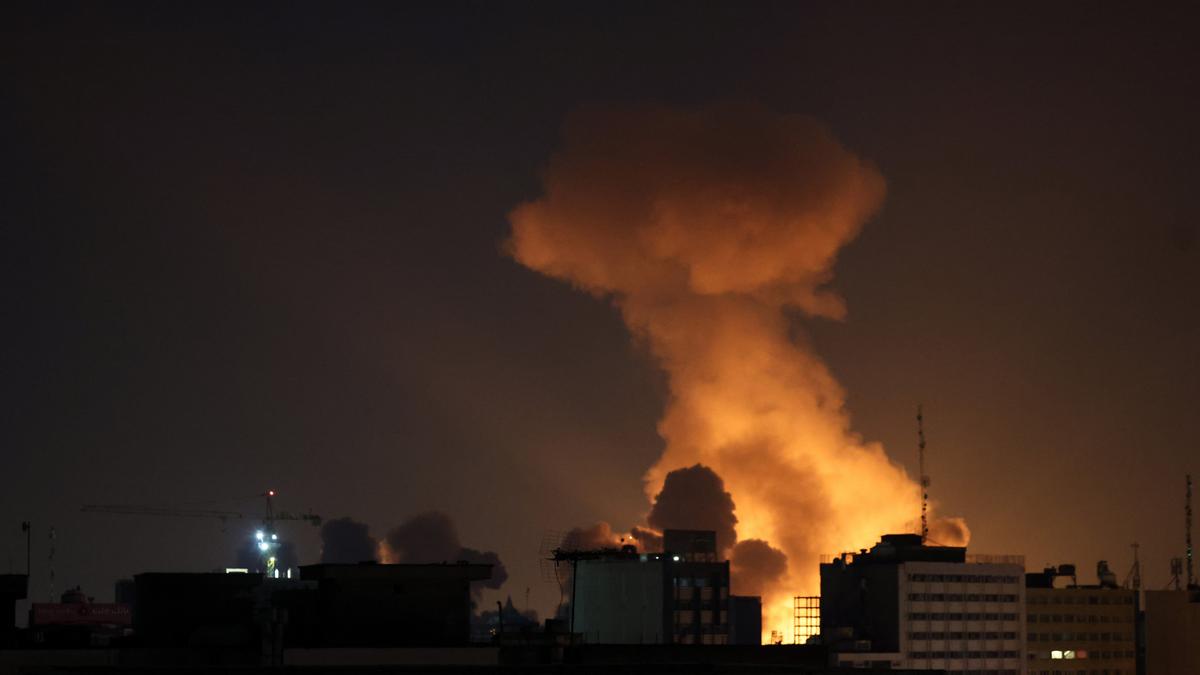
US and Israeli officials, as cited in both government-aligned and opposition outlets, describe a shift to a new phase of coordinated military operations against Iran, following an initial wave of strikes that they say degraded elements of Iran’s air defenses and ballistic missile systems. Both sides report that this next stage centers on intensified attacks against Iranian ballistic missile production facilities and other core military infrastructure, framed as a response to Iran’s recent launches of missiles and drones targeting US and Israeli assets across the Middle East.
Coverage from both camps agrees that this is a phased campaign involving US and Israeli militaries, that Iran has already conducted retaliatory missile and drone attacks, and that further escalation is possible. They also concur that US ground troops remain an option but are currently being avoided, that forward US bases in the region are central to the unfolding operations, and that Ukraine’s role in helping defend some US bases is emerging but still limited and largely defensive in nature.
Areas of disagreement
Scale and effectiveness of strikes. Government-aligned sources emphasize that a substantial portion of Iran’s air defenses and ballistic missile capabilities has already been neutralized, portraying the first phase as a clear operational success that justifies moving to the next stage. Opposition outlets question this characterization by noting the absence of independent verification and highlighting ongoing Iranian missile and drone launches as evidence that Tehran retains significant capabilities.
Nature and objectives of the new phase. Government coverage depicts the new stage as a targeted effort focused on ballistic missile production facilities and other strictly military infrastructure, framed as limited, defensive, and designed to prevent future attacks on US and Israeli interests. Opposition reporting, while acknowledging the stated focus on military targets, underscores language about “core infrastructure,” warning that this could broaden into a wider war with deeper strikes that risk serious damage to Iran’s overall state capacity and civilian-adjacent systems.
Regional involvement and escalation risks. Government-aligned outlets present Ukraine’s expected role in defending US bases as a supportive, contained measure that helps share the security burden without crossing into large-scale US ground deployments. Opposition sources, by contrast, cast Ukraine’s involvement as a sign of creeping multilateralization of the conflict, arguing that drawing in additional partners and assets around US bases increases the risk of miscalculation and a broader regional war.
In summary, government coverage tends to frame the new phase as a largely successful, tightly controlled expansion of precision strikes aimed at curbing Iran’s military threat, while opposition coverage tends to stress the uncertain battlefield picture, the lack of independent confirmation, and the danger that an ostensibly limited operation could widen into a more destructive and uncontrollable conflict.