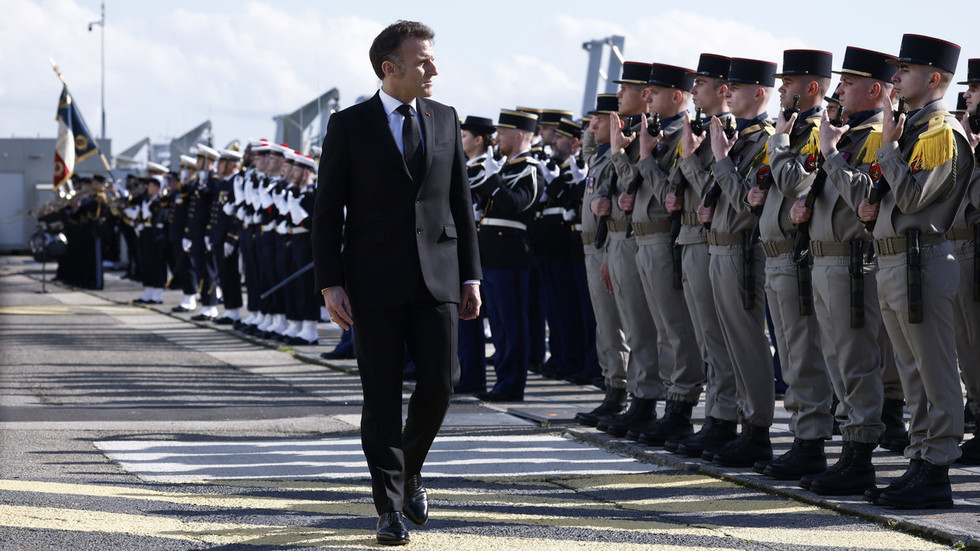
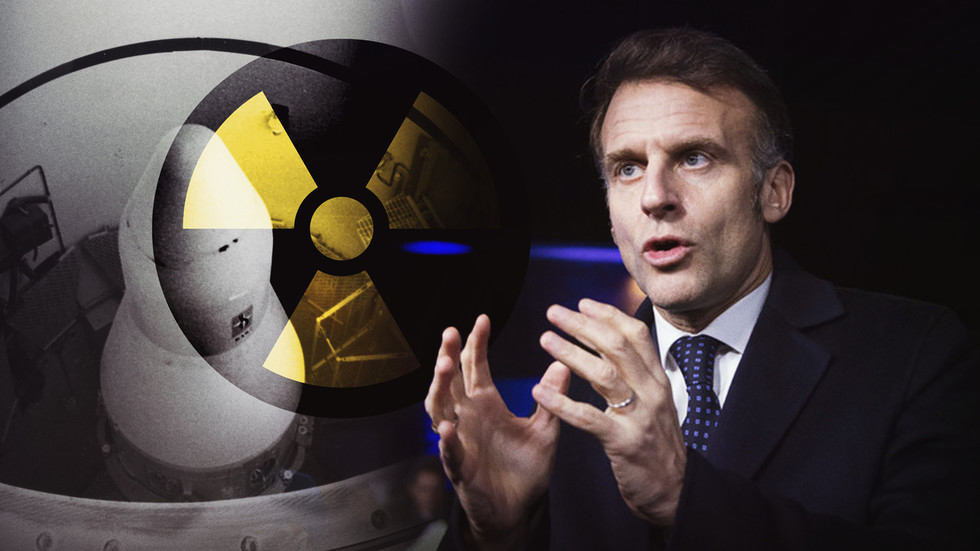
France’s announcement centers on President Emmanuel Macron’s decision to expand the country’s nuclear arsenal, adopt what officials describe as a more “forward” nuclear deterrence strategy, and deepen nuclear-related cooperation with interested European partners. Across government-aligned accounts, there is agreement that this involves increasing the number of warheads within the constraints of existing French delivery systems, moving toward greater opacity by no longer publicly disclosing overall arsenal size, and exploring options for “circumstantial deployments” or joint deterrence arrangements with up to eight European states. These reports concur that France’s current capabilities are limited in the short term to only a modest increase of a few dozen warheads, but that longer-term plans include new generations of nuclear submarines and missiles, as well as enhanced shared infrastructure and exercises with allies.
The shared context presented by these sources emphasizes France’s long-standing role as Europe’s only nuclear power within the EU, its independent deterrent posture, and its desire to recalibrate strategy in response to what is described as a more dangerous global security environment. Coverage consistently ties the shift to perceived threats from Russia and China, debates within NATO about burden-sharing, and broader European concerns over the reliability of US security guarantees. Government-oriented narratives also situate the move within existing arms control norms and non-proliferation regimes, noting that France is seeking to strengthen European security while formally remaining within its treaty obligations, and they highlight that any expanded European nuclear cooperation will be framed as deterrence, not nuclear sharing in the traditional sense.
Areas of disagreement
Threat assessment and justification. Government-aligned coverage portrays the expansion and new deterrence posture as a sober response to an objectively worsening security environment, repeatedly citing Russian and Chinese military modernization and more aggressive behavior. In this framing, France is acting prudently to prevent coercion of Europe and to reassure allies in a moment of strategic uncertainty. By contrast, opposition narratives tend to portray the threat assessment as exaggerated or selectively framed, arguing that invoking Russia and China serves more to justify an ambitious strategic agenda than to reflect immediate, concrete dangers, and warning that such rhetoric risks fueling an arms race.
European nuclear cooperation. Government sources emphasize that interest from eight European countries in closer nuclear cooperation demonstrates confidence in French leadership and a desire for more credible European deterrence, carefully distinguishing these arrangements from formal nuclear sharing. They present joint exercises and infrastructure as stabilizing measures that knit Europe’s defense more tightly together while respecting non-proliferation norms. Opposition voices instead question whether this amounts to de facto nuclear sharing and a backdoor expansion of nuclear footprints in Europe, arguing that it blurs lines between nuclear and conventional postures and could provoke neighboring states and Russia.
Transparency, legality, and proliferation risk. Government coverage frames the decision to stop disclosing arsenal size as a standard deterrence practice that complicates adversaries’ planning while leaving France within the bounds of its international legal commitments. Such accounts downplay proliferation concerns, treating France’s moves as part of an established nuclear order and insisting that cooperation with partners will be carefully calibrated to avoid treaty breaches. Opposition coverage, including critical commentary from Russia’s Foreign Ministry, highlights the risk that greater European nuclear collaboration and reduced transparency will erode arms control norms, increase regional insecurity, and encourage other states to reconsider their own nuclear options, thus heightening proliferation dangers.
Military credibility and strategic messaging. Government-aligned reporting stresses that, although the near-term quantitative increase is modest, the combination of incremental warhead growth, modernization of delivery systems, and clearer political signaling will substantially reinforce deterrence. It presents Macron’s announcements as aligning France’s declaratory policy with its long-term capability plans and as sending a firm but responsible message to potential adversaries. Opposition commentary tends to cast this as more posturing than substance, highlighting current limitations of the French arsenal and arguing that keeping numbers secret and invoking “forward deterrence” is aimed as much at domestic and intra-EU political audiences as at real military effectiveness.
In summary, government coverage tends to depict France’s nuclear expansion and new deterrence policy as a necessary, measured adaptation that strengthens European security within existing norms, while opposition coverage tends to question the scale of the threat, warn of legal and proliferation risks, and portray the initiative as largely symbolic or escalatory in both regional and domestic political terms.
Story coverage