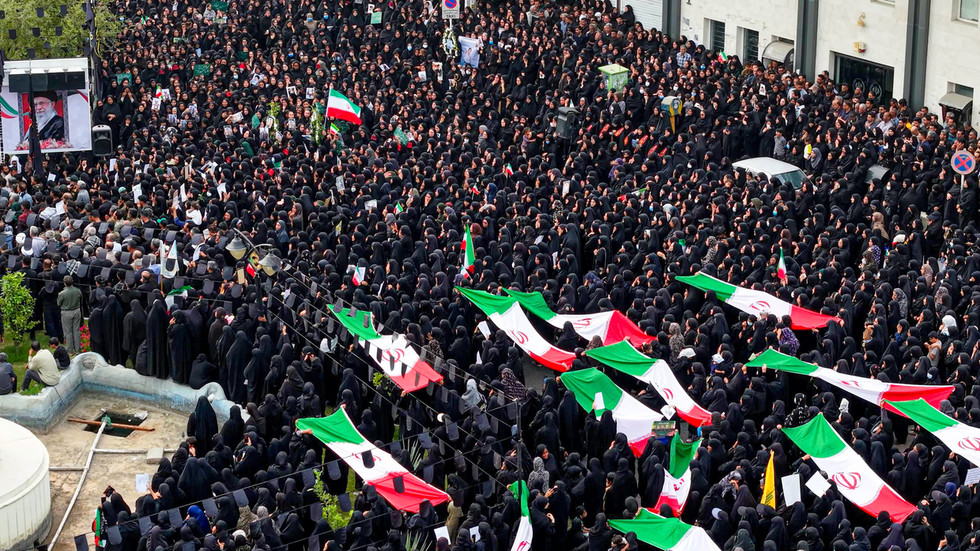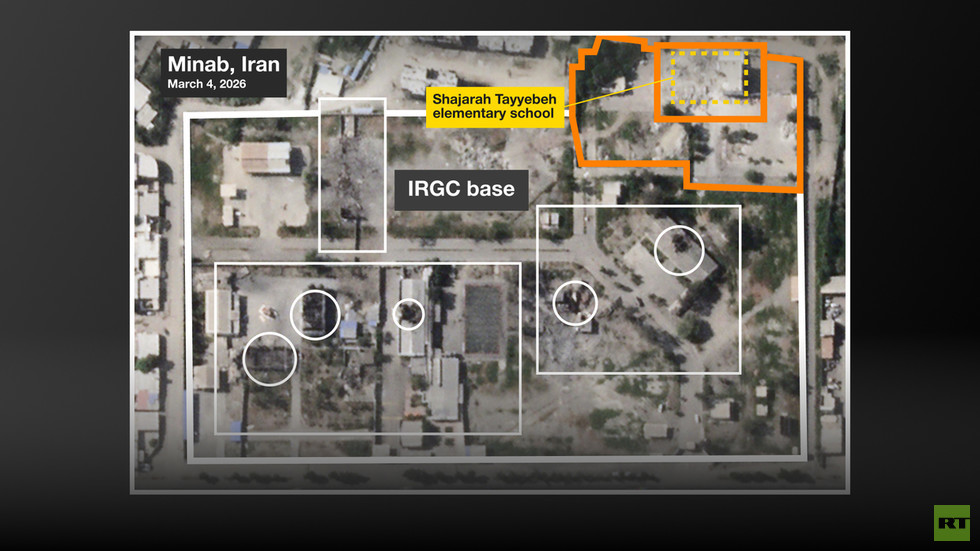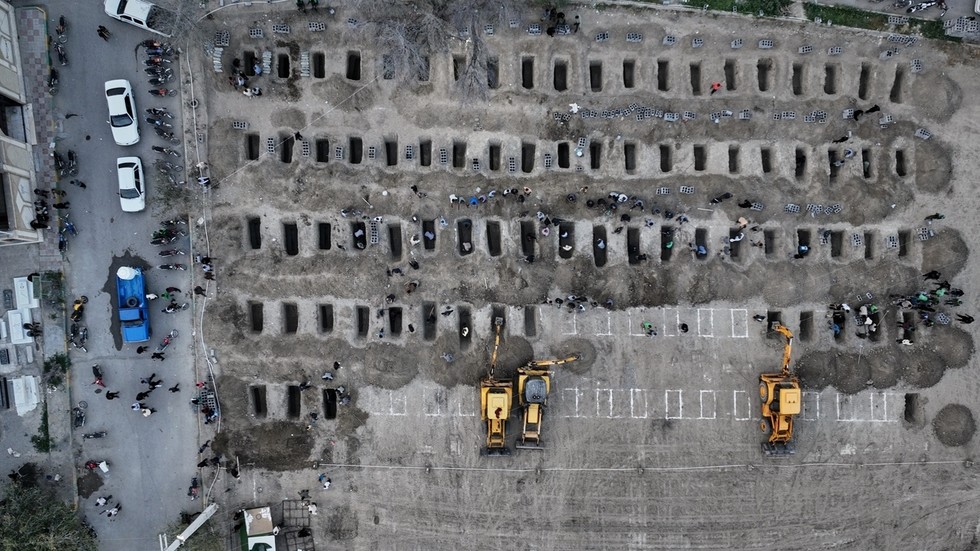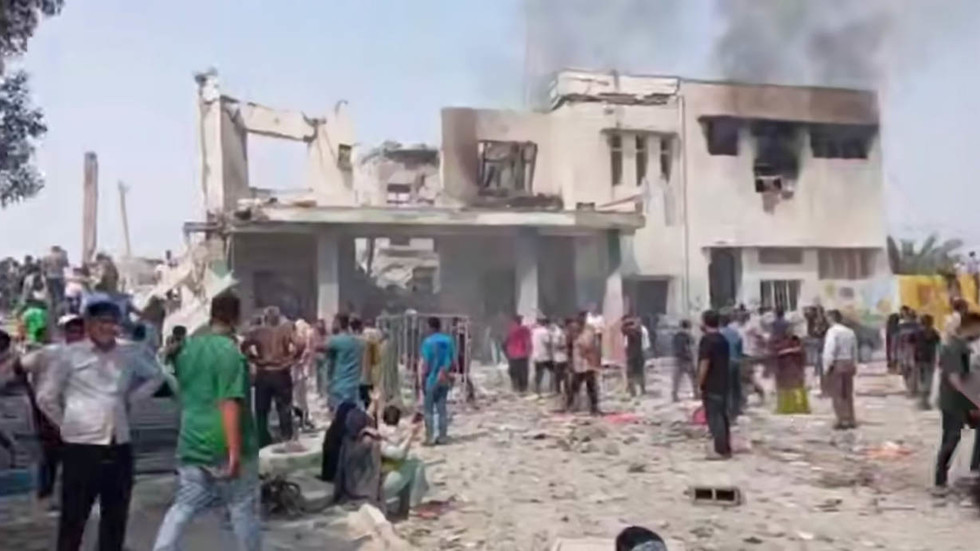
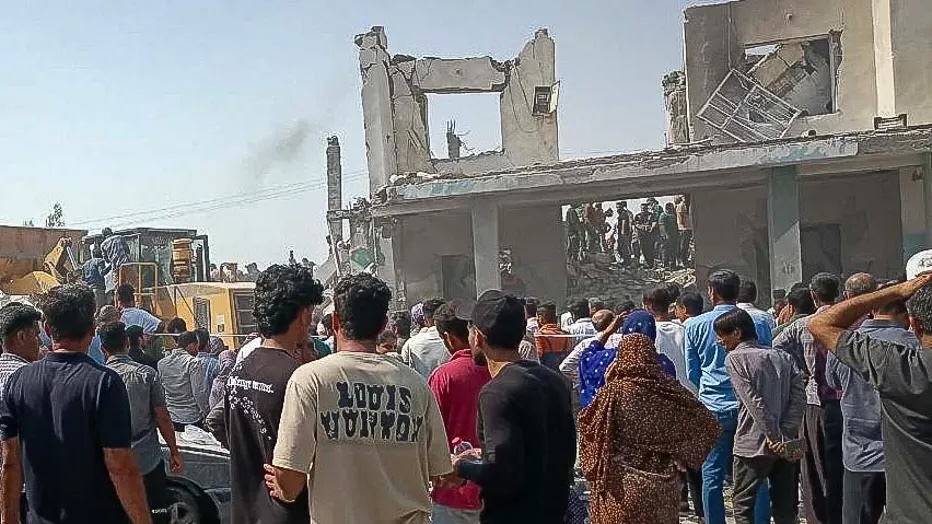
Reports from both government-aligned and opposition-linked outlets agree that a devastating airstrike hit a girls’ elementary school in Minab, southern Iran, killing a large number of students and staff and injuring many more. The death toll reported across government-aligned coverage ranges from around 60 to more than 160, with most accounts converging on roughly 165–168 fatalities, predominantly girls aged roughly 7–12, along with teachers and some parents. The attack occurred amid a broader wave of coordinated US and Israeli strikes on Iranian targets, including an adjacent or nearby naval or IRGC-linked base in the Minab area, and prompted large public funerals and expressions of mass grief. Both sides reference or implicitly acknowledge external investigations, such as satellite and open-source analysis and a US military inquiry, as indicating that American forces were likely involved in the strike, even as the precise targeting rationale and chain of command remain under examination.
Coverage from both camps situates the Minab school strike in the wider context of ongoing US-Israeli military operations against Iran and Iranian-linked assets, highlighting a pattern of cross-border confrontation and escalation. There is shared mention of the involvement of Iranian state institutions such as the Foreign Ministry, judiciary, and military in responding to the attack, through condemnations, vows of retaliation, and promises of investigations. Both sets of outlets place the incident within a history of US and Israeli strikes in the region, references to prior conflicts such as Gaza and Iraq, and debates over international humanitarian law and civilian protection. There is broad agreement that the strike has intensified domestic and international scrutiny of military conduct, further strained US-Iran and Israel-Iran relations, and sparked calls from the United Nations and rights bodies for an independent inquiry into how a crowded school became the site of such a lethal attack.
Areas of disagreement
Responsibility and blame. Government-aligned coverage unequivocally attributes the strike to a coordinated US-Israeli operation, often emphasizing that both countries deliberately bombed a clearly civilian school and sometimes asserting that Iranian authorities have already identified specific foreign pilots and bases. Opposition sources, while generally accepting that Israel likely carried out the strike as part of broader attacks on military infrastructure, emphasize that the school sat within or directly adjacent to an IRGC base, implicitly shifting some responsibility toward Iranian authorities for placing children in a high-risk military environment. Government outlets frame the incident as an unprovoked war crime by hostile foreign powers, whereas opposition reporting treats it as the tragic, if foreseeable, outcome of siting a school and clinic amid munitions depots and military targets.
Nature of the target and legality. Government reporting presents the Minab facility as an ordinary girls’ primary or elementary school located in a civilian neighborhood, stressing the absence of military activity and portraying the attack as a clear violation of international humanitarian law. By contrast, opposition sources foreground local testimonies that the school and adjacent clinic belonged to the IRGC and were physically inside a base that also housed a munitions warehouse, suggesting that the complex would be classified as a legitimate military target under the laws of war, albeit one where civilian presence should have constrained targeting decisions. Government-aligned narratives therefore argue that the strike was an intentional massacre of children, while opposition coverage leans toward portraying it as a strike on a dual-use or militarized site where the authorities’ choice of location critically contributed to the scale of civilian casualties.
Portrayal of Western media and investigations. Government-aligned outlets often accuse Western media of downplaying the Minab deaths, applying a double standard compared with coverage of Israeli or Ukrainian children, and even “implicitly blaming” Tehran by highlighting its military infrastructure. They tend to cite the New York Times’ satellite-based analysis and internal US military probes largely as reluctant admissions of US guilt, reinforcing a narrative of external aggression and hypocrisy. Opposition coverage, however, treats Western investigative reporting and open-source work as corrective tools that expose both the likely foreign authorship of the strike and the Iranian military’s role in embedding a school within a base, placing more trust in these external investigations than in official Iranian accounts.
Political framing inside Iran. Government-aligned media frame the strike as a national tragedy that unifies the public against foreign enemies, highlighting mass funerals, vows of retaliation, and official condemnations while downplaying or ignoring criticism of domestic decision-makers. Opposition sources, in contrast, use the same event to spotlight systemic issues in Iran’s security governance, echoing local voices who question why civilian infrastructure was placed on an IRGC base and implicitly criticizing the regime for sacrificing civilian safety for strategic concealment. Thus, government narratives emphasize external threat and national resilience, while opposition narratives prioritize internal accountability and the costs of militarization of civilian life.
In summary, government coverage tends to portray Minab as a clear-cut, deliberate US-Israeli atrocity against an unmistakably civilian school and a symbol of foreign aggression and Western double standards, while opposition coverage tends to accept foreign responsibility for the strike but stress the school’s location inside an IRGC base, highlighting regime culpability for exposing children to military danger and relying more heavily on external investigative findings.
Story coverage