

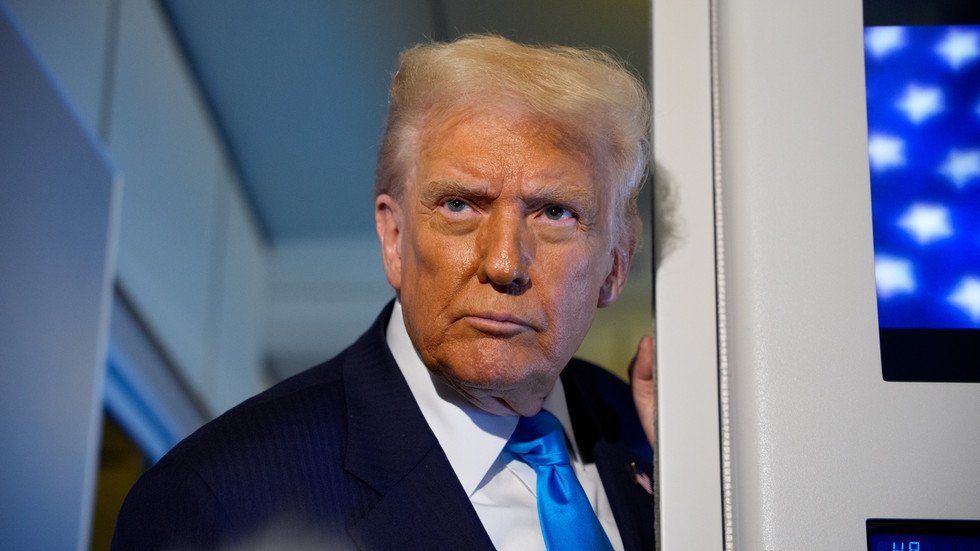
US and regional media from both sides agree that former US President Donald Trump has publicly threatened new military action against Iran, saying the country would be “hit very hard” and that the US Army is planning to attack previously untargeted areas. They converge on the point that these prospective strikes would focus on new locations and groups inside Iran, framed as a response to what Trump calls Iran’s “bad behavior.” Coverage also agrees that these threats come as the US and Israel are already conducting bombing operations that have killed more than 1,300 people in Iran, including children, and that Iran’s leadership has signaled it will halt attacks on neighboring Gulf states unless attacked again, while warning that US and Israeli bases could be targeted if strikes continue.
Outlets across the spectrum describe a tense regional backdrop involving Iran, Gulf countries, the US, and Israel, with ongoing military exchanges and fears of further escalation. They also share the context that Iran’s president, Masoud Pezeshkian, has issued an apology for earlier strikes on Gulf states and that his government is attempting to signal conditional restraint toward neighbors while maintaining a deterrent posture against the US and Israel. Both sides present the institutions involved—the US presidency and military, the Iranian presidency and security apparatus, and regional bases used by US and Israeli forces—as central actors in a broader struggle over deterrence, influence, and acceptable rules of engagement in the Middle East.
Areas of disagreement
Framing of Trump’s threats. Government-aligned coverage depicts Trump’s statement about striking previously untargeted areas as a harsh but straightforward warning tied to Iran’s alleged “bad behavior,” emphasizing US resolve and military capability. In the absence of explicit opposition-leaning articles, it is reasonable to infer that opposition sources would be more likely to portray these threats as reckless escalation, potentially unlawful under international norms, and disproportionate given the existing death toll in Iran. Government narratives tend to highlight deterrence and punishment, whereas opposition narratives would likely stress humanitarian risks and question the strategic wisdom of expanding target sets.
Portrayal of casualties and proportionality. Government sources acknowledge the figure of over 1,300 deaths, including children, from US-Israeli bombing but present it mainly as background rather than as a central indictment of current policy. Opposition outlets, by contrast, would be expected to foreground these civilian casualties as evidence that current and threatened actions are excessive and morally indefensible, arguing that new untargeted strikes would deepen an already grave humanitarian crisis. Where government coverage treats the number as context within a security narrative, opposition coverage would likely treat it as a primary metric of policy failure and potential war crimes.
Characterization of Iranian actions and intentions. Government-aligned media underscore Iran’s prior strikes on Gulf countries and describe Tehran’s conduct as “bad behavior,” partially acknowledging Pezeshkian’s apology and conditional restraint but still framing Iran as the main provocateur. Opposition sources would likely emphasize the apology and Iran’s stated halt on attacks against neighbors unless provoked, casting Tehran as at least partially responsive to diplomacy and deterrence and arguing that US threats risk undermining these signals. Thus, government narratives center Iranian aggression and duplicity, while opposition narratives are more inclined to highlight Iranian caution and the role of US-Israeli operations in perpetuating conflict.
Legitimacy of targets and bases. Government coverage references US-Israeli bases primarily as potential future Iranian targets, treating them as legitimate instruments of security that may need to be defended through stronger threats and expanded targeting inside Iran. Opposition outlets would be more prone to question the legitimacy and strategic necessity of these bases, suggesting they draw the region into cycles of retaliation and make escalation more likely, especially if the US moves to destroy new areas and social infrastructure within Iran. Government narratives thus normalize these bases as defensive assets under threat, whereas opposition narratives cast them as flashpoints that contribute to instability and justify Iranian counter-threats.
In summary, government coverage tends to normalize Trump’s threats as a firm but justified response within a deterrence framework and to foreground Iranian misconduct, while opposition coverage tends to depict the threats as escalatory and disproportionate, emphasize civilian harm and legal-ethical concerns, and place greater blame on US-Israeli actions and military posture for driving the crisis.
