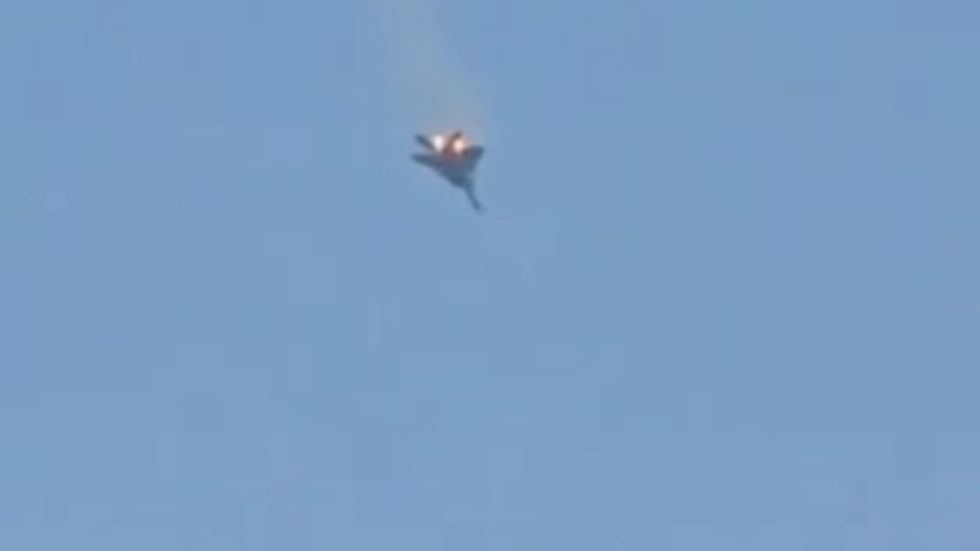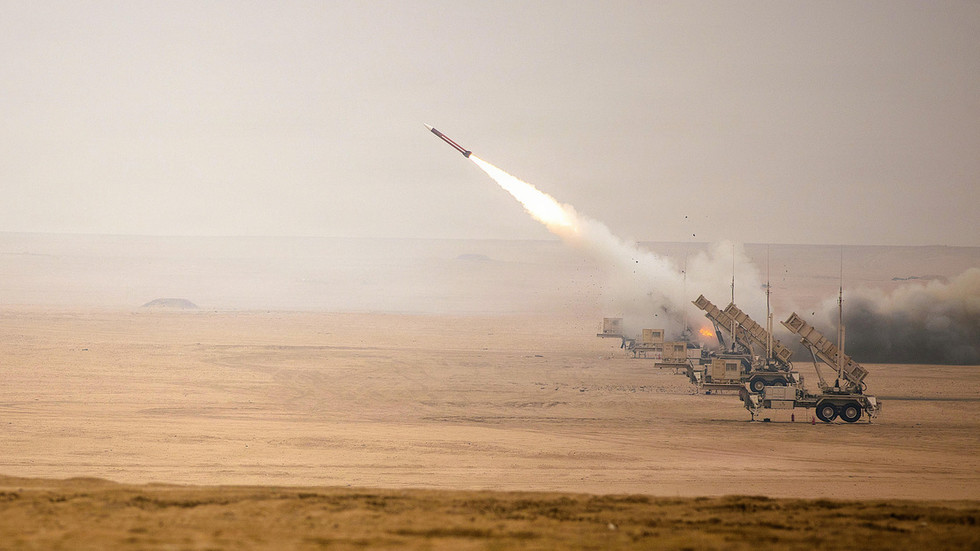
Government and semi-official reports converge on a basic sequence of events: in the early hours of Monday, during heavy regional fighting that involved Iranian aircraft, ballistic missiles, and drones, three US F-15E Strike Eagle jets were downed while operating in or near Kuwaiti airspace. These outlets state that Kuwaiti air defenses "shot down" or were at least officially described as having shot down the aircraft, that six crew members ejected and were recovered alive and in stable condition, and that the incident took place in the context of ongoing US and Israeli operations targeting Iran. They also agree that both US Central Command and the Kuwaiti Defense Ministry issued statements acknowledging the loss of the jets, though with some discrepancies in detail, and that Iran publicly claimed some form of responsibility or role in the broader engagement.
On context, government-aligned coverage agrees that Kuwait fields a layered air-defense network integrated with US systems, and that this network was under intense pressure from simultaneous threats originating from or attributed to Iran. These accounts frame the episode against a backdrop of long-standing US–Kuwait security cooperation, including hosting US forces and joint air-defense planning, and note that the F-15E jets were part of a wider US–Israeli strike package directed at Iranian targets. There is shared acknowledgment that modern air battlespaces are complex, that fratricide or misidentification can occur under saturation attacks, and that regional institutions—CENTCOM, Kuwaiti command structures, and allied coordination cells—are now engaged in investigations and after-action reviews to clarify the chain of events and technical causes.
Areas of disagreement
Cause of the downing. Government-aligned sources emphasize that Kuwaiti air defenses "mistakenly" engaged the US jets amid a chaotic multi-vector Iranian attack, suggesting a fog-of-war friendly-fire scenario, while opposition narratives tend to cast doubt on this explanation and imply either deliberate targeting or a cover-up of Iranian involvement. Government outlets reference pressures on radar and command systems to justify how misidentification could occur, whereas opposition commentators, where they appear or are summarized, highlight the technical mismatch between Kuwait’s known missile systems and the likely weapons used, arguing that these inconsistencies undermine the friendly-fire claim.
Attribution and Iranian role. Government coverage generally presents Iran as the primary aggressor, describing a massive Iranian barrage that forced Kuwaiti defenses into rapid engagement cycles, with the F-15s becoming unintended victims of that environment, while opposition voices elevate Iran’s own claim of responsibility for the downing as more credible than Kuwaiti or US accounts. In government narratives, Iran’s claim is portrayed as opportunistic propaganda or partial at best, whereas opposition-leaning analysis suggests that Western and Kuwaiti officials may be rebranding an Iranian success as a Kuwaiti mistake to minimize the strategic and political embarrassment for Washington and its Gulf partners.
Credibility of official statements. Government-aligned media largely treat CENTCOM and the Kuwaiti Defense Ministry as authoritative but concede there are discrepancies that will be resolved by ongoing investigations, while opposition sources point to those very contradictions as evidence of deliberate obfuscation. Government accounts frame the evolving statements as a normal feature of crisis communication under uncertainty, whereas opposition coverage stresses that changing narratives—combined with improbable survival statistics compared to prior shoot-downs—indicate that key facts are being withheld from the public.
Strategic framing and responsibility. Government reporting situates the incident within a narrative of allied resilience and technical error under unprecedented Iranian pressure, effectively diffusing blame across system stress, split-second decision-making, and Iranian escalation, while opposition commentary foregrounds political responsibility, suggesting that US–Israeli operations near Iran recklessly exposed allied forces and Kuwaiti territory to unacceptable risks. In the government view, the episode underscores the need for tighter interoperability and better identification protocols but does not fundamentally tarnish the US–Kuwait partnership, whereas opposition sources characterize it as proof that Kuwait’s alignment with US and Israeli military campaigns entangles the country in conflicts it cannot control and whose costs are not being transparently reported.
In summary, government coverage tends to portray the incident as an unintended friendly-fire event amid Iranian-provoked chaos and stresses confidence in official investigations, while opposition coverage tends to question the friendly-fire narrative, elevate Iran’s claims, and frame the episode as a politically driven cover-up of a deeper strategic failure.