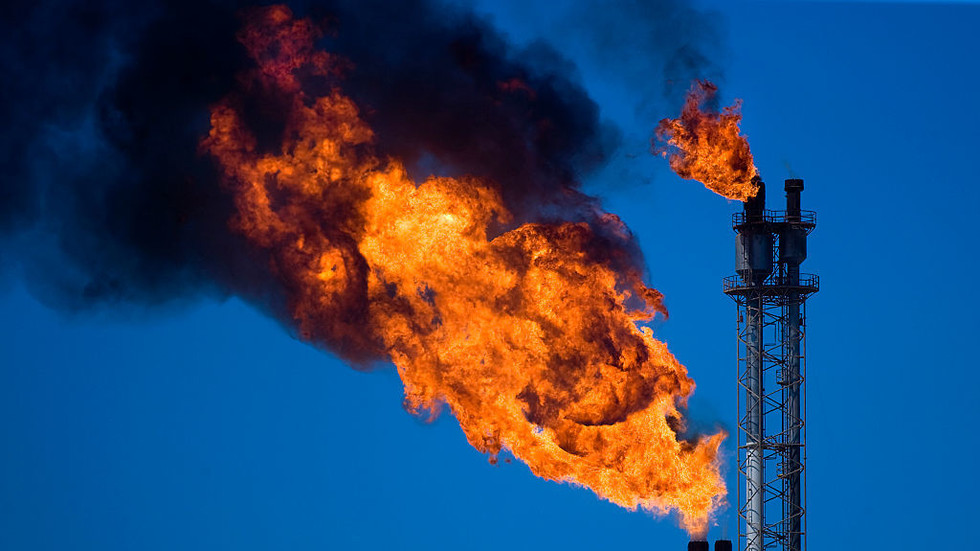
QatarEnergy has declared force majeure on liquefied natural gas operations after drone attacks hit its key facilities in the Ras Laffan and Mesaieed industrial zones, forcing a suspension of LNG production and related industrial activity. Both government-aligned and opposition outlets report that several other major Qatari industrial companies halted operations following the strikes, and that the disruption has sent European gas and LNG benchmark prices sharply higher—variously described as around a third to roughly 50%—to levels near 45 euros per megawatt-hour. Coverage agrees that the attacks have intensified fears of a broader supply shock from the Middle East, with particular concern over possible impacts on flows through the Strait of Hormuz and on Europe’s already fragile energy security.
Across both government and opposition reporting, the situation is framed as a serious stress test for the post‑2022 global gas system, in which Europe has become substantially more dependent on LNG imports to replace lost pipeline volumes. Outlets on both sides reference QatarEnergy’s status as the world’s largest LNG supplier and highlight the strategic importance of its industrial hubs at Ras Laffan and Mesaieed for global energy markets. There is shared acknowledgment that the attacks come amid wider regional tensions, that they expose vulnerabilities in critical energy infrastructure, and that they may prompt further scrutiny of supply diversification strategies, insurance costs, and contingency planning among European buyers and global energy institutions.
Areas of disagreement
Scale and framing of the shock. Government-aligned sources characterise the disruption as a grave but manageable episode, warning of volatility yet stressing that global markets and European buyers have buffers, alternative suppliers, and strategic reserves. Opposition outlets, by contrast, depict the event as a systemic shock to the LNG-based energy architecture, emphasising that the hit to QatarEnergy’s output and associated industrial plants reveals how fragile Europe’s shift toward spot LNG has become. While both acknowledge sharp price rises, government coverage portrays them as a temporary spike within a still-functioning market, whereas opposition coverage suggests they signal a deeper structural vulnerability.
Attribution of vulnerability. Government sources focus on external security threats and regional instability as the primary causes of the crisis, presenting Qatar and Europe largely as victims of geopolitical aggression against energy infrastructure. Opposition media instead highlight policy choices—such as Europe’s rapid pivot from pipeline gas to LNG and perceived overreliance on a few Gulf suppliers—as key reasons why drone attacks in Qatar can so quickly ripple into European bills. The government narrative stresses that diversification efforts were necessary and broadly successful, while opposition voices argue these same strategies concentrated risk in politically volatile chokepoints like the Strait of Hormuz.
Policy implications and responsibility. Government-aligned reporting tends to fold the incident into a call for stronger maritime security, enhanced protection of energy assets, and closer coordination with Gulf partners, implying that the right response is more of the same strategy but with tighter security. Opposition outlets focus more on accountability for energy planners and political leaders who, in their view, underestimated the security and price risks of leaning so heavily on LNG imports from a conflict-prone region. Where government coverage emphasises resilience measures and market adaptation, opposition coverage pushes for a re-think of energy policy priorities, including greater domestic production, demand reduction, or faster diversification away from fossil gas.
Economic and social impact. Government sources primarily discuss the episode in macroeconomic and market terms—benchmark prices, supply balances, and trade routes—downplaying any immediate threat to household supply security or broader economic stability. Opposition reporting more explicitly links the price surge to potential consumer hardship and industrial stress in Europe, warning that sustained high prices could reignite inflation and squeeze vulnerable sectors. While both sides agree that markets are roiled, government narratives stress containment and continuity, whereas opposition narratives foreground the risks of pass-through costs and renewed energy insecurity for ordinary consumers.
In summary, government coverage tends to emphasise external threats, market resilience, and the manageability of the QatarEnergy disruption within existing energy strategies, while opposition coverage tends to stress structural vulnerabilities, policy missteps, and the potential for long-lasting economic and social fallout.