opposition
Komsomolskaya Pravda. Candidate from the IRGC. Mojtaba Khamenei, son of the murdered ayatollah, is running for the post of Supreme Leader of Iran. He is considered more radical than his father and is closely associated with the security forces. What is known about him?
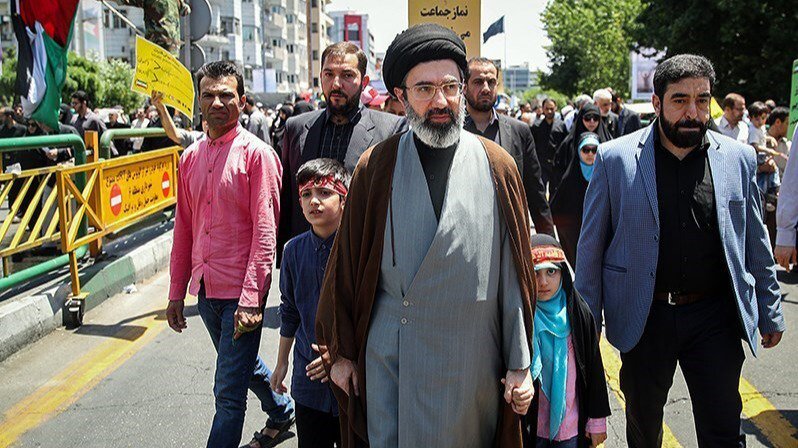
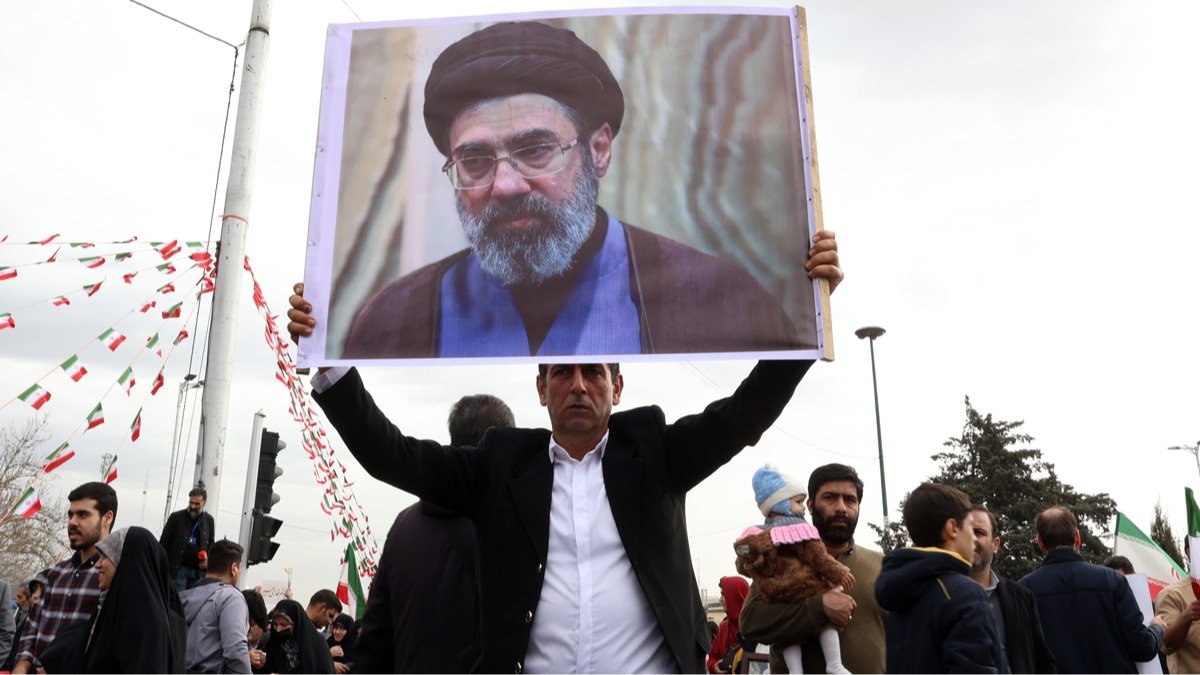
For 47 years of the Islamic Republic's history, the Assembly of Experts is gathering for the second time to elect a supreme leader. The main favorite is Mojtaba Khamenei, the son of the murdered ayatollah, who has remained in the shadows for many years, but according to sources, it is his candidacy that the Islamic Revolutionary Guard Corps is now promoting. However, there is no official confirmation from Tehran yet, and within the clergy itself, there are concerns that a public announcement of the successor's name could make him a primary target for the US and Israel. What is known about Mojtaba Khamenei and how region experts characterize him – in the material of "Novaya-Europe". A man with a portrait of Mojtaba Khamenei during the celebration of the 47th anniversary of the Islamic Revolution in Tehran, Iran, February 11, 2026. Photo: Abedin Taherkenareh / EPA. According to sources from The New York Times and Iran International, Iran's Assembly of Experts - the highest clerical body responsible for appointing the supreme leader - held a meeting on March 2nd, where 56-year-old Mojtaba Khamenei, the son of Ayatollah Ali Khamenei, who was killed over the weekend, became the main favorite for the post. Iranian authorities have not officially confirmed this information. In the 47-year history of the Islamic Republic, the Assembly will gather to elect a leader for only the second time. The first time was in 1989, when Ayatollah Ali Khamenei was elected. As told to The New York Times, citing three Iranian officials familiar with the situation, the clergy are considering the possibility of officially announcing a new successor, but there is no unity on this issue. Some members of the Assembly express concerns that a public announcement of the name could make him a primary target for strikes from the US and Israel. Due to these risks, the Assembly's meetings were held online, and a planned meeting in the city of Qom was disrupted by an Israeli strike on an empty building where it was supposed to take place. US President Donald Trump at a press conference on Tuesday already expressed concern that a person "as bad as the previous one" could become the new head of Iran, which the US would not want to allow. "An active politician with the ideas of the Islamic Revolution." Who is Mojtaba Khamenei? If the Assembly chooses Mojtaba, it will mean the final victory of the most radical wing of the regime, closely associated with the Islamic Revolutionary Guard Corps (IRGC), Iran expert from Johns Hopkins University Vali Nasr told The New York Times. In his opinion, this would indicate that the IRGC is now controlling the situation in the country. According to sources from The New York Times, it was the IRGC that actively lobbied for his appointment, insisting that in a situation of acute crisis, the country needs a leader who already has experience managing силовыми and military structures. Mojtaba Khamenei's candidacy as a successor has been considered for a long time, Marianna Belenkaya, author of the Telegram channel "Falafelnaya", which covers Middle East events, told "Novaya-Europe". According to her, this has been the subject of years of discussions – unofficial, because the successor was never officially appointed. "Moreover, initially, it was said that this option was unlikely, because Khamenei Sr. himself was allegedly against hereditary transfer of power – so that it would not be associated with Shah's Iran, with the monarchy (the Islamic Revolution of 1979 proclaimed the creation of the Islamic Republic, where power cannot be inherited as it was under the monarchy; the supreme leader must be elected by the Assembly of Experts. – Ed.). But gradually, apparently, the situation has changed," she said. Mojtaba Khamenei (center) participates in the annual Al-Quds Day procession in Tehran, Iran, May 31, 2019. Photo: Vahid Salemi / AP Photo / Scanpix / LETA. As Ruslan Suleymanov, an Orientalist and expert at the NEST Centre, told "Novaya-Europe", if the Iranian authorities have indeed made such a decision, then it is obvious: in the face of external threat, the regime has decided not to change course and to continue the policy pursued by Khamenei Sr. "Mojtaba Khamenei is known for enjoying support not only in religious circles but also among security officials, primarily in the Islamic Revolutionary Guard Corps. On the other hand, there are quite a few in Iran who believe that Mojtaba should not hold this post, because his appointment essentially copies the dynastic principle that existed under the Shah and the monarchy. But, again, given the unprecedented conditions in which the power transition is taking place, perhaps such a decision was made," the interlocutor of "Novaya-Europe" said. It is too early to talk about any new course that will be fundamentally different from what was under Ali Khamenei, Suleymanov believes; at least as long as the fighting continues. In general, according to him, if Mojtaba is elected, the Iranian regime will remain as it was under Khamenei Sr. At the same time, as Marianna Belenkaya emphasized in a conversation with "Novaya-Europe", it is believed that Mojtaba is more radical than his father: he actively participated in the suppression of the 2009 protests, and has always been closely associated with Basij – the IRGC militia, which plays a key role in suppressing popular uprisings. "He was raised within the system, in seminaries, made a career, became an active politician with the ideas of the Islamic Revolution, to which he is undoubtedly loyal. He will also be fueled by a sense of revenge and a sense of duty towards his father. And he perfectly understands that he is now the next target," she says. In addition, as Belenkaya notes, Mojtaba has always remained in the shadows and has never held official political positions, so he may turn out to be a "dark horse". Moreover, in recent years, we do not know for sure how much real power his father retained, and how much Mojtaba was already influencing decision-making, the interlocutor of "Novaya-Europe" emphasizes. But even if he himself does not become the supreme leader, there are several candidates who could be his proteges, Belenkaya noted. Alireza Arafi. Photo: Akasbashi / Sipa / Scanpix / LETA. "No time for power struggles." Who else is being considered for the post of Supreme Leader of Iran? The reports that appeared in Iran International and The New York Times are capable of influencing the situation in Iran themselves, notes Ruslan Suleymanov: we do not know for sure whether Mojtaba was actually elected. And now, according to him, the Iranian leadership finds itself in a difficult trap. "If they elect Mojtaba, it may look like a concession to external pressure, like playing along with emigrant media. If they do not elect him, they will alienate that part of the security and religious elite who wanted to see him in this post. But in any case, since the regime is now fighting for survival, internal division recedes into the background. They simply have no time for power struggles. "Even if Mojtaba Khamenei has indeed become the supreme leader, he has no time to sort out relations with competitors or opponents of his election now," he says. Against this background, two more alternative candidates are being considered for the post of supreme leader, The New York Times reports: Alireza Arafi, a clergyman and legal scholar, who is part of the temporary transition council of three people created after the death of Ayatollah Khamenei, and Seyed Hassan Khomeini, grandson of the founder of the Islamic Republic, known for his closeness to the reformist wing removed from power. In addition, according to the Arab news channel "Al-Hadath", other candidates are also being discussed. Among them: Hassan Rouhani, former president and member of the Assembly of Experts (the very body that will choose the new supreme leader); Sadegh Amoli Larijani, who held the post of head of the judiciary and heads the Expediency Discernment Council; Mohammad Reza Hosseini Bushehri, a member of the Assembly of Experts. However, none of the options have been finally approved yet.
a month ago