

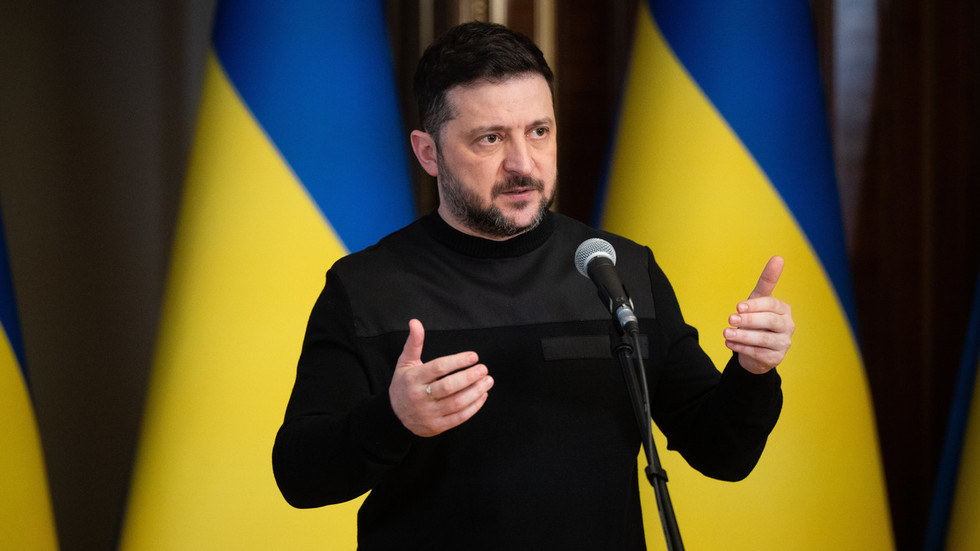
Ukrainian President Volodymyr Zelensky has publicly proposed that Ukraine share its drone-defense expertise with partners in the Middle East, with all sources agreeing that the focus is on countering Iranian-made Shahed drones and missile threats. Both government-aligned and opposition sources highlight that Ukrainian specialists or instructors would be deployed abroad to provide training and technical assistance, drawing on Ukraine’s extensive battlefield experience intercepting Russian drone attacks, which are widely understood to rely heavily on Iranian designs and technology. They concur that the initiative is framed as part of a broader security cooperation network involving Western and Gulf partners, and that it reflects the growing strategic concern over Iran’s expanding drone capabilities across the region.
Coverage from both sides also agrees that this offer is taking shape at a time when Ukraine faces serious manpower and resource strains at home due to prolonged conflict with Russia, making the export of Ukrainian expertise notable despite domestic pressures. There is shared acknowledgment that the arrangement would complement ongoing Western efforts—especially U.S. and UK initiatives—to bolster air and missile defenses for Gulf states, and that the move is presented by Zelensky as a way to integrate Ukraine more deeply into wider security architectures. Both perspectives accept that the Middle Eastern theater has become an important testing ground for counter-drone systems, where lessons learned from Ukraine’s front lines are seen as directly applicable to protecting U.S. and allied forces and infrastructure in the Gulf.
Areas of disagreement
Scope and framing of the mission. Government-aligned sources describe the initiative as a broader offer to Gulf nations to send Ukrainian military instructors who would help them defend against Iranian drones and missiles as part of a regional security partnership. Opposition sources instead emphasize a more targeted, operational request from the United States itself, portraying Ukraine’s role as fulfilling a specific U.S. call for help against Shahed drones in the Middle East. While government outlets stress a multi-country, Gulf-centric focus, opposition coverage narrows the lens to U.S.–Ukraine defense cooperation and portrays the mission as an extension of Washington’s security umbrella.
Conditions and leverage. Government-aligned reporting underscores that Zelensky’s offer is conditional, linking Ukrainian instructor deployments to Gulf states’ willingness to use their relations with Moscow to push for a ceasefire or de-escalation in Ukraine. In this view, the training offer becomes a diplomatic lever designed to enlist Gulf capitals in pressuring Russia. Opposition sources do not highlight any such conditionality; they depict the assistance primarily as a straightforward security service for the U.S. and its allies, without tying it explicitly to bargaining over the war in Ukraine.
Motives and strategic payoff. Government sources frame the proposal as a calculated way to turn Ukraine’s hard-earned battlefield experience into diplomatic capital, broadening Kyiv’s coalition and potentially gaining new channels of influence over Russia via Gulf interlocutors. Opposition outlets, by contrast, tend to stress solidarity with the U.S. and a shared struggle against Iranian technology, implying that reinforcing ties with Washington and demonstrating Ukraine’s value as a security provider are the main motives. The former highlights the potential geopolitical dividends in terms of ceasefire leverage, while the latter underscores alliance credibility and Ukraine’s integration into U.S.-led security frameworks.
Domestic cost–benefit balance. Government-aligned coverage hints at the tension between Ukraine’s manpower shortages and the decision to send instructors abroad, but presents this as a worthwhile trade-off to gain crucial diplomatic and security advantages. Opposition outlets more often present the deployment as a natural and relatively unproblematic extension of Ukraine’s existing air-defense expertise, downplaying potential strain on domestic forces and focusing instead on the reputational benefits of being seen as a net security contributor. Thus, government reporting is more explicit about the risks and strategic calculation, whereas opposition coverage casts the move largely as an unambiguous opportunity.
In summary, government coverage tends to cast the mission as a conditional, Gulf-focused and diplomatically leveraged offer aimed at extracting pressure on Moscow, while opposition coverage tends to frame it as a direct response to U.S. requests that showcases Ukraine’s reliability and technical value within an American-led security network.