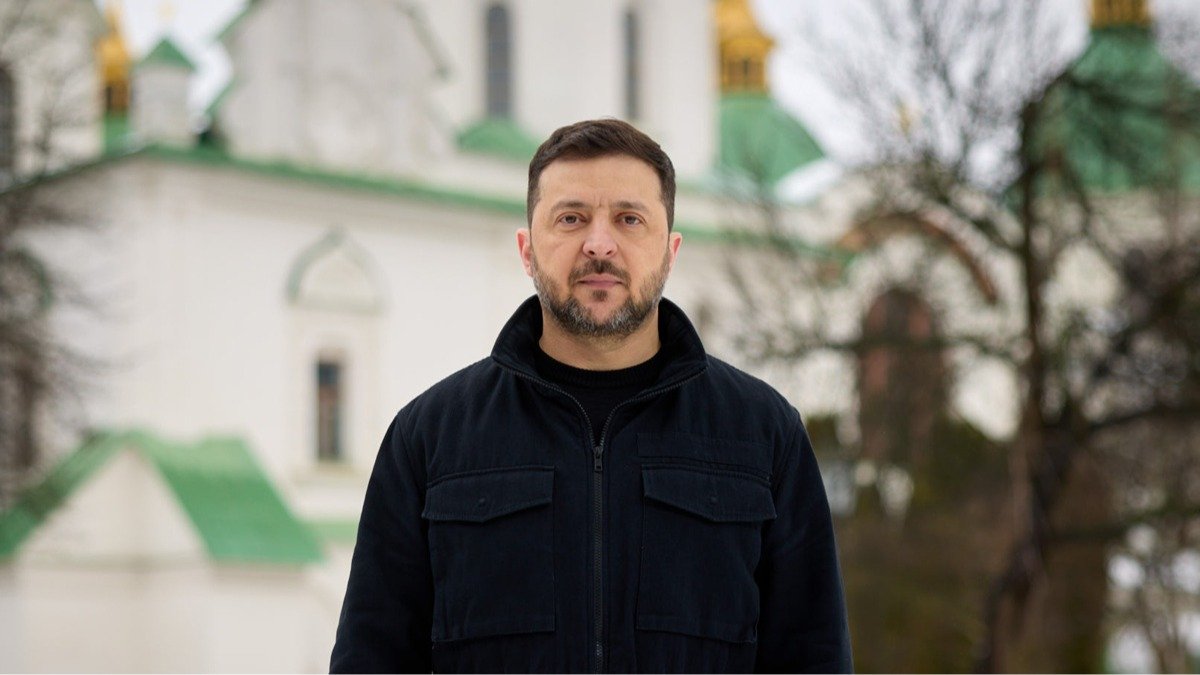

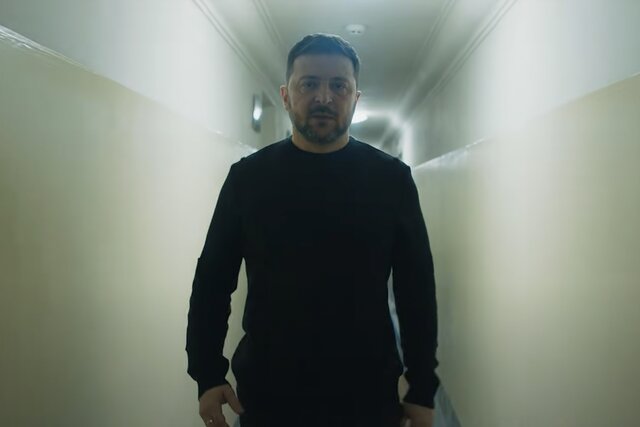
On the fourth anniversary of Russia’s full-scale invasion of Ukraine, President Volodymyr Zelensky delivered a video address from an underground bunker in Kyiv that he identified as the wartime command site used since the earliest days of the conflict. Across both government-aligned and opposition-leaning coverage, reports agree that Zelensky used the setting to underscore Ukraine’s continued resistance, highlighting a trajectory from initial fear and improvisation to a more organized defense capable of producing and deploying advanced weaponry. The address is consistently framed around the idea that Russia’s original goal of quickly seizing Kyiv and toppling the Ukrainian government has failed, with Zelensky explicitly recalling that Moscow had planned to capture the capital within three days. Both sides also note that he spoke directly to the Ukrainian public, evoking the heavy toll of casualties, displacement, and destruction, while insisting that Ukrainians have transformed pain and rage into energy for defending their sovereignty and pursuing ultimate victory.
Common contextual threads in both government and opposition reporting emphasize the symbolic weight of the bunker as the place where Zelensky coordinated military decisions, addressed the nation, and conducted urgent talks with foreign leaders during the most perilous phases of the war. Outlets from both camps situate the speech within Ukraine’s broader effort to secure and maintain international backing, including weapons, financial support, and diplomatic pressure on Russia, portraying the war as a defining struggle over Ukraine’s independence and European security architecture. They concur that Zelensky used the anniversary to reaffirm long-standing goals: liberating occupied territories, ensuring accountability for Russian aggression, and achieving a just peace rather than a simple cessation of hostilities. There is also shared acknowledgment that Ukrainian society has undergone profound militarization and social mobilization over four years, with citizens, institutions, and industry reoriented toward sustaining a prolonged defensive war against a larger invading power.
Areas of disagreement
Symbolism of the bunker. Government-aligned sources tend to portray the bunker as a powerful emblem of steadfast leadership under siege, emphasizing Zelensky’s physical presence in Kyiv throughout the invasion and presenting the video tour as transparency about how the state endured the initial shock. Opposition outlets, by contrast, describe the bunker more neutrally or even skeptically, acknowledging its symbolic role but suggesting that showcasing it now can also function as image-building or campaign-style messaging. While government narratives highlight the bunker as a shared national fortress, opposition coverage is more likely to question whether the timing and framing primarily serve to reinforce Zelensky’s personal brand.
Assessment of war progress. Government coverage generally echoes Zelensky’s claim that Putin has failed in his core objectives, framing the stalled Russian blitz on Kyiv and Ukraine’s continued sovereignty as clear evidence of strategic success and national resilience. Opposition outlets, while agreeing that Russia did not take Kyiv in three days and has not toppled the government, are more inclined to stress the protracted nature of the conflict, territorial losses, and ongoing battlefield stalemate to temper any suggestion of overall success. Government narratives highlight advances in domestic arms production and battlefield adaptation, whereas opposition accounts more often juxtapose these achievements with continued shortages, delays in Western aid, and mounting human costs.
International support and diplomacy. Government-aligned media typically present Zelensky’s references to negotiations with world leaders and struggles for aid as proof of effective diplomacy that has kept Ukraine on the international agenda and unlocked crucial military and financial packages. Opposition reporting tends instead to underline the fragility and conditional nature of this support, pointing to delays in assistance and donor fatigue to argue that official Kyiv may overstate the reliability of foreign partners. Where government narratives stress gratitude and strategic alignment with Western allies, opposition sources are more likely to frame the same relationships as precarious, warning that missteps by the administration could further erode aid flows.
Domestic leadership and accountability. In government coverage, Zelensky’s bunker address is cast as another demonstration of unifying wartime leadership, with his emphasis on shared sacrifice and resilience presented as a rallying call that transcends political divides. Opposition outlets, while not contesting his central role in the early days of the invasion, are more prone to connect the speech to unresolved questions about mobilization policies, corruption, and the handling of the war economy, implying that the emotive rhetoric can obscure governance shortcomings. Government-aligned pieces highlight continuity and resolve at the top, whereas opposition narratives tend to balance acknowledgment of his personal courage with calls for greater transparency, institutional reform, and scrutiny of wartime decision-making.
In summary, government coverage tends to treat Zelensky’s bunker address as a validation of resilient leadership, diplomatic efficacy, and incremental strategic success, while opposition coverage tends to accept the core facts of resistance and survival but use the same event to spotlight the war’s unresolved costs, the precariousness of external support, and the need for stronger accountability at home.