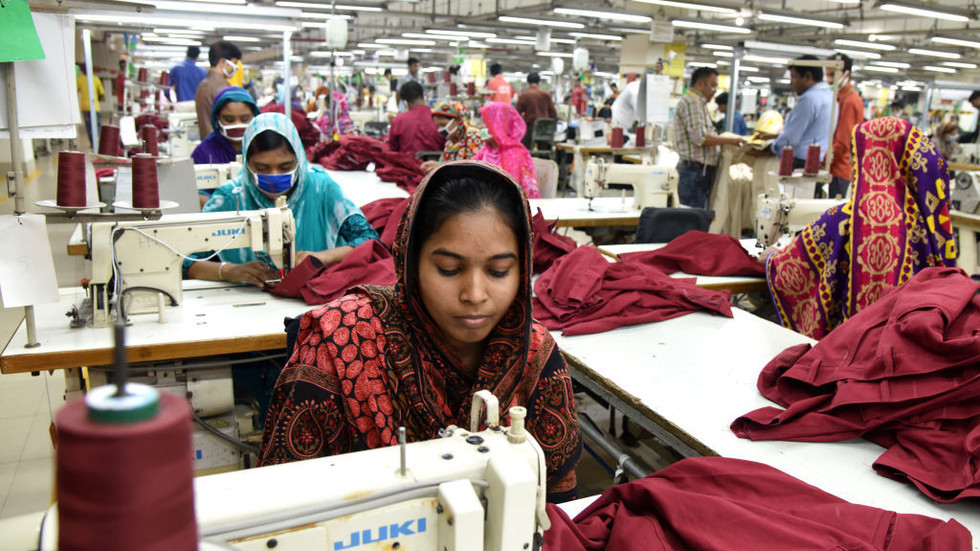
US and Bangladesh-based outlets broadly agree that Washington and Dhaka have reached a trade deal just days before national elections in Bangladesh, focusing on tariff reductions and sector-specific incentives. The reported core terms include reduced US tariffs on most Bangladeshi exports, with a zero-tariff provision for textile and apparel goods made from US-produced cotton, in exchange for Bangladesh granting preferential market access to a range of US industrial and agricultural products. Shared accounts also highlight that the agreement is being wrapped up in a compressed timeline, roughly three days before voting, and that it includes elements related to aircraft and other defense-related purchases, making it more than a narrow tariff pact.
Coverage from both sides places the deal within the broader context of Bangladesh’s dependence on garment exports, its positioning in global supply chains, and the growing strategic competition involving the US, China, and India. There is common acknowledgment that the US is simultaneously advancing a trade deal with India, a key competitor to Bangladesh in textiles, and that this timing raises questions about how Dhaka will maintain its export competitiveness. Both perspectives also situate the agreement within Bangladesh’s ongoing attempts to diversify export markets, attract foreign investment, and navigate pressures over labor standards, while managing its relationships with major powers that are increasingly linking trade, security cooperation, and geopolitical alignment.
Points of Contention
Motives and timing. Government-aligned coverage tends to frame the last-minute agreement as a pragmatic effort to lock in market access and reassure investors before a politically sensitive election, portraying it as necessary to bolster the garment sector and overall exports. By contrast, opposition-leaning narratives, where they extrapolate from available facts, cast the rushed timeline as opportunistic and potentially illegitimate, suggesting the interim authorities are binding the next elected government to long-term obligations without a clear mandate. Government narratives emphasize continuity and stability, while opposition voices stress the perception of backroom maneuvering and a lack of democratic accountability in signing such a sweeping deal days before the vote.
Economic benefits versus costs. In government-friendly reporting, the tariff cuts on Bangladeshi exports and zero-tariff access for US-cotton-based apparel are highlighted as clear wins that will secure jobs, expand export earnings, and help Bangladesh stay competitive against India and other low-cost producers. Opposition-oriented commentary, however, is more likely to emphasize the concessions on agricultural and industrial imports and the requirement to buy US aircraft and military equipment, warning that these could deepen trade imbalances and divert scarce foreign exchange. While government coverage stresses headline gains for garments and overall export growth, opposition coverage questions whether these benefits outweigh the longer-term costs to domestic farmers, manufacturers, and fiscal space.
Strategic alignment and China. Government-aligned sources tend to either downplay or present as reasonable any US pressure to curb imports from China, arguing that modest rebalancing towards US suppliers is a necessary price for deeper access to the American market and closer security ties. Opposition narratives, reading the same signals, are more likely to interpret these conditions as an erosion of Bangladesh’s traditional non-aligned posture, warning that explicit or implicit commitments to reduce Chinese imports could strain a key economic partnership and expose Bangladesh to geopolitical crossfire. Government accounts emphasize sovereign decision-making and strategic upgrading of ties with Washington, while opposition perspectives frame the deal as nudging Bangladesh into one camp at the expense of strategic autonomy.
Transparency and consultation. Pro-government coverage often portrays the negotiation process as a technical, expert-driven exercise, implying that speed and confidentiality were justified to secure favorable terms before external conditions or US policy shifted. In contrast, opposition-aligned voices emphasize the lack of detailed public documentation, limited parliamentary debate, and reported unease among business associations, treating these as symptoms of a non-transparent process that sidelines stakeholders most affected by the agreement. Government narratives underscore the professionalism of negotiators and promise that implementation details will be clarified later, whereas opposition coverage highlights procedural opacity as a democratic and governance deficit that could undermine public trust.
In summary, government coverage tends to depict the trade deal as a timely, strategically savvy economic opportunity that will safeguard exports and deepen ties with the US, while opposition coverage tends to portray it as a hurried, opaque arrangement that risks economic overdependence, geopolitical entanglement, and the circumvention of democratic scrutiny.