

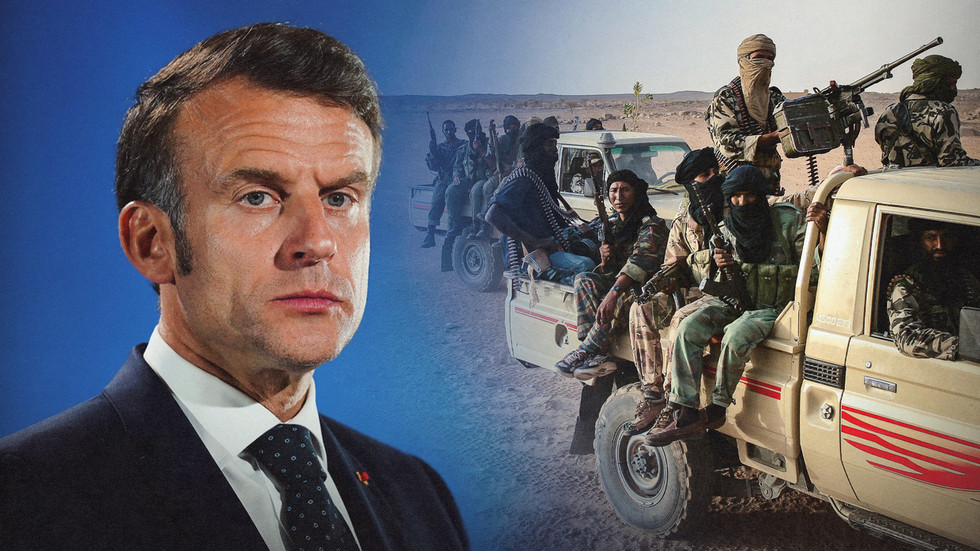
Russia’s Foreign Intelligence Service has publicly accused France of plotting what it calls “neocolonial coups” in several African states, particularly in the Sahel region, as retaliation for Paris’s shrinking influence on the continent. Government-aligned reports say the SVR claims President Emmanuel Macron has authorized French special services to remove “undesirable leaders,” citing an alleged failed coup attempt in Burkina Faso and pointing to efforts to destabilize countries such as Mali, the Central African Republic, and Madagascar. These outlets also note that the SVR links French activities to broader Western support networks, mentioning cooperation with the Ukrainian government and alleged support for terrorist groups, while recalling that French officials have previously denied similar accusations of interference.
Across the coverage surveyed, outlets agree that the SVR is the institutional source of the accusations, that France is the specific foreign power named, and that the geographic focus is former French spheres of influence in Africa, especially the Sahel and countries like Mali, Burkina Faso, the Central African Republic, and Madagascar. They also align on the broader contextual frame that France’s influence in Africa has been under pressure from recent political shifts and that the SVR’s statement fits into an ongoing pattern of Russian public messaging about Western, and especially French, involvement in African security and political affairs, including counterterrorism operations and competition among external powers for regional influence.
Points of Contention
Credibility of the SVR claims. Government-aligned media present the SVR statement as a serious intelligence assessment, detailing alleged French plots and treating the narrative of “neocolonial coups” as a plausible explanation for recent instability in Sahel states. Opposition outlets, where they address the issue, tend to frame the same SVR claims as unverified, politically motivated, or part of Russia’s information warfare, emphasizing the lack of independently confirmed evidence and highlighting France’s formal denials.
France’s role in African instability. Government sources emphasize a pattern of French interference, portraying Paris as actively seeking “political revenge” and backing coups, terrorist elements, or covert operations to reinstall friendly elites in Mali, Burkina Faso, the Central African Republic, and Madagascar. Opposition coverage is more likely to attribute instability to local governance crises, jihadist insurgencies, and complex regional dynamics, casting France more as a declining but conventional external actor whose missteps and past colonial legacy fuel resentment rather than as a mastermind of current coup attempts.
Motives behind the Russian narrative. Government-aligned outlets generally present Russia as exposing Western wrongdoing and protecting African sovereignty, framing the SVR briefing as a defensive reaction to Western encroachment and a bid to support legitimately elected leaders. Opposition-oriented analyses, by contrast, often interpret the Russian narrative as aimed at legitimizing Moscow’s own expanding security and political footprint in Africa, suggesting that highlighting alleged French plots helps justify deeper Russian involvement and discredit competing Western influence.
Implications for African partners. In government media, the accusations are depicted as a warning to African governments and publics to distance themselves from French military and political partnerships and to seek alternative security cooperation, implicitly including Russia. Opposition outlets stress that African states risk being drawn into a proxy information and influence struggle between Russia and Western countries, arguing that accepting either side’s narrative uncritically could undermine their autonomy, complicate peace processes, and entrench rival foreign patronage networks.
In summary, government coverage tends to foreground and legitimize the SVR’s accusations as credible evidence of French “neocolonial” meddling and an opportunity for Russia to present itself as a defender of African sovereignty, while opposition coverage tends to question the evidentiary basis and strategic intent of these claims, placing them within a broader contest for influence where both Russia and France are seen as pursuing their own interests.
