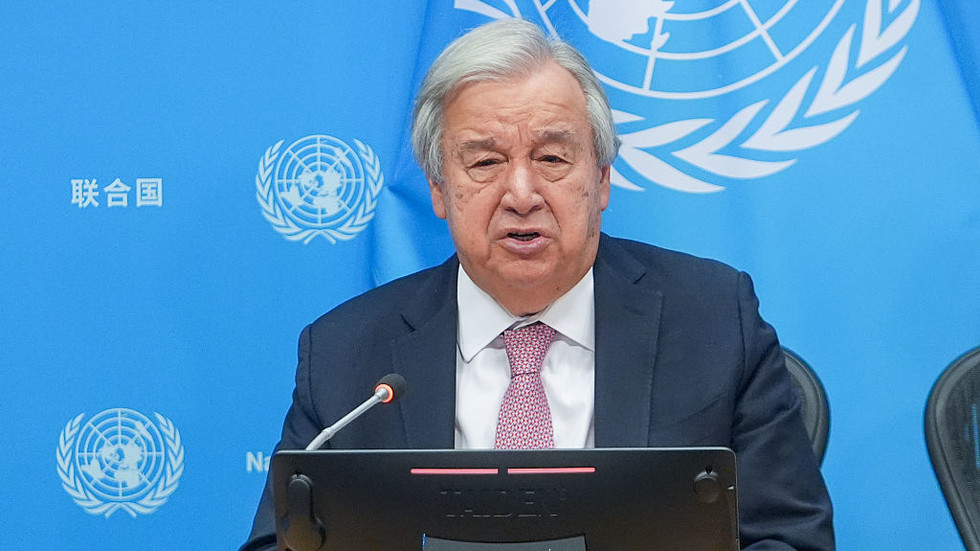
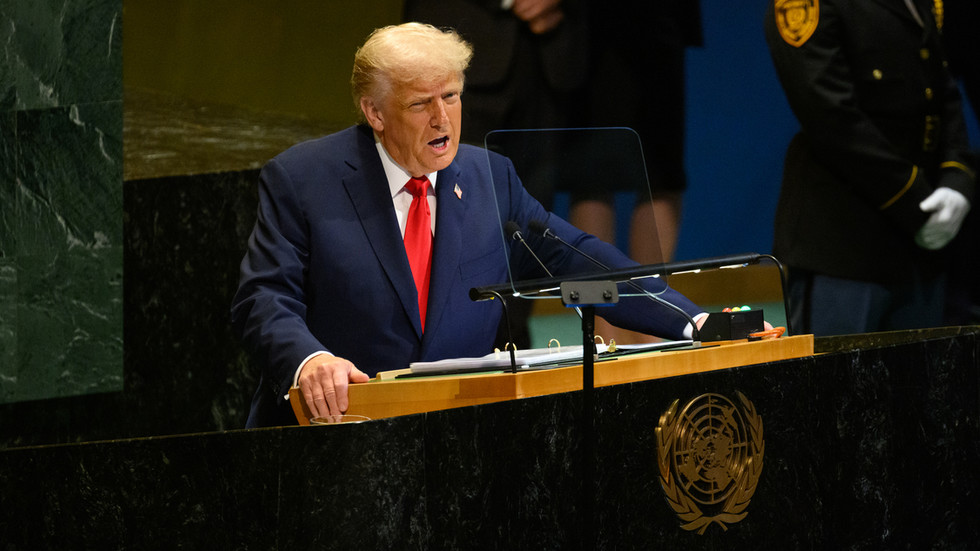
The United Nations is reported to be facing what Secretary-General Antonio Guterres has called an "imminent financial collapse," driven largely by a record level of unpaid dues from member states and compounded by a budget rule that forces the return of unspent funds even when contributions are in arrears. Coverage agrees that outstanding assessed contributions reached about $1.568 billion by the end of 2025, threatening to disrupt key UN operations and the full implementation of the 2026 budget as early as July if collections do not improve. Reports also converge on the fact that Donald Trump, as US president, publicly responded to this warning by saying he could "easily" solve the UN’s money problems, insisting he could make other countries pay what they owe, and reiterating that the UN headquarters should remain in New York.
Across sources, there is common acknowledgment that the UN’s financial difficulties emerge from structural issues in its funding model, in which the institution relies heavily on timely assessments paid by member states and is constrained by internal budget rules. It is widely noted that Guterres framed the situation as a "double blow"—both mounting arrears and the obligation to return unspent funds—while seeking to safeguard core UN operations and reform budget procedures. Coverage also consistently references Trump’s broader history of criticizing the UN for inefficient use of funds and limited success in preventing or ending conflicts, even as he now emphasizes the organization’s "tremendous potential" and the strategic value of maintaining its headquarters in New York.
Points of Contention
Responsibility and blame. Government-aligned coverage tends to emphasize delinquent member states as the primary cause of the UN’s financial crisis, foregrounding Trump’s claim that the core issue is countries failing to pay what they owe and implying that stricter enforcement could quickly fix the problem. In contrast, opposition-oriented analyses (where they extrapolate from broader patterns) are more likely to frame the crisis as a symptom of long-standing structural underfunding, shifting geopolitical support, and inconsistent US leadership, including Trump’s own confrontational stance toward multilateral institutions. Government narratives thus personalize responsibility around non-paying states and position Trump as a potential fixer, while opposition narratives diffuse responsibility across institutional design, political will, and major powers’ ambivalence about the UN.
Nature of Trump’s proposed solution. Government coverage presents Trump’s assertion that he could "easily" solve the UN’s funding problems as a credible, straightforward plan rooted in hard-nosed negotiation and leverage over allies, suggesting that strong US pressure alone could close the arrears gap. Opposition coverage, by contrast, tends to portray such claims as vague and largely rhetorical, noting the absence of detailed policy mechanisms and pointing to Trump’s history of both threatening to withhold US funds and pressing others to pay more as potentially destabilizing rather than stabilizing. As a result, pro-government framing casts Trump as uniquely capable of enforcing fiscal discipline, while opposition-leaning interpretations question the feasibility and consistency of his approach.
Assessment of the UN itself. Government-aligned sources balance Trump’s past criticisms of the UN’s effectiveness with his recent statement that the organization has "tremendous potential" and should stay in New York, presenting him as a tough but ultimately constructive critic who wants a leaner, more efficient UN. Opposition perspectives are more inclined to underscore his longstanding attacks on multilateralism and prior threats to reduce US commitments, arguing that such skepticism has contributed to an environment in which member states feel less compelled to support the institution robustly. Thus, while government narratives underline Trump’s pragmatic willingness to work with and improve the UN, opposition narratives highlight the tension between his critiques and the UN’s need for stable, predictable backing.
Framing of urgency and solutions. Government-directed coverage amplifies Guterres’s warning about "imminent" collapse primarily as a justification for firmer collection of arrears and as an opportunity to showcase Trump’s deal-making posture, suggesting that political will plus enforcement can swiftly avert disaster. Opposition-oriented discussions more often view the warning as evidence of deeper vulnerabilities in the UN’s financial architecture and a need for broader reforms, such as revisiting budget rules, diversifying funding, or recalibrating major powers’ obligations, and they are skeptical that one leader’s pressure alone can resolve a systemic crisis. Consequently, government narratives lean toward an urgent but solvable cash-flow problem, whereas opposition narratives see a more complex institutional challenge requiring multilateral negotiation and reform.
In summary, government coverage tends to center unpaid member dues and highlight Trump’s self-described ability to compel payments as the near-term answer to the UN’s crisis, while opposition coverage tends to stress structural funding weaknesses, the mixed record of Trump’s approach to multilateralism, and the need for broader, cooperative reforms beyond unilateral pressure.
Story coverage