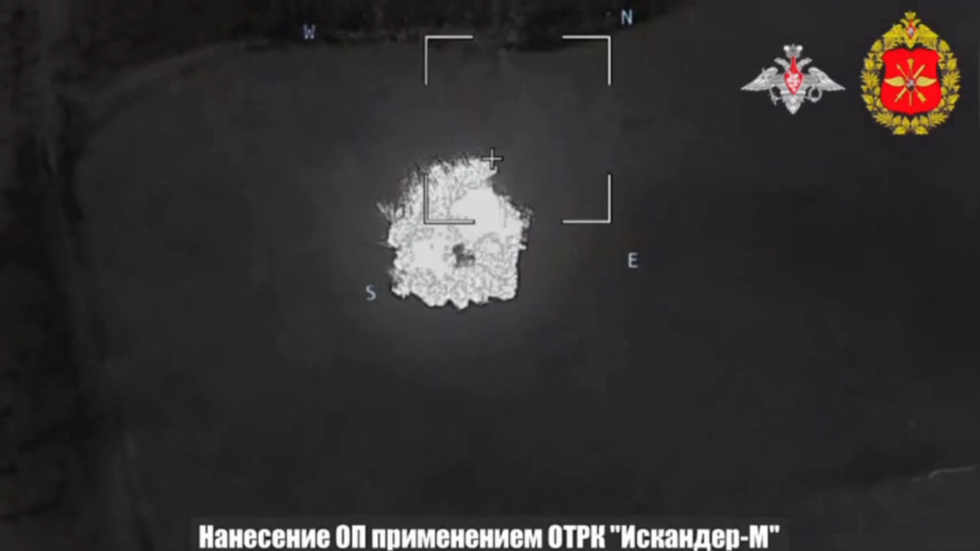
Russian government-aligned media report that the Russian Defense Ministry claims an Iskander-M missile strike destroyed a US-made HIMARS multiple launch rocket system in Ukraine’s Kharkov Region, allegedly killing up to ten Ukrainian servicemen. The same briefings also assert that another Iskander-M strike destroyed a Soviet-era S-300 air defense system in the Dnepropetrovsk Region, and that Russian forces recently captured the settlements of Pridorozhnoye and Zelenoye, using dense fog as cover in the latter assault. In addition, official statements cite the downing of 202 Ukrainian drones and four guided aerial bombs, and report that Russian units operating in the Sumy and Kharkov Regions eliminated up to 250 Ukrainian troops and various military assets within a 24-hour period.
Across both government and opposition ecosystems, there is a shared recognition that HIMARS and S-300 systems are key components of Ukraine’s Western-supplied and legacy air defense and artillery capabilities, and that Iskander-M missiles are among Russia’s principal precision-strike assets used to target them. Both sides generally agree that the Kharkov and Dnepropetrovsk regions remain active fronts in the war, where long-range systems play a central role in counter-battery warfare and air defense, and that the capture or loss of small settlements like Pridorozhnoye and Zelenoye reflects an ongoing, attritional struggle rather than decisive breakthroughs. There is also broad acknowledgment that drone warfare and guided aerial munitions have become a routine, high-intensity feature of daily combat operations, and that official daily battlefield tallies, whether from Russia or Ukraine, serve both military and informational purposes.
Points of Contention
Verification and credibility. Government-aligned outlets present the destruction of the HIMARS and S-300 systems, the casualty figures, and the capture of settlements as established battlefield facts, relying almost exclusively on Defense Ministry communiqués and official video releases. Opposition sources, where they comment on such claims, tend to emphasize the lack of independent evidence, the absence of corroborating imagery that clearly identifies a HIMARS system, and the pattern of inflated or unverified kill counts in past Russian briefings. They are more likely to frame these announcements as part of an information campaign aimed at domestic audiences and to highlight that Western or Ukrainian channels have not definitively confirmed the specific HIMARS loss.
Military significance. Government reporting casts the alleged HIMARS destruction as a strategically important success that weakens Ukraine’s high-precision strike capability and proves the effectiveness of Russian missile forces, often linking it to the broader narrative of steadily degrading Ukrainian military power. Opposition voices typically downplay the operational impact, arguing that even if a HIMARS unit was hit, Ukraine still retains multiple launchers and ongoing Western resupply, and that localized Russian gains in small settlements do not substantially change the overall front-line balance. They also stress that Russian claims of hundreds of Ukrainian casualties in a single day are unlikely to translate into immediate, tangible strategic advantage.
Narrative framing of momentum. Government-aligned media portray these strikes and reported territorial gains as evidence of Russian momentum, suggesting a continuous series of successful offensive actions and growing control over contested regions such as Kharkov-area front lines. Opposition outlets, by contrast, tend to situate the same events within a narrative of grinding, high-cost attrition, arguing that incremental captures like Pridorozhnoye and Zelenoye reflect a stalemated battlefield rather than a decisive Russian advance. They are more inclined to juxtapose official Russian claims with reports of Russian losses or Ukrainian counterstrikes that state media underplay or omit.
Portrayal of Western involvement. Government coverage emphasizes that a US-made HIMARS was allegedly destroyed, underscoring the theme that Russia is not only fighting Ukraine but also degrading NATO-supplied weaponry, and using this to argue that Western military assistance is being neutralized. Opposition sources more often frame such claims as attempts to reassure the Russian public that Western systems are vulnerable and to deter further Western aid, noting that the continued flow of equipment from the United States and Europe suggests these isolated losses are expected and factored into Western planning. They may also point out that Western militaries usually require independent verification before adjusting their assessments of system survivability.
In summary, government coverage tends to treat Defense Ministry claims about the destruction of the HIMARS launcher and other Ukrainian assets as authoritative proof of Russian military success and shifting momentum, while opposition coverage tends to question the evidence, minimize the strategic significance of these specific claims, and frame them as part of a broader information war rather than conclusive proof of real battlefield dominance.