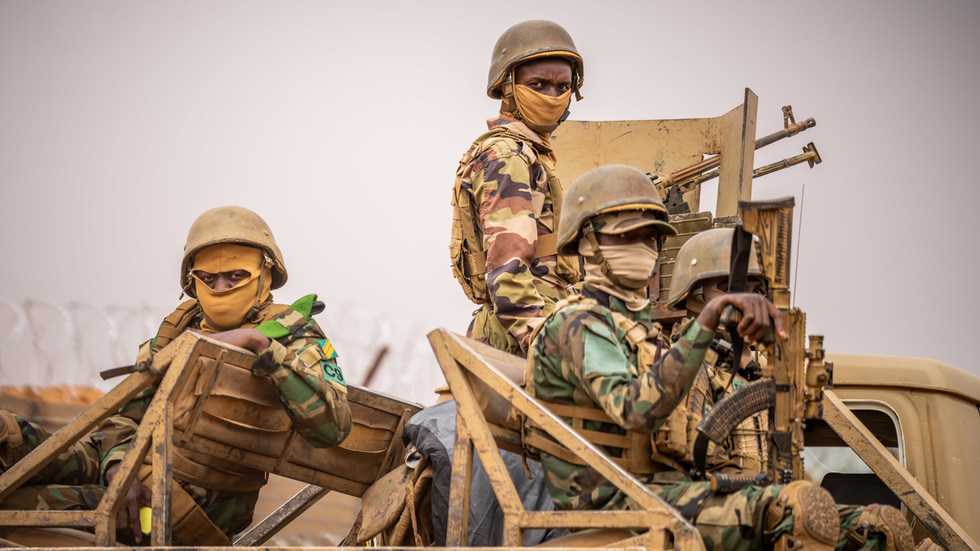
Gunmen attacked Niger’s Diori Hamani International Airport and the adjacent Air Base 101 in Niamey, with both sides of the political media landscape agreeing that the incident involved a surprise, coordinated assault by militants arriving on motorcycles and targeting military installations and nearby civilian aircraft. Islamic State has publicly claimed responsibility for the attack, and government reports say that around 20 militants were killed and 11 arrested after about 30 minutes of fighting, with at least four Nigerien soldiers injured and several military facilities and civilian planes damaged. Both government-aligned and opposition sources, where they comment, acknowledge that the incident took place in the capital’s main airport complex and that it reflects a serious security breach, even as they may differ over the implications and accountability.
There is shared acknowledgment that the attack occurs against the backdrop of Niger’s broader security struggles and the regional insurgency environment spanning Niger, Mali, and Burkina Faso. Coverage from both sides recognizes the existence of the Alliance of Sahel States and the ongoing search for new security partnerships and arrangements following tensions with traditional Western allies. Both perspectives also note, directly or indirectly, that Niger’s security forces remain on high alert around strategic assets such as airports, air bases, and critical resources, and that the government is pursuing investigations into possible links to sensitive issues such as stranded uranium consignments, although the degree of emphasis placed on these factors can differ.
Points of Contention
Framing of the attack’s significance. Government-aligned outlets portray the incident primarily as a failed terrorist operation that was swiftly contained, emphasizing the number of militants killed and arrested and the limited duration of the assault. In contrast, opposition sources are more likely to highlight the fact that such an attack could reach a major airport and air base in the capital at all, casting it as evidence of serious security lapses and systemic vulnerability. While government coverage stresses resilience and operational success, opposition coverage tends to stress the alarming symbolism and potential risks to civilians and strategic infrastructure.
Responsibility and accountability. Government-aligned reporting focuses responsibility on Islamic State and wider jihadist networks, framing the attack as part of an ongoing war on terror that justifies current military measures and regional alliances. Opposition voices, while not disputing Islamic State’s claim, are more prone to question how intelligence and security structures allowed the raid to happen, implicitly or explicitly criticizing the ruling authorities’ preparedness. Government narratives center on external enemies and heroic defense, whereas opposition narratives mix acknowledgment of the terrorist threat with calls to scrutinize internal command, oversight, and security-sector performance.
Political and regional implications. Government-aligned media tend to situate the attack within the strategic logic of the Alliance of Sahel States and a shift toward new international partners, suggesting the incident underscores the need to deepen these security arrangements. Opposition outlets are more inclined to question whether current regional alignments and the reorientation away from some traditional partners have actually improved security on the ground, sometimes implying that geopolitical repositioning has yet to yield tangible protection for citizens. Thus, government coverage uses the attack to validate its chosen regional strategy, while opposition coverage uses it to challenge that same strategy’s effectiveness.
Resource and uranium angle. Government-aligned sources cautiously mention investigations into possible links between the attack and a stranded uranium consignment, framing this as a technical security issue under active review by authorities. Opposition reporting, where it raises this angle, is more likely to treat it as part of a broader pattern of opacity around resource management, hinting that the protection of strategic commodities and associated deals remains inadequate or poorly supervised. Government narratives highlight diligent follow-up and state control over sensitive resources, while opposition narratives lean toward suspicion about governance and transparency.
In summary, government coverage tends to underscore a contained terrorist incident that validates current security policies and highlights the competence of state forces, while opposition coverage tends to treat the same attack as proof of enduring vulnerabilities, using it to question the regime’s strategic choices, transparency, and overall handling of national security.