government
US military ready for action against Iran
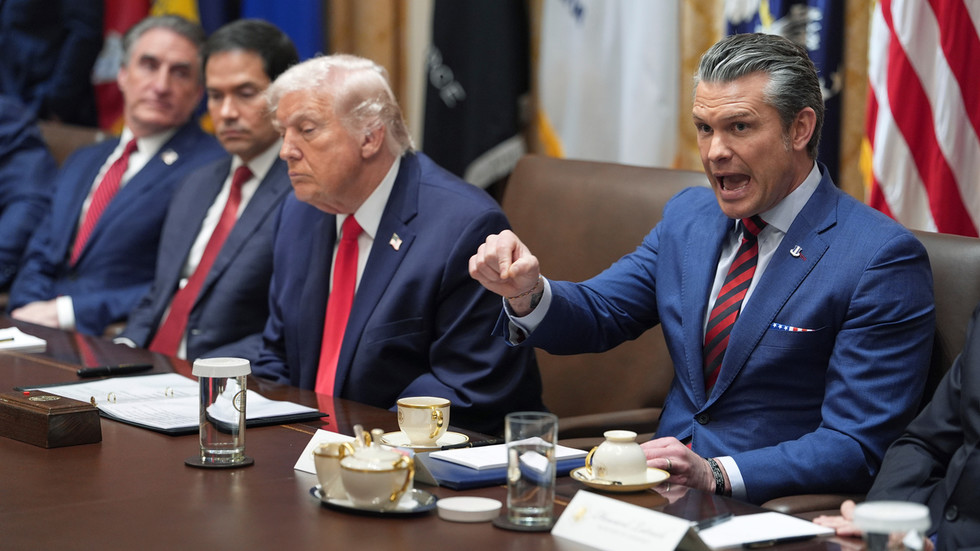
US Secretary of War Pete Hegseth has said the military is fully prepared to “deliver whatever” President Donald Trump orders regarding Iran
3 months ago
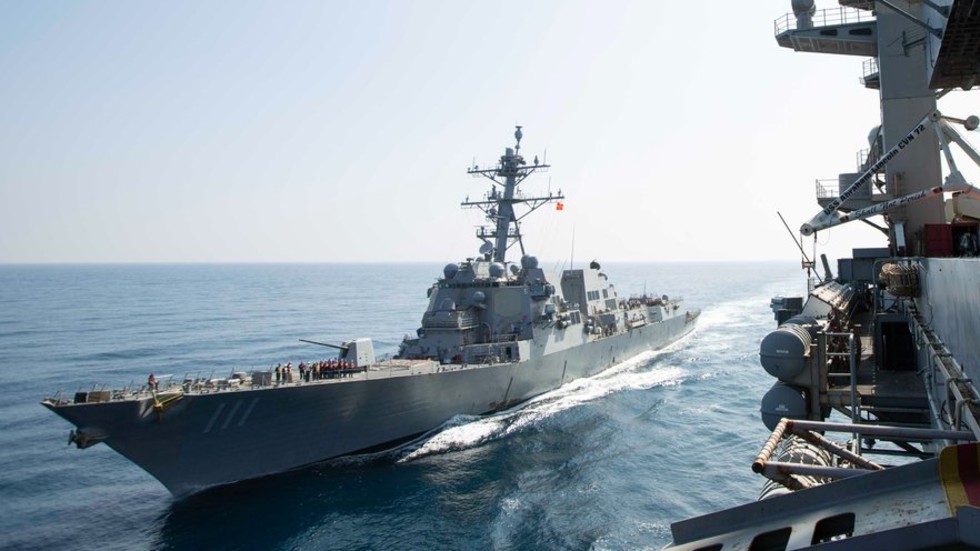
US and government-aligned outlets describe a major US naval deployment, repeatedly referred to as an armada led by the aircraft carrier Abraham Lincoln, moving toward or positioned near Iran, with the US military declared ready to carry out presidential orders. They agree that President Donald Trump is publicly linking this deployment to a set of demands on Iran, including halting any pursuit of nuclear weapons, ending the killing of protesters, and conducting naval activities safely in the Strait of Hormuz, while warning that any operation, if ordered, would be fast and forceful, comparable to prior US actions in Venezuela. These reports further concur that US Central Command has warned it will not tolerate unsafe actions by Iranian forces, that Iranian officials have responded defiantly while affirming a willingness to talk, and that the US side is framing the force posture as both a deterrent signal and a concrete, ready-to-execute military option.
Across these accounts, common background context includes the long-running dispute over Iran’s nuclear program and the history of earlier nuclear deal efforts that Washington says Tehran rejected, which US officials now cite as part of the rationale for renewed pressure. The coverage presents a shared picture of a dual-track US approach that pairs an overt show of military strength with calls for rapid negotiations aimed at a new or revised nuclear agreement, framed against a wider backdrop of regional instability and past US interventions such as in Venezuela. Both sides acknowledge that conditions inside Iran are described as fluid and dynamic, that the Strait of Hormuz is a key strategic chokepoint where miscalculation could have global economic repercussions, and that official rhetoric on both sides mixes threats with stated openness to dialogue.
Nature and purpose of the armada. Government-aligned reporting portrays the approaching armada as a calibrated deterrent meant to preserve regional stability and protect international shipping lanes, emphasizing readiness without explicitly confirming an imminent attack. In the absence of opposition coverage in the provided material, likely opposition narratives would frame the same deployment as escalation or saber-rattling that increases the risk of war and provokes Iranian hardliners. Government sources stress professionalism, rules of engagement, and large-scale readiness drills as evidence of responsible conduct, whereas opposition outlets would be expected to question whether such force levels are proportionate or strategically wise.
Framing of US intentions. Government accounts consistently highlight Trump’s stated desire for dialogue and a deal, presenting military threats as a necessary backdrop to compel Iran to the negotiating table and prevent nuclear proliferation. Opposition sources, if present, would probably argue that the US is using diplomacy as a cover for coercive regime-change ambitions or at least for extracting maximal concessions through pressure, casting doubt on the genuineness of the outreach. Government narratives underline prior Iranian rejection of nuclear proposals to justify a tougher stance, while opposition narratives would likely focus on US withdrawal from past agreements and the role of sanctions in driving the crisis.
Portrayal of Iran’s behavior and agency. Government-aligned media depict Iran as defiant, potentially dangerous at sea, and responsible for internal repression, stressing demands that Tehran stop killing protesters and cease unsafe naval maneuvers. Opposition coverage would likely stress Iran’s statements about defending its sovereignty and readiness for dialogue, arguing that US militarization encircles the country and fuels its security fears. Where government reports highlight US Central Command’s warnings against unsafe actions by Iranian forces, opposition outlets would be inclined to spotlight prior incidents of US military brinkmanship and question who truly endangers navigation and regional peace.
Historical narrative and precedent. Government sources invoke the example of Venezuela and the claim that US actions previously neutralized Iran’s nuclear capabilities by mid-2025 to imply that decisive force, or its credible threat, can solve such crises. Opposition media, by contrast, would likely interpret the Venezuela comparison as evidence of a pattern of interventionism and point out that past military and covert operations often created long-term instability rather than sustainable solutions. Government narratives frame earlier Iranian refusals of deals as proof that only stronger pressure works, while opposition narratives would emphasize diplomatic breakdowns, sanctions, and unilateral US moves as key causes of the current standoff.
In summary, government coverage tends to present the armada as a necessary and responsible show of force backing sincere diplomatic outreach, while opposition coverage tends to view the deployment as dangerous escalation rooted in a broader pattern of US militarized pressure and interventionism.