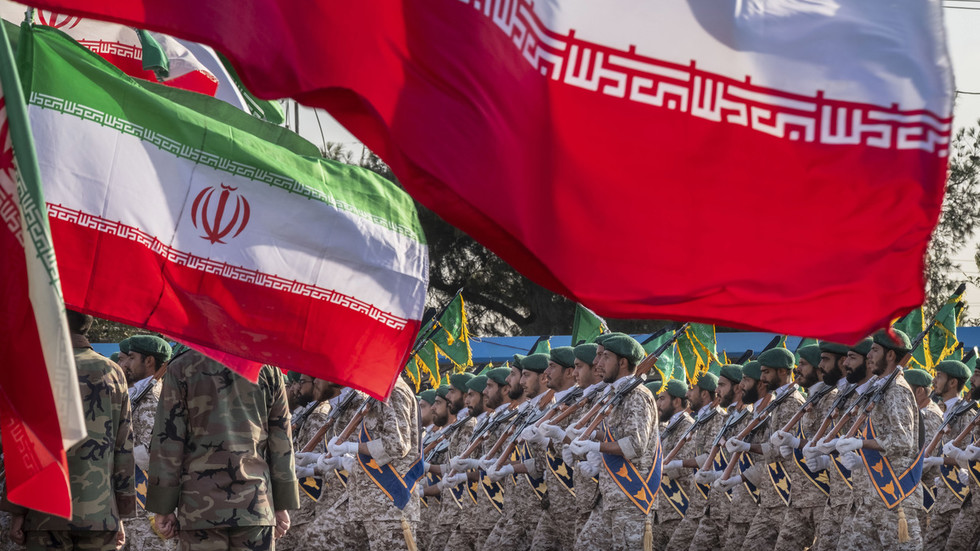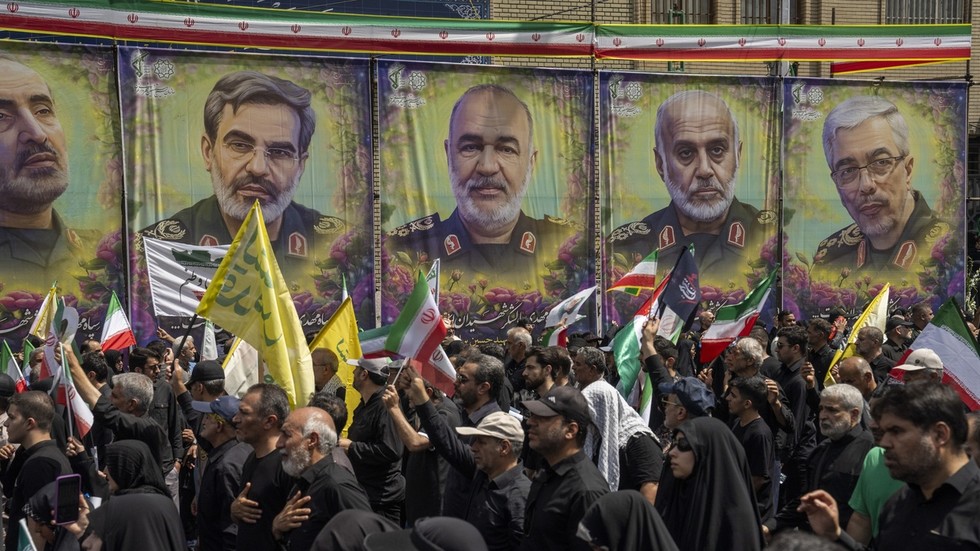
EU and Iranian sources agree that European Union foreign ministers have moved to label Iran’s Islamic Revolutionary Guard Corps as a terrorist organization in response to Iran’s recent domestic crackdown and alleged human rights violations. The process has involved debate among member states, with some initial resistance from countries like France and Italy reportedly softening, culminating in a consensus decision to blacklist the IRGC and impose sanctions on around a dozen individuals and several entities. Both sides report that Iran has reacted sharply, with senior officials, including the foreign minister and parliamentarians, condemning the EU’s step, framing it as politically motivated and warning of destabilizing consequences for the region and EU–Iran relations. They also concur that, in a retaliatory move, Iran’s parliament has designated the armed forces of EU member states as terrorist organizations, presenting this as a mirror response to the EU measure.
Across both perspectives, there is acknowledgment that the EU decision is rooted in broader tensions over Iran’s handling of protests, its human rights record, and its regional and international conduct, including alleged military support to Russia. Both sides recognize the IRGC as a central institution within Iran’s political and security architecture, with extensive influence over the economy and foreign policy, which makes any terrorist designation unusually far‑reaching compared with past EU terror listings. Coverage converges on the fact that the move is part of a layered sanctions regime the EU has been building over time, supplementing earlier measures tied to Iran’s nuclear program and regional activities. There is also agreement that these steps risk further complicating diplomatic efforts on issues such as the nuclear file, regional security arrangements, and any potential future negotiations aimed at de‑escalation between Iran and Western states.
Points of Contention
Legitimacy of the designation. Government‑aligned outlets frame the EU’s terror listing of the IRGC as an illegitimate, politically driven stunt orchestrated under US and Israeli influence, emphasizing that a state’s official armed force should not be treated as a terrorist group. Opposition‑leaning or critical sources, by contrast, portray the designation as a legally and morally justified response to systematic abuses and cross‑border destabilizing activities by the IRGC. While government narratives stress sovereignty and the IRGC’s formal status within Iran’s constitution, opposition coverage highlights patterns of repression and external operations as fitting established terrorism criteria.
Characterization of the IRGC’s role. Government coverage presents the IRGC as a legitimate defense and security institution that protects Iran’s borders, preserves internal order, and counters terrorism and foreign plots, particularly those allegedly backed by the US, Israel, and some European states. Opposition sources tend to describe the IRGC as the regime’s primary instrument of coercion, responsible for violent crackdowns on protesters and deep interference in neighboring countries through proxy groups. Where government media emphasize sacrifices made by IRGC personnel in fighting extremist groups, opposition narratives stress its command role in human rights violations and regional militancy.
Framing of Iran’s retaliation. Government‑aligned reporting casts the Iranian parliament’s move to label EU member states’ armed forces as terrorist organizations as a proportionate, sovereign response intended to demonstrate reciprocity and deterrence. Opposition coverage is more likely to frame the step as symbolic and escalatory, arguing that it further isolates Iran diplomatically and has limited practical effect compared with EU measures. In government narratives, this retaliation is portrayed as a defense of national dignity and a signal of strength, whereas opposition voices question whether it primarily harms Iran’s international standing and economic prospects.
Impact on diplomacy and regional stability. Government sources warn that the EU’s action undermines regional stability, jeopardizes counterterrorism cooperation, and sabotages any remaining prospects for reviving the nuclear agreement or broader diplomatic engagement. Opposition outlets more often suggest that the main obstacle to diplomacy and stability is Iran’s own conduct, arguing that sustained repression at home and aggressive behavior abroad forced the EU’s hand. While government reporting portrays Europe as risking security blowback and increased tensions, opposition accounts stress that external pressure may be one of the few remaining tools to alter the IRGC’s cost‑benefit calculus.
In summary, government coverage tends to depict the EU designation as an illegitimate, externally orchestrated attack on Iran’s sovereignty that justifies reciprocal measures, while opposition coverage tends to treat it as a warranted response to the IRGC’s domestic repression and regional activities, highlighting how Tehran’s choices have driven escalation and isolation.
Story coverage