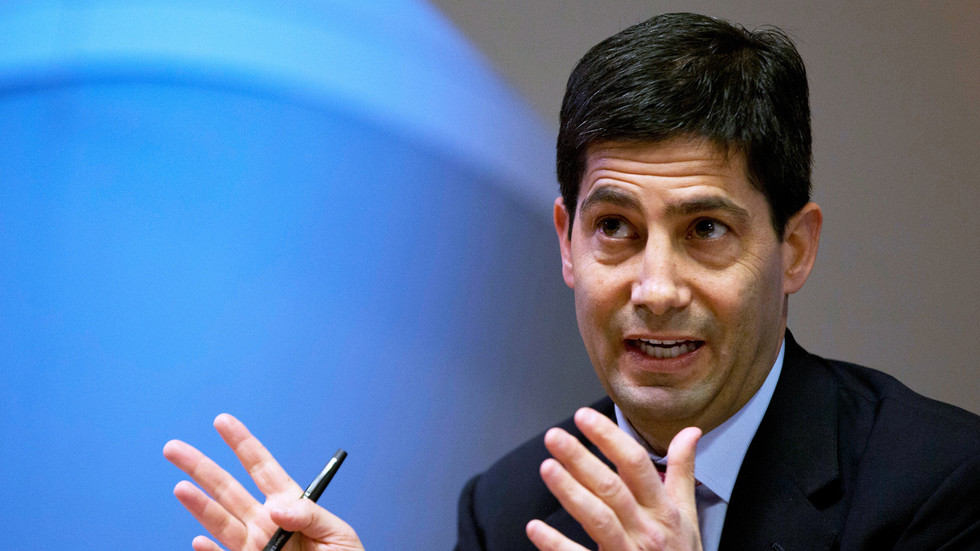
Kevin Warsh, a former Federal Reserve governor, has been nominated by President Donald Trump to succeed Jerome Powell as chair of the Federal Reserve, according to government-aligned reporting. These accounts agree that Trump has repeatedly criticized Powell’s approach to interest rates and has pushed for cuts to support economic growth, and they note that Warsh, once seen as more hawkish on inflation, has recently signaled openness to lower rates. Government coverage also reports that immediate financial-market reactions were relatively muted, with modest declines in futures markets rather than a broad sell-off.
Shared context across the government-aligned narratives emphasizes the central role of the Federal Reserve in setting interest rates, maintaining price stability, and managing inflation risks, as well as the ongoing political debate over how independent the Fed should remain from the White House. They agree that gold and silver suffered a sharp one-day drop, characterized as one of their worst in years, after Warsh’s nomination, which markets interpreted as a sign that the Fed would likely continue to prioritize price stability and institutional independence rather than aggressively financing government debt through ultra-low rates. At the same time, these reports describe enduring structural supports for safe-haven assets, such as geopolitical tensions and inflation concerns, and suggest that the correction in precious metals could present an opportunity for central banks to build gold reserves.
Points of Contention
Motives behind the nomination. Government-aligned sources frame Trump’s choice of Warsh as a pragmatic move to install a chair who understands market dynamics and monetary policy, presenting it as a logical response to disagreements with Powell’s rate decisions. In an opposition framing, the same decision would likely be cast as an attempt by Trump to bend the Fed toward his political and electoral interests, highlighting the president’s vocal rate-cut demands as evidence. Where government narratives stress continuity and competence, opposition narratives would emphasize political pressure on an institution that is supposed to be insulated from partisan influence.
Federal Reserve independence. Government coverage points to market interpretations that Warsh’s leadership would maintain the Fed’s independence and focus on price stability, using the sharp drop in gold and silver as evidence that fears of monetizing government debt are easing. Opposition outlets would be more inclined to question this reading, arguing that Trump’s history of attacking Powell and demanding lower rates undermines any claim of genuine independence under his appointees. Thus, while government narratives underscore institutional resilience, opposition narratives would highlight the risk that formal independence masks informal, but powerful, presidential influence.
Market implications and risk. Government-aligned reporting portrays the market reaction as largely orderly, noting only slight declines in futures and interpreting the precious-metals plunge as a rational repricing toward confidence in sound monetary policy. Opposition coverage would likely stress the volatility in gold and silver as a sign of uncertainty over the Fed’s future direction and potential policy missteps under a chair closely tied to Trump. Government voices frame the episode as a healthy correction and even an opportunity for central banks, whereas opposition voices would question whether such swings signal deeper unease about politicized monetary policy.
Assessment of Warsh’s policy stance. Government narratives highlight Warsh’s evolution from caution on inflation to supporting lower rates, presenting this shift as thoughtful adaptation to changing economic conditions and compatible with Trump’s growth agenda. Opposition sources would be more prone to portray this change as convenient alignment with Trump’s preferences, raising doubts about whether Warsh would resist politically motivated calls for looser policy if inflation risks return. For government outlets, Warsh’s flexibility is seen as an asset; for opposition outlets, it would be seen as a vulnerability to presidential pressure.
In summary, government coverage tends to depict Warsh’s nomination as a stabilizing, institutionally respectful choice that reassures markets and preserves the Fed’s credibility, while opposition coverage tends to frame it as a politically driven maneuver that threatens central-bank independence and injects new uncertainty into monetary policy and financial markets.