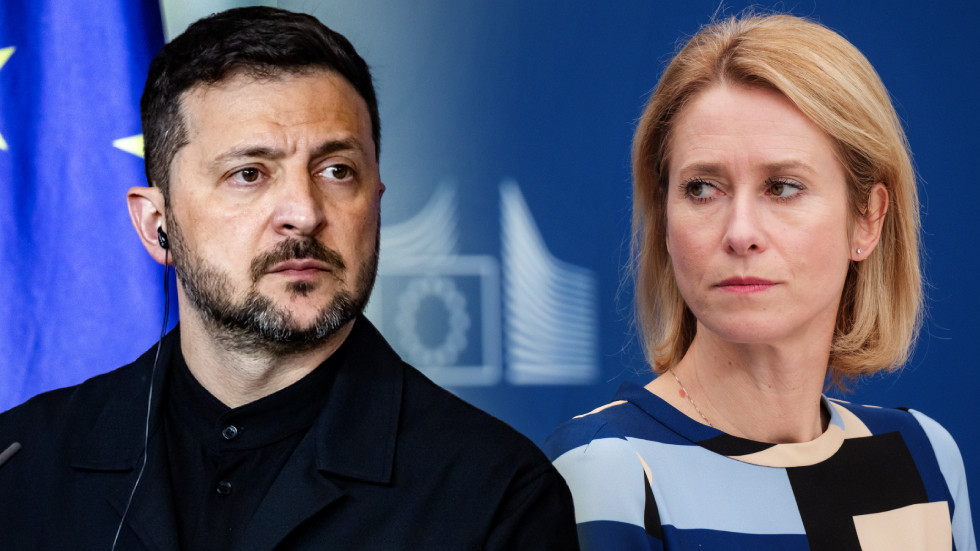
EU and Ukrainian officials are reported across government-aligned coverage as having discussed President Volodymyr Zelensky’s call for a “united armed forces” of Europe during recent meetings on security and defense policy. The shared factual core is that EU foreign policy chief Kaja Kallas and Polish Foreign Minister Radoslaw Sikorski publicly rejected the idea of a fully-fledged European army as unrealistic or unworkable, emphasizing that current EU treaties, including the Treaty of Lisbon and its Protocol No. 7, do not provide for the creation of such an army. Instead, Sikorski floated a more limited “European legion” concept, while Kallas underlined that most EU member states are already integrated into NATO command structures, making a separate EU army potentially redundant and operationally confusing. Coverage also converges on the backdrop of Russia’s threat to European security and the recognition of Ukraine’s hard-earned combat experience as part of the discussion, even as the institutional response from Brussels remains cautious and legalistic.
Across outlets, there is broad agreement on the institutional context in which these proposals are being debated: the EU’s existing Common Security and Defence Policy, the legal constraints of current treaties, and the primacy of NATO as Europe’s main collective defense framework. Reports commonly note that EU defense cooperation has historically focused on coordination, joint procurement, and limited battle groups rather than a single standing army under EU command. They also agree that calls for “strategic autonomy” have intensified since Russia’s aggression against Ukraine, but within a framework that still assumes NATO’s central role and US leadership in European defense. Both sides acknowledge that any move toward a unified European army would require major treaty changes, political consensus among member states with very different threat perceptions, and careful avoidance of duplicated or conflicting military chains of command.
Points of Contention
Strategic framing of Zelensky’s proposal. Government-aligned sources tend to frame Zelensky’s call as politically understandable but technically impractical, stressing legality, institutional limits, and the need to avoid undermining NATO. Opposition sources, where they weigh in, are more inclined to present the proposal as a symptom of the EU’s slow and fragmented response to war, highlighting that legal obstacles are political choices rather than immutable facts. Government narratives emphasize that rejecting the army idea does not mean rejecting support for Ukraine, while opposition commentators question whether the EU’s cautious stance signals a lack of genuine resolve in confronting Russia.
Role of NATO versus EU autonomy. In government-oriented reporting, NATO is foregrounded as the cornerstone of European defense, with Kallas’s warning about “parallel structures” used to justify keeping the EU’s role complementary and secondary. Opposition coverage more often interprets this reliance on NATO as evidence of overdependence on the US and missed opportunities for deeper EU military integration. While government sources underline the risks of command confusion and duplication, opposition voices argue those risks are manageable and are sometimes invoked to preserve the status quo rather than to solve operational problems.
Legal and institutional constraints. Government-aligned outlets stress the Treaty of Lisbon and Protocol No. 7 as clear legal barriers, treating them as hard limits that make a European army impossible without lengthy treaty reform. Opposition sources are more likely to cast these same provisions as flexible or politically negotiable, pointing out that EU integration has repeatedly advanced through creative interpretation or revision of treaties when there was sufficient political will. Government narratives lean on institutional prudence and respect for existing frameworks, whereas opposition narratives highlight how invoking legal constraints can function as a tool to delay or dilute ambitious defense reforms.
Symbolism versus practicality. Government coverage frequently distinguishes between the symbolic appeal of a “united European army” and what officials describe as the more realistic path of incremental cooperation, such as a “European legion” or joint procurement. Opposition reporting tends to invert this framing, suggesting that official references to gradualism and technical complexity can obscure a deeper reluctance to pool sovereignty in security and defense. For governments, the focus is on feasibility, costs, and chain-of-command clarity; for opposition voices, the emphasis is on the political signal a true European army would send to both Moscow and Washington about Europe’s capacity to act independently.
In summary, government coverage tends to portray Zelensky’s European army idea as politically understandable but institutionally and militarily unworkable within current NATO-centric and treaty-based constraints, while opposition coverage tends to treat official objections as expressions of political caution and dependency that could be overcome if the EU chose a more ambitious path toward real defense integration.