

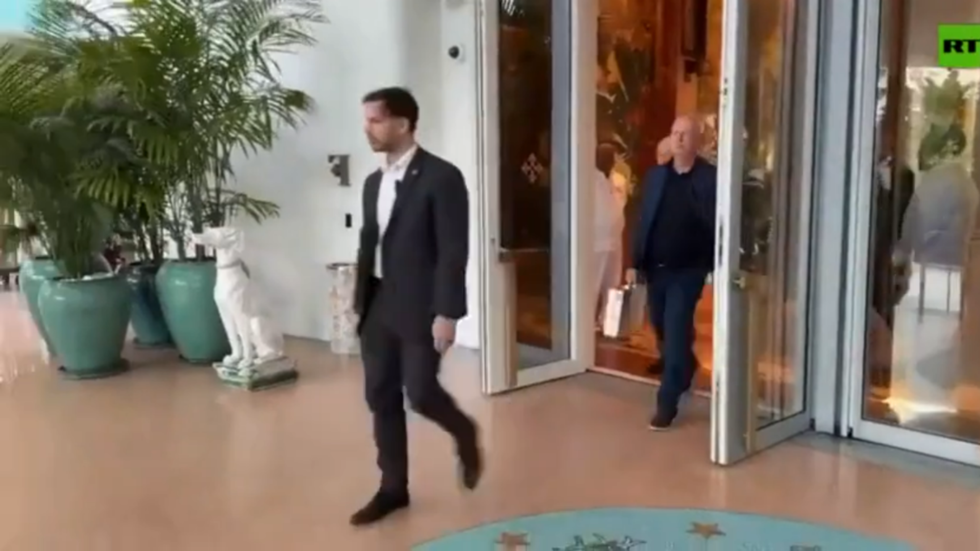
Russian and US delegations are reported to have held talks in Florida involving Russia’s chief Ukraine negotiator and special presidential envoy Kirill Dmitriev and a US delegation that included Special Envoy Steve Witkoff, Treasury Secretary Scott Bessent, Jared Kushner, and White House Senior Advisor Josh Gruenbaum. The Florida meeting, described as taking place in Miami after Dmitriev publicly announced his arrival and posted a beach sunrise photo, is presented as a precursor to new Russia‑Ukraine negotiations scheduled for Sunday in Abu Dhabi, following earlier trilateral meetings that both sides acknowledge occurred and were described as “very constructive.”
Across outlets, coverage agrees that the negotiations center on territorial issues, particularly Moscow’s insistence that Ukraine withdraw from certain regions and recognize new borders, including Crimea, and Kyiv’s firm rejection of any territorial concessions. Both perspectives situate the Florida talks within the broader institutional framework of ongoing diplomacy around the war, involving Russian presidential envoys, US administration officials, and multilateral negotiation formats that have already produced trilateral discussions, but not yet a breakthrough on the central question of borders and sovereignty.
Points of Contention
Framing of the talks’ significance. Government-aligned outlets present the Florida meeting as a meaningful and “constructive” step that helps prepare the ground for the Abu Dhabi round, emphasizing momentum and diplomatic seriousness, while opposition sources tend to portray it as a symbolic or tactical move with limited immediate impact. Government narratives stress continuity with prior “very constructive” trilateral contacts, while opposition commentary questions whether these encounters substantially alter the military or political balance.
Portrayal of Russian demands. Government coverage depicts Moscow’s conditions on territorial withdrawal and recognition of new borders, including Crimea, as pragmatic baselines for a realistic settlement, implying that formalizing the status quo could stabilize the region. Opposition voices, by contrast, are more likely to frame these same demands as maximalist or coercive, underscoring that they contradict international law and Ukraine’s declared red lines, and suggesting they are meant to pressure Kyiv rather than genuinely compromise.
Characterization of US involvement. Government-aligned media underscore the presence of senior American figures as evidence of Washington’s constructive engagement and tacit acknowledgment of Russia’s central role in shaping any eventual settlement. Opposition sources tend to highlight the mix of officials and politically connected figures like Jared Kushner as a sign of back‑channel or personalized diplomacy, questioning whether the process is transparent or aligned with established diplomatic institutions.
Expectations for Abu Dhabi negotiations. Government outlets generally convey cautious optimism that the Florida talks will positively influence the upcoming Abu Dhabi negotiations, suggesting that channels are open and technical groundwork is being laid despite unresolved disputes. Opposition coverage is more skeptical, arguing that without movement on fundamental territorial issues and security guarantees, Abu Dhabi is likely to produce more process than progress and may mainly serve each side’s desire to appear open to peace.
In summary, government coverage tends to cast the Florida meeting as a constructive, legitimacy‑enhancing step within a serious diplomatic trajectory toward a possible settlement, while opposition coverage tends to downplay its substantive impact and emphasize the unresolved, and perhaps unresolvable, nature of the core territorial and legal disputes.
