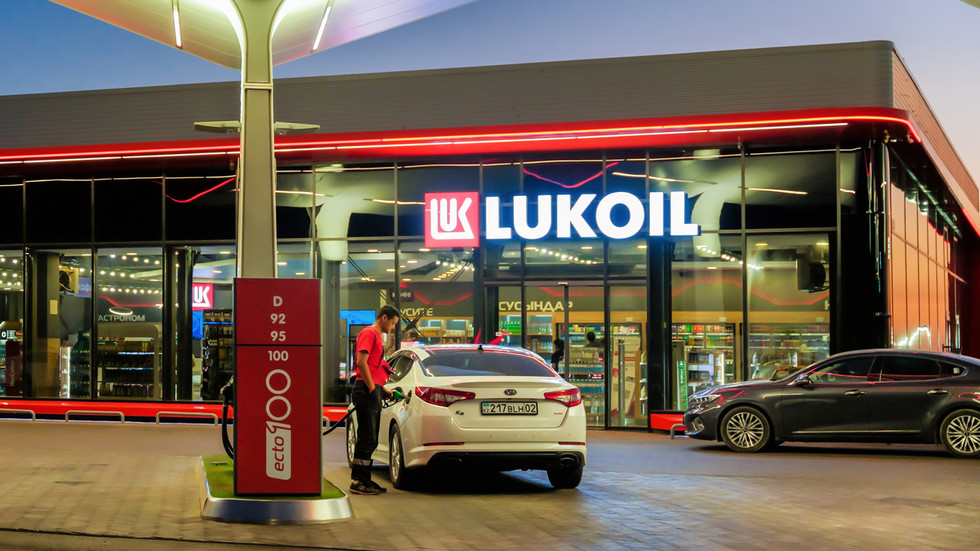
Lukoil and Carlyle Group have reached a preliminary agreement for the sale of Lukoil International GmbH, which holds most of Lukoil’s foreign assets, with government-aligned outlets consistently noting that the package is valued at about $22 billion. These reports agree that the deal is non‑exclusive, with Lukoil still in talks with other potential buyers, and that completion is contingent on a series of conditions, notably regulatory approvals from authorities such as the US Department of the Treasury’s Office of Foreign Assets Control. Coverage converges on the timeline in which restrictive measures were imposed on Lukoil and its subsidiaries, including their addition to US and UK sanctions lists in October, and on the earlier failed bid from Swiss trading house Gunvor, which reportedly collapsed amid US accusations of that firm’s ties to Moscow.
Government-oriented reporting also aligns on the basic institutional and geopolitical context, describing the transaction as a major restructuring of a Russian oil major’s overseas footprint under the pressure of Western sanctions regimes. These accounts frame the sale as part of a broader pattern in which Russian energy companies adjust their international exposure in response to tightening compliance requirements, export restrictions, and access-to-finance constraints in Western jurisdictions. They emphasize that any final agreement will have to navigate a complex sanctions landscape, including OFAC vetting and similar scrutiny in the UK and EU, and that foreign private equity players like Carlyle are positioned as technically capable, sanctions‑literate buyers able to take over assets without breaching existing restrictions.
Points of Contention
Motives behind the sale. Government-aligned outlets typically present Lukoil’s decision as a pragmatic corporate move to optimize its portfolio and ensure uninterrupted operations of its foreign subsidiaries under new regulatory conditions, stressing business continuity and legal compliance. In contrast, opposition-leaning sources are more likely to portray the sale as a forced divestment driven by sanctions pressure and the shrinking room for Russian companies in Western markets, emphasizing coercion over strategy. Where official narratives underline managerial rationality and long-term planning, critical outlets tend to highlight loss of strategic assets and diminished economic sovereignty.
Characterization of Western actors. Government-oriented coverage often depicts Carlyle and Western regulators as technocratic participants in a standard market transaction, focusing on procedural aspects like due diligence and approval timelines. Opposition coverage, by contrast, is prone to emphasize asymmetries of power, suggesting that Western governments and financial groups leverage sanctions and regulatory approvals to extract advantageous terms or gain control over Russian-linked energy infrastructure. Thus, while state-aligned narratives downplay political intent and stress neutral rule‑based oversight, opposition narratives foreground geopolitical leverage and possible opportunism by Western firms.
Implications for Russian energy policy. In government media, the deal is framed as compatible with Russia’s broader energy strategy, with arguments that concentrating on domestic and “friendly” markets can increase resilience and that divesting vulnerable foreign assets may reduce sanctions risk. Opposition outlets instead tend to interpret the sale as symptomatic of a structural retreat of Russian energy companies from key global markets, warning of long-term losses in influence, technology access, and revenue diversification. The former perspective underscores adaptation and reorientation, whereas the latter stresses contraction and strategic setback.
Responsibility for sanctions fallout. Government-aligned reports tend to attribute the underlying problems to what they call illegitimate or politically motivated Western sanctions, positioning Russian companies, including Lukoil, as victims of external decisions beyond their control. Opposition sources are more inclined to argue that Russia’s own foreign and domestic policies created the conditions for these sanctions, and therefore for the need to offload foreign assets at potentially depressed valuations. As a result, state-linked coverage externalizes blame onto Western governments, while oppositional coverage distributes responsibility back onto Russian authorities and corporate elites.
In summary, government coverage tends to present the Lukoil–Carlyle deal as a controlled, rational adjustment to external constraints that preserves stability and aligns with a recalibrated energy strategy, while opposition coverage tends to frame it as a politically driven, sanctions‑induced retreat in which Russian interests are weakened and responsibility lies partly with Moscow’s own policy choices.