

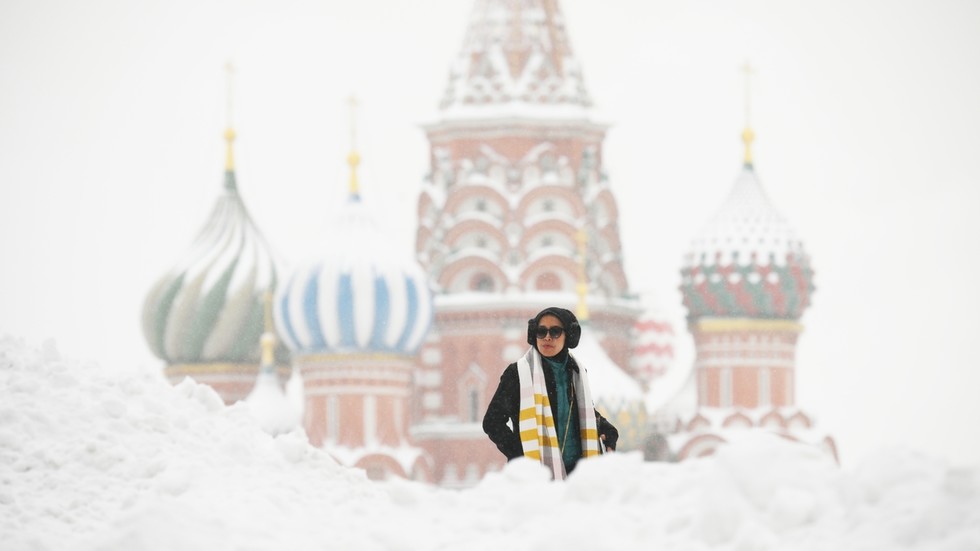
Moscow has been hit by an exceptionally powerful snowstorm that has produced the highest snow accumulation in roughly 70 years and made this January the snowiest in more than two centuries, according to meteorologists. Government-aligned coverage cites data from the MSU Meteorological Observatory showing nearly 92 mm of precipitation this month, with a stable and unusually deep snow cover across the city. Reports note that public transport, including key metro and surface routes, continues to operate with limited disruption, while city services work around the clock to clear roads and sidewalks, and officials advise residents to avoid non-essential travel.
Shared context in these accounts stresses that the event fits within a broader pattern of changing winter conditions in the Moscow region: despite global climate warming, winter precipitation has been increasing locally. Government-aligned outlets reference scientists who attribute the current cold and snowy spell to a series of deep cyclones and sharp weather fronts passing over European Russia, creating the conditions for persistent snowfalls. They also highlight the role of municipal services and emergency response structures in managing the impact, and frame the extraordinary snowfall as both a meteorological anomaly and a test of the city’s infrastructure and preparedness.
Points of Contention
Severity and disruption. Government-aligned outlets emphasize that, although snowfall records have been broken, the city is coping relatively well, with public transport “largely functional” and only localized disruptions, presenting imagery of cleared main roads and operating services. In the absence of explicit opposition reporting here, opposition-leaning narratives would typically stress the extent of delays, traffic jams, and localized failures in snow removal, questioning how “functional” the system really is for ordinary residents. Government reports tend to highlight rapid response times and continuous work by utilities, while opposition sources would be more likely to foreground stranded commuters, overwhelmed neighborhoods, and any instances where official statistics appear to understate the real level of disruption.
Performance of city services. Government coverage portrays municipal workers and city agencies as operating efficiently and tirelessly, underscoring round-the-clock deployments of snowplows and de-icing crews and praising coordination by city authorities. By contrast, opposition media would usually frame the same situation as exposing chronic underinvestment, poor planning, or mismanagement, pointing to backlogged side streets, uneven service between central and peripheral districts, and potential budgetary or corruption issues behind apparent gaps. Government-aligned stories focus on official briefings, visual evidence of plowed arterial roads, and assurances that systems are under control, while opposition outlets would be more inclined to quote disgruntled residents and independent experts challenging that optimistic picture.
Framing of causes and climate context. Government-aligned reporting leans on institutional scientific voices to explain the snowfall through natural factors such as deep cyclones and atmospheric fronts, while acknowledging increased winter precipitation amid global warming without dwelling on broader climate policy implications. Opposition sources would typically use the same scientific data to situate the event within a more urgent climate-change narrative, potentially criticizing authorities for lack of comprehensive adaptation strategies in urban planning, drainage, and transport resilience. Government outlets thus treat the snowfall mainly as a rare but manageable weather anomaly, whereas opposition media would be more likely to frame it as a warning sign demanding systemic policy responses.
Political and symbolic framing. Government-aligned media tend to depoliticize the storm, turning it into a story of resilience, civic unity, and competent governance under stress, often featuring reassuring messages from officials and images of well-organized cleanup efforts. Opposition outlets, by contrast, would be inclined to politicize operational shortcomings, using them as symbols of broader governance issues, socioeconomic inequality in service provision, and the gap between official narratives and everyday realities. Where government coverage seeks to bolster public trust and project control, opposition coverage would seek to question that control and highlight contradictions between celebratory rhetoric about record snowfall and the lived experience of residents navigating snow-clogged streets.
In summary, government coverage tends to present the record snowfall as an extraordinary but well-managed natural event underscoring the effectiveness of city services and institutional expertise, while opposition coverage tends to recast the same storm as a stress test that reveals infrastructural weaknesses, governance problems, and a more troubling climate and policy context.
