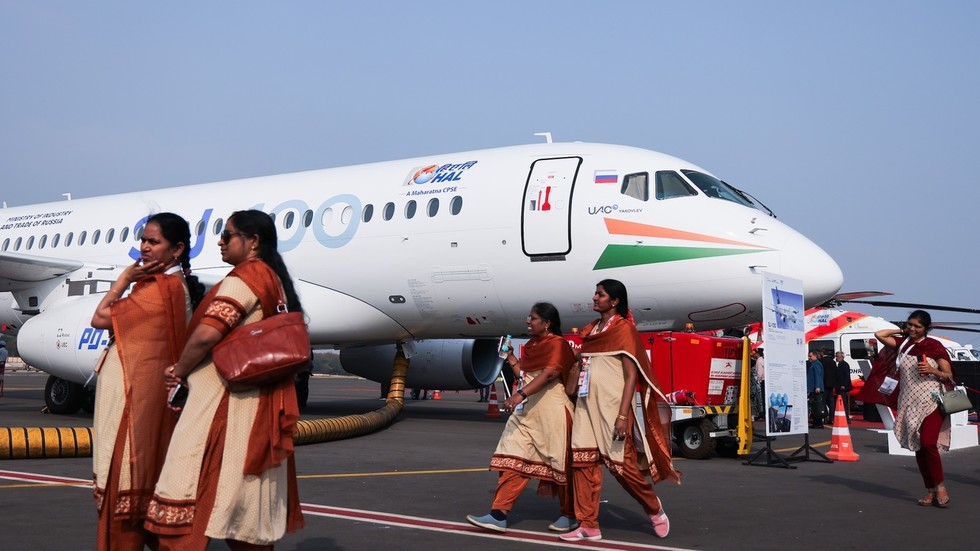
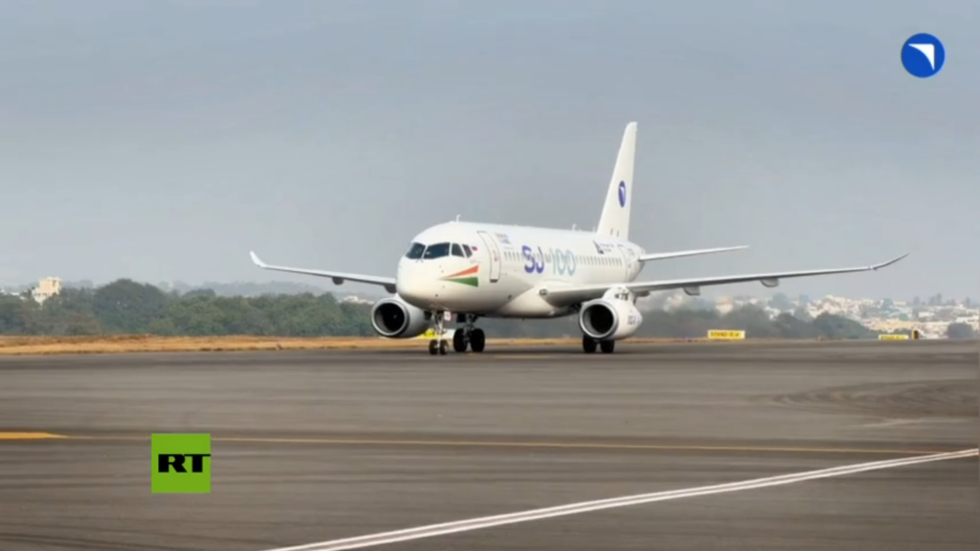
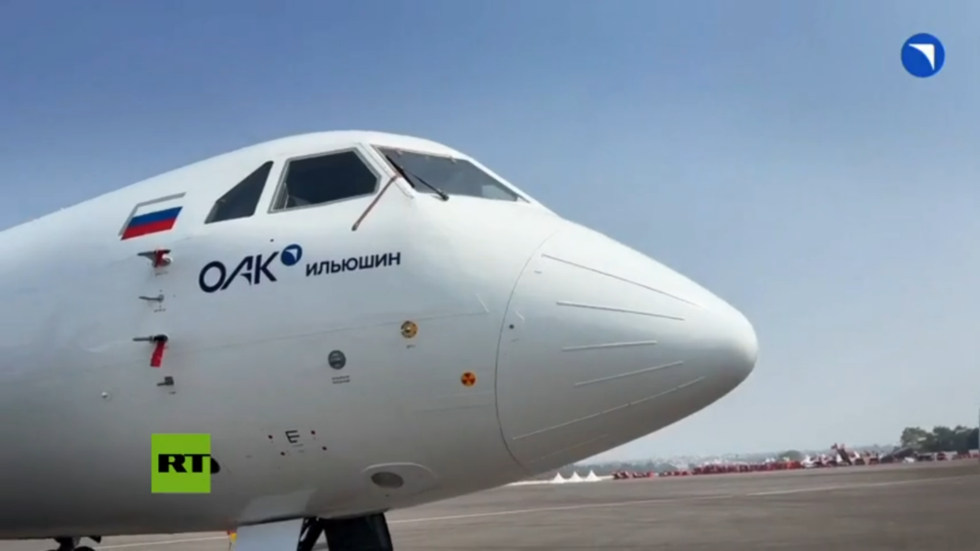
Russia’s United Aircraft Corporation and India’s Hindustan Aeronautics Limited have signed a series of cooperation agreements to expand Russian civilian aircraft manufacturing and operations in India, centered on the Sukhoi SJ-100 regional passenger jet and the Il-114-300 aircraft. Government-aligned coverage consistently reports that HAL will receive licensed rights to manufacture, assemble, and sell SJ-100 aircraft and components in India, with Russian technical and certification support, and that the partners expect demand for more than 200 regional jets, plus an initial batch of six Il-114-300 aircraft for India’s Flamingo Aerospace. These outlets note that the plan includes rolling out the first semi-knocked-down SJ-100s within about three years, potentially leasing around ten SJ-100s in the near term to meet immediate needs, and showcasing the Il-114-300 and its TV7-117ST-01 engines at the Wings India 2026 exhibition.
Government-aligned reporting also converges on the broader institutional and policy framework, presenting these deals as part of India’s regional connectivity push and Russia’s effort to expand its civil aviation footprint in Asia. The partnership is framed as fitting squarely within India’s Make in India and aviation capacity-building strategies, with HAL positioned as a key domestic integrator and UAC, along with United Engine Corporation, as technology and capability providers. Shared context across these outlets emphasizes long-term industrial cooperation, skill and maintenance ecosystem development, and the creation of an Indian regional jet fleet that draws on Russian platforms but is increasingly supported by localized production, assembly, and after-sales services.
Points of Contention
Strategic framing and dependence. Government-aligned sources portray the SJ-100 and Il-114-300 deals as a balanced, mutually beneficial partnership that strengthens India’s strategic autonomy and industrial base, highlighting technology transfer and joint ventures as evidence of growing self-reliance. Opposition coverage, by contrast, tends to depict such arrangements as deepening India’s dependence on Russian platforms and supply chains at a time when diversification toward other suppliers is strategically prudent. Where government narratives stress complementarity between Indian manufacturing ambitions and Russian know-how, opposition voices question whether the structure of licensing and support actually locks India into long-term reliance on Russian design, certification, and spares.
Economic benefits and opportunity costs. In government-oriented reporting, the projected demand for over 200 regional jets and the focus on local assembly, maintenance, and potential exports are framed as clear economic wins in terms of jobs, industrial investment, and regional airline growth. Opposition narratives would more likely interrogate these projections, raising doubts about market absorption, the competitiveness of Russian aircraft versus Western models, and potential hidden costs from delays, technology obsolescence, or sanctions-related constraints. While government coverage emphasizes alignment with Make in India and the promise of new competencies for HAL and private players like Flamingo Aerospace, opposition voices typically stress opportunity costs and whether comparable or better terms could be secured from other global manufacturers.
Technical reliability and regulatory risk. Government-aligned outlets underscore the readiness of Russian partners—like United Engine Corporation—to deliver engines and support certification, and they present the SJ-100 and Il-114-300 as mature regional platforms well-suited to Indian conditions. Opposition-leaning commentary generally highlights concerns about past reliability and support issues with some Russian civil aviation programs, as well as the potential for sanctions or export controls to disrupt supply of critical components or avionics. Whereas government narratives stress Russian assistance in navigating Indian and international regulatory requirements, critics tend to question whether certification and after-sales support will match the standards and responsiveness associated with established Western regional jets.
Geopolitical signaling and alignment. Government coverage frames these aircraft deals as evidence of a robust, time-tested India–Russia partnership that can weather global tensions and provide India with bargaining power in a multipolar order. Opposition perspectives often warn that expanding high-visibility industrial projects with Russia could complicate India’s balancing act with Western partners, especially in sensitive areas like aviation technologies and dual-use capabilities. The official narrative emphasizes continuity and diplomatic trust, while opposition voices focus on reputational and diplomatic risks of being seen as deepening ties with Moscow amid ongoing geopolitical frictions.
In summary, government coverage tends to showcase the Russia–India aircraft manufacturing partnerships as strategic, economically sound pillars of Make in India and regional connectivity, while opposition coverage tends to emphasize dependency risks, economic and technical uncertainties, and the potential geopolitical costs of leaning more heavily on Russian aviation platforms.
Story coverage