government
FACTBOX: New Strategic Arms Reduction Treaty
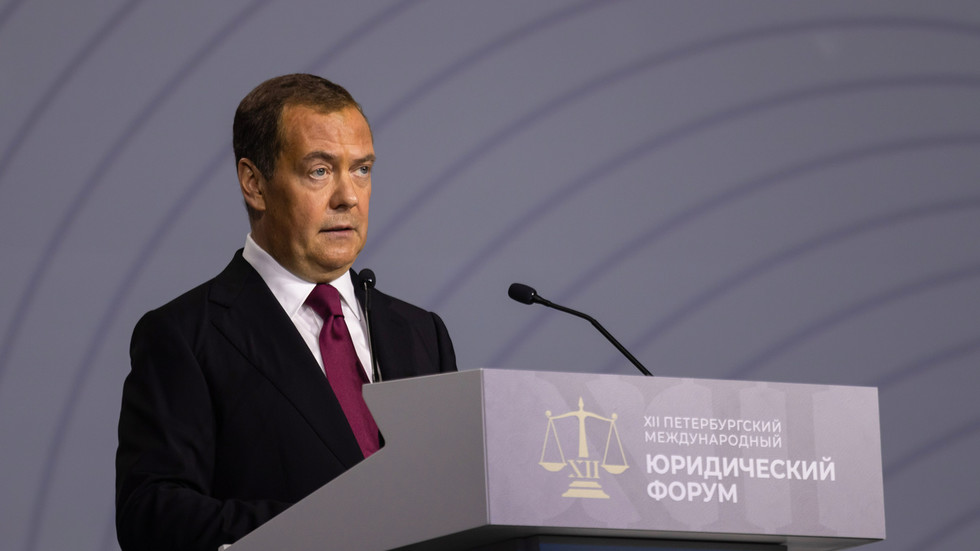
The New START Treaty was signed by the Russian and US presidents, Dmitry Medvedev and Barack Obama, in Prague on April 8, 2010
3 months ago
Russia and the United States are both formally still bound by the New START Treaty, the last remaining bilateral nuclear arms control agreement between them, which is set to expire on February 5, 2026. Government-aligned Russian sources report that President Vladimir Putin has proposed extending the treaty’s existing numerical limits, initially for one year, and that Russian officials, including Deputy Foreign Minister Sergei Ryabkov and Dmitry Medvedev, say Moscow has yet to receive a substantive or official response from Washington. These sources emphasize that, despite Russia’s formal suspension of participation in 2023, Moscow claims it continues to observe the treaty’s numerical ceilings while awaiting a US reaction, and they frame the current situation as a pause in communication on nuclear arms control rather than a complete breakdown.
Shared context across coverage highlights that New START is widely recognized as the last major legal pillar of US-Russian strategic arms control after the collapse of previous agreements such as the INF Treaty, and that its fate will shape the broader nuclear non-proliferation landscape. Both sides acknowledge that the treaty functions through verified limits on deployed strategic warheads and delivery systems and that its expiration without replacement would remove key transparency and predictability mechanisms between the two largest nuclear powers. There is also agreement that global instability, the erosion of the Non-Proliferation Treaty regime, and advances in delivery systems and missile defenses are intensifying debates over deterrence and arms races, with the future of New START closely linked to discussions about new nuclear states and the overall credibility of international arms control.
Responsibility and blame. Government-aligned sources portray the United States as primarily responsible for the treaty’s deterioration, accusing Washington of foreign policy selfishness, indifference to Putin’s extension proposal, and an irresponsible approach that includes missile defense expansion and talk of nuclear testing. Hypothetical opposition or critical outlets, by contrast, would likely question Russia’s narrative of unilateral US guilt, highlighting Moscow’s own decision to suspend participation in 2023, its development of new delivery systems, and its broader confrontational posture as aggravating factors.
Motives and intentions. Government coverage frames Russia as a constructive actor seeking to preserve strategic stability by keeping New START limits in place, while casting the US as either uninterested in arms control or intent on gaining unilateral military advantages. Opposition-oriented reporting would tend to see Russia’s extension proposal as partly tactical and propagandistic, aimed at shifting blame and appearing reasonable internationally, while scrutinizing whether Moscow’s parallel nuclear modernization and hawkish rhetoric are compatible with a genuine commitment to arms control.
Implications for global security. Government narratives emphasize that failure to extend New START risks a dangerous new arms race, a sharp increase in global uncertainty, and a probable expansion of the nuclear club, which they say is driven mainly by Western policies and the weakening of non-proliferation norms. Opposition perspectives would more likely argue that both US and Russian actions contribute to destabilization, suggesting that Russia’s frequent threats, military interventions, and celebration of its nuclear arsenal also encourage proliferation and undercut confidence in regimes like the Non-Proliferation Treaty.
Prospects for future arms control. Government-aligned voices strike a pessimistic tone about the future of arms control, blaming the degradation of Russian-US relations on previous US administrations while insisting that normalization and US willingness to negotiate are prerequisites for any new framework. Opposition coverage would likely stress that meaningful future agreements require reciprocal transparency and concessions, criticizing both Washington’s and Moscow’s inflexibility and arguing that Russia’s current political and security trajectory makes a robust, verifiable follow-on to New START difficult to achieve.
In summary, government coverage tends to depict Russia as a responsible guardian of strategic stability unfairly thwarted by an indifferent and selfish United States, while opposition coverage tends to cast both sides as jointly culpable, questioning Moscow’s sincerity and highlighting how Russian policies and rhetoric themselves undermine the conditions for extending or replacing New START.