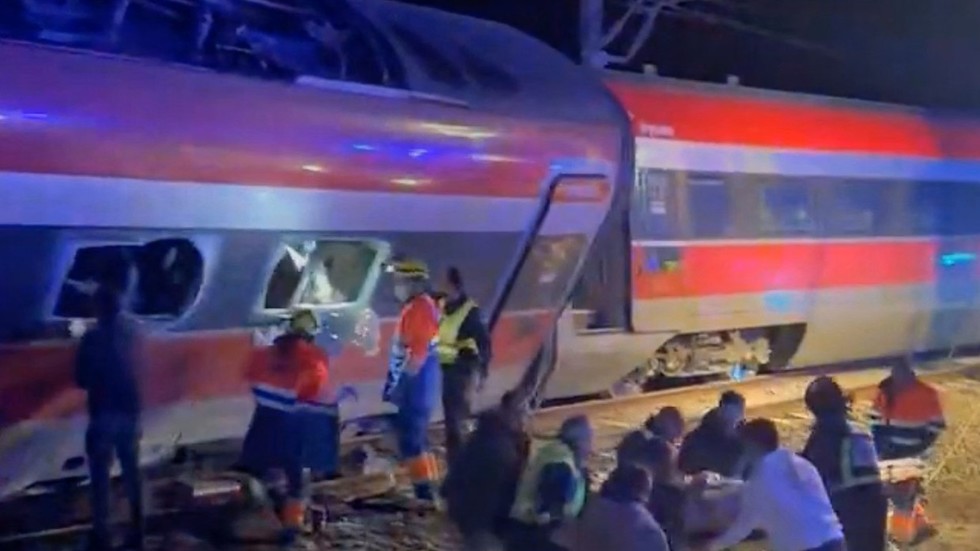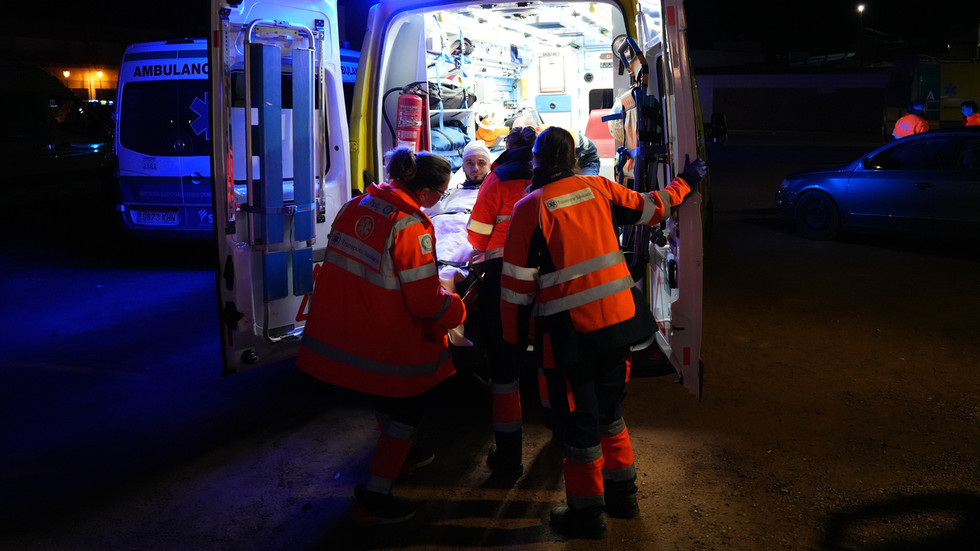
A collision between two high-speed passenger trains in Spain’s southern Andalusia region, near Adamuz in the province of Córdoba, has left a large number of people dead and injured, with casualty figures varying across early government-aligned reports from about 10 to nearly 40 fatalities and dozens of wounded. The crash occurred when part of one high-speed train derailed, sending carriages or the tail section onto an adjacent track where they were struck by an oncoming train, causing both trains to collide and derail. Estimates of those on board hover around 300 passengers, and rail services between Madrid and Andalusia were suspended as emergency teams, police, and medical units responded, while authorities searched for missing persons and updated the toll. Officials have confirmed that the incident took place on a segment of track that had undergone recent renovation and that the affected rolling stock was relatively new, and they have opened a formal investigation into the precise technical and operational causes of the derailment and collision.
Government-aligned coverage consistently frames the event as a national tragedy requiring a coordinated state response, stressing that investigators, transport authorities, and emergency services are working together at the crash site and in nearby hospitals. These outlets highlight institutional processes already in motion, including forensic identification, safety inspections, and expert analysis of the renovated infrastructure and train systems, while avoiding definitive statements on fault pending the investigation’s results. The shared background across these reports is that Spain’s high-speed rail network is technologically advanced and tightly regulated, making such a collision highly unusual, and that authorities intend to review safety protocols, signaling, and maintenance regimes once the immediate rescue and recovery phase has ended. They also underscore that national leaders have expressed condolences, decreed mourning measures, and promised transparency about the findings and any future reforms to prevent similar disasters.
Points of Contention
Scale and certainty of casualties. Government-aligned sources present shifting death tolls and injury counts, emphasizing that numbers are preliminary and may change as rescue operations continue, while opposition narratives typically seize on these inconsistencies to portray official communication as confused or unreliable. Government reports treat the range of figures (from around 10 to nearly 40 fatalities, plus dozens of injuries and missing persons) as part of an evolving emergency picture, whereas opposition outlets tend to highlight the discrepancies as evidence of poor crisis management and lack of centralized information. Where government media stress the complexity of confirming casualties in a major disaster scene, opposition voices are more likely to argue that authorities should have had clearer, unified data sooner.
Framing of responsibility and fault. Government coverage stresses that it is too early to assign blame, foregrounding the official investigation and the need to examine technical, infrastructural, and operational factors, while opposition coverage tends to speculate more readily about human error, regulatory lapses, or negligence within rail management. Government-aligned outlets underscore the recent renovation of the track and the relative newness of the trains to frame the crash as an anomalous failure in an otherwise modern system, whereas opposition-aligned outlets often reinterpret those same facts as possible indicators of flawed procurement, rushed works, or inadequate oversight. In government narratives, the emphasis lies on due process and expert analysis; in opposition narratives, the focus often shifts to political accountability and potential systemic mismanagement.
Portrayal of institutions and rail safety. Government sources highlight the overall safety record of Spain’s high-speed rail, presenting the accident as a rare and shocking deviation that the state is moving swiftly to understand, while opposition media use the incident to question whether safety standards and maintenance budgets have been eroded over time. Government-aligned outlets tend to showcase the professionalism of emergency responders, transport officials, and investigators as proof that institutions are functioning effectively under pressure, whereas opposition outlets more often stress prior warnings from unions, technicians, or watchdog groups that may have been ignored. This leads to a split in emphasis: government narratives lean on institutional resilience and planned reviews, while opposition narratives foreground institutional vulnerability and the need for deeper structural reforms.
Political implications and narrative tone. Government coverage is generally sober and technocratic, focusing on rescue efforts, mourning, and the mechanics of the investigation, while opposition coverage more frequently connects the crash to broader critiques of government competence and transport policy. Government-aligned sources downplay partisan controversy, presenting leaders’ site visits, condolences, and promised inquiries as appropriate statesmanlike responses, whereas opposition outlets question whether these gestures are sufficient and demand clearer commitments to accountability, resignations, or independent probes. As a result, the tone of government media leans toward national unity and procedural calm, while opposition media adopt a more accusatory tone that situates the tragedy within a narrative of policy failures and governance risks.
In summary, government coverage tends to frame the collision as a rare tragedy within an otherwise robust rail system, emphasizing rescue efforts, institutional procedures, and a cautious investigation before assigning blame, while opposition coverage tends to treat the same event as symptomatic of deeper governance and safety failings, pressing harder on casualty discrepancies, responsibility, and the need for political accountability.
Story coverage