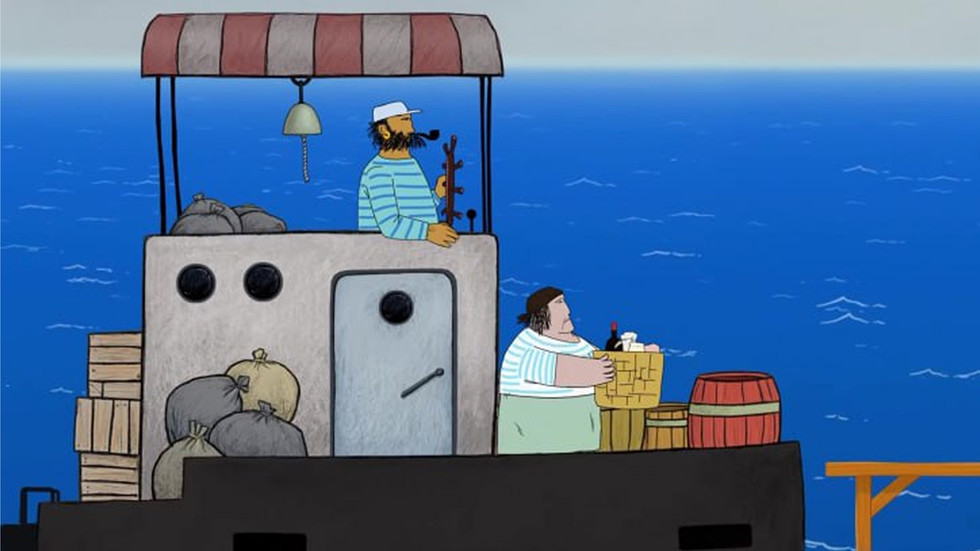
Russian and international outlets across the spectrum agree that Russian cinema has secured fresh Academy Award recognition this year, with particular attention to the animated short “Three Sisters” by director Konstantin Bronzit. This film, inspired by a Montenegrin legend, centers on three unmarried sisters whose lives are changed when a sailor rents their cottage, and it has been officially nominated in the best animated short category, confirming Russia’s continued artistic presence at the Oscars despite broader political tensions.
Both sides also concur that these nominations are unfolding against a backdrop of strained Russia–West relations since the escalation of the conflict in Ukraine in 2022, which has complicated cultural exchange but not halted it. They situate the recognition of Russian work within established Academy Award processes and traditions, acknowledging that, regardless of politics, the Oscars remain a key global institution for validating cinematic achievement and highlighting individual Russian filmmakers within the wider international film industry.
Points of Contention
Which Russian films matter most. Government-aligned coverage spotlights “Three Sisters” as the central story, presenting it as the emblematic Russian nominee and giving only passing or no attention to other Russian-linked entries. Opposition outlets, by contrast, highlight both “Three Sisters” and the documentary “Mr. Nobody vs. Putin,” framing the latter as at least equally significant and stressing that multiple Russian projects, including explicitly political ones, have entered the Oscar race.
Framing of politics and culture. Government sources emphasize the artistic and cultural dimensions of Bronzit’s film, describing the nomination as proof that Russian culture is still welcomed and respected in Western institutions despite geopolitical friction. Opposition media, while noting the same institutional context, foreground the explicitly political nature of “Mr. Nobody vs. Putin” and cast its nomination as evidence that critical narratives about the Russian leadership are gaining international legitimacy and attention.
Narrative about Russia’s image abroad. Government-friendly reporting treats the Oscar recognition primarily as a soft-power success that showcases the universality and enduring appeal of Russian storytelling, even in an era of sanctions and diplomatic rifts. Opposition coverage instead suggests that Russia’s global image is increasingly being shaped by works that question or challenge the current regime, arguing that critical documentaries like “Mr. Nobody vs. Putin” may define how foreign audiences understand contemporary Russia more than neutral or apolitical animations.
Context within the wider Oscar field. Government outlets keep their focus narrow, concentrating on the honor of nomination itself and situating “Three Sisters” within the Academy’s long-standing tradition of rewarding high-quality animation, without delving deeply into the broader competition. Opposition outlets, however, stress the wider awards landscape by mentioning that the film “Sinners” leads with a record 16 nominations, using this to underline the intensely competitive environment in which both Russian films are operating and to frame the Russian entries as part of a much larger, more politicized global conversation.
In summary, government coverage tends to treat the Oscar recognition mainly as a cultural achievement centered on “Three Sisters” and Russia’s artistic prestige, while opposition coverage tends to highlight the politically charged “Mr. Nobody vs. Putin” and interpret the nominations as a sign of growing international validation for critical perspectives on the Kremlin.