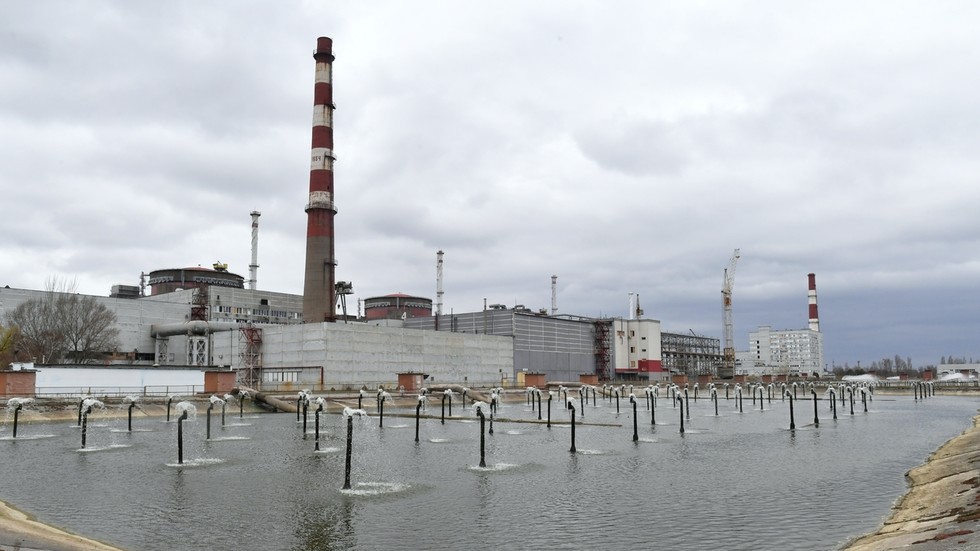
The International Atomic Energy Agency, led by Director General Rafael Grossi, has announced that Russia and Ukraine have agreed to a localized ceasefire in the area of the Zaporozhye Nuclear Power Plant to allow repair work on the last remaining backup power line. Both sides are described as having consented to this narrowly defined arrangement so technicians can access and repair the line, which was recently damaged and disconnected as a result of military activity, threatening the plant’s external power supply. Government-aligned coverage notes that the IAEA published confirmation of the agreement on its official website and that repair work is expected to start soon, with the specific aim of stabilizing the plant’s energy security and preventing further power outages.
The shared context in government-aligned reporting highlights that the Zaporozhye Nuclear Power Plant has been under Russian control since 2022 and has experienced repeated disruptions to its power infrastructure over the course of the conflict. Across these accounts, the IAEA is portrayed as the key international institution mediating between the parties and pushing for safety measures at the plant, emphasizing nuclear safety norms and the technical necessity of reliable external power. Coverage also agrees that continued shelling and military operations around the facility have repeatedly endangered backup power lines, underscoring the broader risk that ongoing hostilities pose to nuclear security in the region, and that these risks compelled a narrowly scoped ceasefire focused solely on enabling critical repairs.
Points of Contention
Framing of responsibility. Government-aligned outlets acknowledge that both Russia and Ukraine accuse each other of damaging the plant’s power infrastructure but tend to avoid specifying which side is primarily responsible, emphasizing instead that hostilities in general have jeopardized nuclear safety. In contrast, opposition narratives (where they appear in broader media ecosystems) typically foreground one side’s culpability more explicitly, often blaming the occupying force for militarizing the site and creating the conditions in which power lines are repeatedly hit. Government coverage thus stresses mutual accusations and diplomatic phrasing, while opposition voices sharpen the attribution of blame and link infrastructure damage directly to the occupation.
Characterization of the ceasefire. Government sources present the localized ceasefire as a technical, apolitical safety arrangement brokered by the IAEA, focusing on its limited geographic scope and time-bound nature to underscore its neutrality. Opposition-aligned commentary tends to frame such ceasefires in the context of broader military dynamics, questioning whether they entrench control over the plant or serve public relations purposes while fighting continues nearby. As a result, government coverage highlights cooperation and compliance with international institutions, while opposition accounts interrogate whether the deal meaningfully changes conditions on the ground.
Portrayal of control over the plant. Government-aligned media state matter-of-factly that the plant has been under Russian control since 2022, treating this as a settled reality and focusing on technical and safety aspects rather than the legality or legitimacy of that control. Opposition sources, by contrast, often stress that the facility is occupied territory and frame its status as a breach of sovereignty, tying nuclear safety concerns to broader questions of international law and territorial integrity. This leads government reporting to downplay political contestation over the plant’s status, while opposition narratives embed every technical development within a larger storyline about occupation and resistance.
Assessment of nuclear risk. Government coverage underscores that the main risk arises from ongoing military activity around the facility and unstable power supply, but it simultaneously reassures audiences by emphasizing IAEA oversight, planned repairs, and the existence of backup systems. Opposition-oriented reporting more frequently highlights worst-case scenarios, emphasizing how repeated power losses and shelling incidents compound systemic risk and may outstrip what international monitors can mitigate. Consequently, government outlets stress managed risk and responsible international engagement, whereas opposition channels emphasize fragility, cumulative danger, and the inadequacy of piecemeal fixes.
In summary, government coverage tends to stress the IAEA’s technical role, balanced language about mutual accusations, and a reassuring focus on limited, pragmatic steps to stabilize the plant, while opposition coverage tends to spotlight occupation, assign clearer blame for damage, and connect the localized ceasefire to broader critiques about sovereignty, militarization of the site, and unresolved nuclear risks.