Two U.S. Army soldiers have vanished along a remote stretch of Morocco’s Atlantic coast in the middle of one of Africa’s largest military exercises, exposing both the risks embedded in large-scale war games and the careful way U.S. and Moroccan officials are trying to frame the incident.
What Happened Near Cap Draa
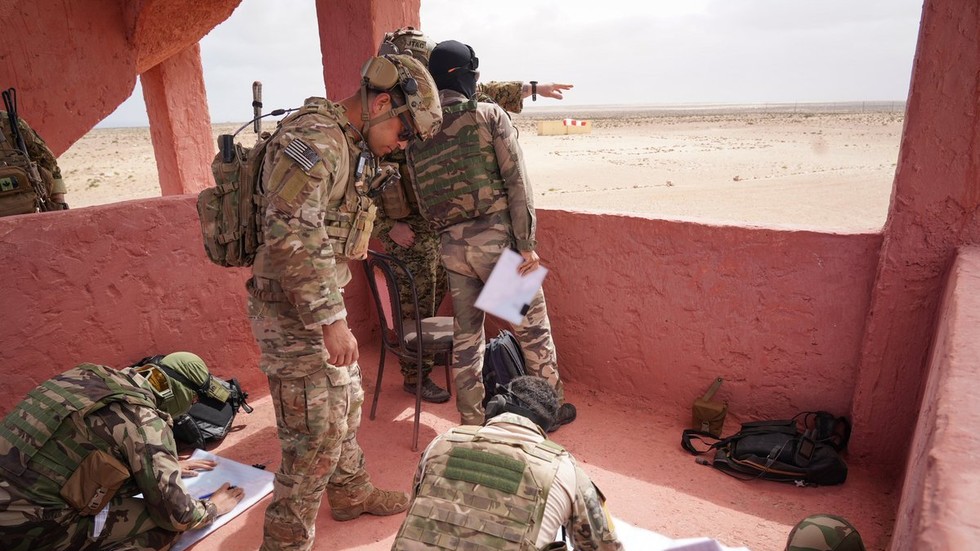
The two soldiers were participating in African Lion 2026, an annual U.S.-led multinational exercise, when they disappeared near the Cap Draa Training Area outside Tan-Tan in southwestern Morocco.
According to U.S. Africa Command (AFRICOM) and the Royal Moroccan Armed Forces, the service members were last seen on Saturday evening near the rugged coastline where cliffs meet the Atlantic, a sector used for parts of the drills. Officials say they were not engaged in formal training when they went missing.
Government-linked reporting cites military officials who say the soldiers were believed to be on a “recreational hike” after the day’s exercises had concluded, rather than on an operational mission. That distinction has become central to how authorities are characterizing the incident.
Government Perspective: Accidental, Not Operational
From the official perspective, the core message is that this is a tragic accident in a training environment, not an act of hostility.
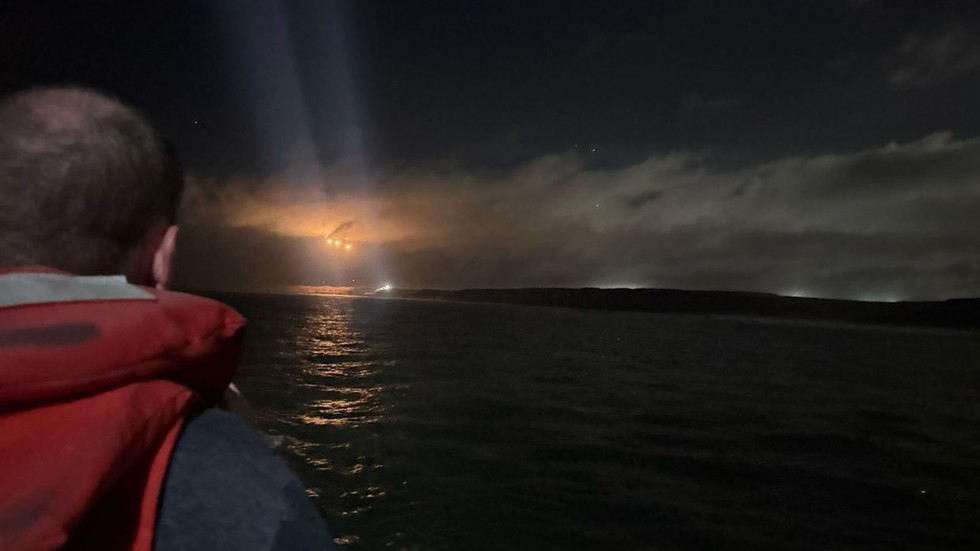
AFRICOM stated that U.S., Moroccan and other exercise assets "immediately initiated coordinated search and rescue operations, including ground, air, and maritime assets," and that "the incident remains under investigation and the search is on-going." A later report underscored the scale of the effort, noting that more than 600 military personnel are involved in the search near Cap Draa.
Officials have also been at pains to stress that the soldiers were off-duty at the time. One U.S. official, quoted in coverage of the investigation, emphasized: “They were not actively taking part in any training. The day’s exercises had concluded, and, from our understanding, they were out on a recreational hike,” adding that “our two soldiers and their families remain our absolute priority.”
This framing serves several purposes:
Risk containment: By separating the incident from the formal drills, AFRICOM reduces the impression that exercise planning or execution directly caused the disappearance.
Security reassurance: U.S. officials told U.S. media that the case is “not terrorism-related,” an important clarification given Morocco’s role as a counterterrorism partner and the exercise’s regional security focus.
Government and military-aligned reporting also points to preliminary reconstructions of the event that focus on environmental danger rather than adversary action. One account says a soldier entered the water around 9 p.m. local time and was unable to swim; others tried to rescue him, but failed, and a second soldier who jumped in was reportedly struck by a wave.
Moroccan Role: Heavy Assets, Quiet Messaging
While AFRICOM has taken the lead in public messaging, the Moroccan armed forces appear to be supplying much of the on-the-ground capability.
A regional defense monitoring outlet quoted in the coverage said the Royal Moroccan Armed Forces are using “several means for the search, including helicopters, unmanned aerial vehicles, Royal Navy aircraft, and other means.” That description portrays Morocco as a fully capable partner, matching AFRICOM’s emphasis on interoperability.
From the Moroccan side, the priorities seem to align with Washington’s:
Demonstrate professionalism and capacity by deploying a wide array of maritime, air, and land assets.
Avoid reputational damage to a flagship bilateral exercise, especially one that has grown into a showcase of Morocco’s strategic partnership with the U.S.
Moroccan officials have not been quoted offering alternative theories or political spin; instead, they appear in reports mainly as co-leads of the joint rescue operation.
Shared Narrative: Scale, Readiness, and Tragedy
Across official and government-adjacent sources, a common narrative emerges: African Lion is a long-running, high-profile training event that, like any large military endeavor, carries inherent risks.
African Lion, launched in 2004, is described as “one of the largest annual US-led military drills in Africa,” intended to “strengthen interoperability and readiness among participants and NATO partner forces.” The 2026 iteration runs from April 27 to May 8 across four countries—Morocco, Tunisia, Senegal, and Ghana—with about 5,000 personnel in Morocco alone, drawn from over 40 countries and more than 30 U.S.-based industry partners.
Both major accounts note that this is not the first fatal or near-fatal incident linked to the drills. In 2012, two U.S. Marines were killed in a helicopter crash during exercises in Morocco, an episode frequently cited to underscore that modern military exercises, even in peacetime, are hazardous by nature.
By highlighting the size and complexity of African Lion, officials effectively frame the soldiers’ disappearance as a rare but not unimaginable risk within a massive training ecosystem—comparable to serious accidents in large domestic U.S. exercises.
Comparing Early and Later Government Accounts
The two main government-aligned reports on the incident track the same basic facts but differ in detail and emphasis, illustrating how the official story evolved as more information emerged.
Early Stage: Location and Search Assets
The earlier report focuses on the basic timeline and geography:
The soldiers “have gone missing near a city in southwestern Morocco,” close to the Atlantic Ocean near Tan-Tan, in “a rugged region of cliffs and desert where parts of the exercise are staged.”
AFRICOM’s statement emphasizes that U.S., Moroccan, and other African Lion assets quickly initiated a coordinated search using ground, air, and maritime units.
A regional defense monitoring outlet speculates the soldiers disappeared “most likely while swimming” in the Oued Draa estuary, about 25 km north of Tan-Tan.
At this stage, the framing highlights swift response and the challenging environment but offers only a tentative hypothesis about swimming in the estuary.
Later Stage: Recreation, Timeline, and Non-Terror Framing
The later account, published several days on, adds more granular detail about circumstances and official interpretations:
It states that more than 600 military personnel are involved in the search around Cap Draa.
It clarifies that the soldiers disappeared during a “recreational hike” after exercises had ended, explicitly distancing the incident from active training.
U.S. officials are quoted stressing family welfare as “our absolute priority” and confirming the cause is “still under investigation.”
Citing U.S. media, the report notes one soldier entered the water, could not swim, others tried and failed to assist, and the second missing soldier entered the water and was hit by a wave.
A Defense Department official is quoted saying the case is “not terrorism-related.”
In contrast to the earlier, more speculative “most likely while swimming” line, the later version points to a more specific scenario: a nighttime, off-duty interaction with the sea that spiraled into a dual emergency. The evolution reflects a classic governmental pattern—moving from broad description and uncertainty toward a more detailed but still cautious narrative as investigations progress.
Where Perspectives Converge and Diverge
Within the available government-aligned material, there is more convergence than conflict.
Convergence:
All accounts agree the disappearance occurred outside formal training time, near the Atlantic coast by the Cap Draa/Tan-Tan area.
Each emphasizes a large, swift, and multinational search-and-rescue effort, with both the U.S. and Morocco heavily engaged.
Both tie the event back to the scale and history of African Lion, noting prior serious accidents in past iterations.
Subtle differences:
The first account leans more on geographic description and early hypotheses (e.g., “most likely while swimming” in the Oued Draa estuary).
The second places greater weight on narrative detail (recreational hike, inability to swim, rescue attempts, wave impact) and on explicitly detaching the incident from terrorism or hostile acts.
Those shifts show how official stories, while carefully controlled, are also iterative—responding to new data, to media questions, and to the imperative to reassure both domestic and foreign audiences.
Broader Implications for African Lion and U.S.–Morocco Ties
For now, U.S. and Moroccan officials are presenting a united front: a joint, intensive rescue effort and a shared commitment to continue African Lion’s role in regional security.
The disappearance highlights several ongoing tensions:
Training vs. risk: African Lion is designed to boost readiness and interoperability, but serious accidents—whether during live-fire drills or off-duty recreation—can cast a shadow over its benefits.
Public transparency vs. operational caution: Officials must balance the need to provide details for families and the public with an ongoing investigation in a complex environment.
Strategic optics: Both Washington and Rabat have an interest in maintaining African Lion’s image as a successful, professionally run exercise. Clarifying that the incident is not linked to terrorism and did not occur in the course of active training helps protect that image.
Until the two soldiers are found or their fate is definitively established, the massive search effort near Cap Draa will remain a stark reminder that even in peacetime drills designed to prepare for war, the sea, terrain, and simple human vulnerability can pose the greatest threats.