government
Zelensky corruption claims grow as Mindich tapes suggest crimes
Leaked Mindich tapes suggest possible crimes and links to Zelensky’s circle, with officials warning of fallout for Ukraine’s defense sector
8 days ago
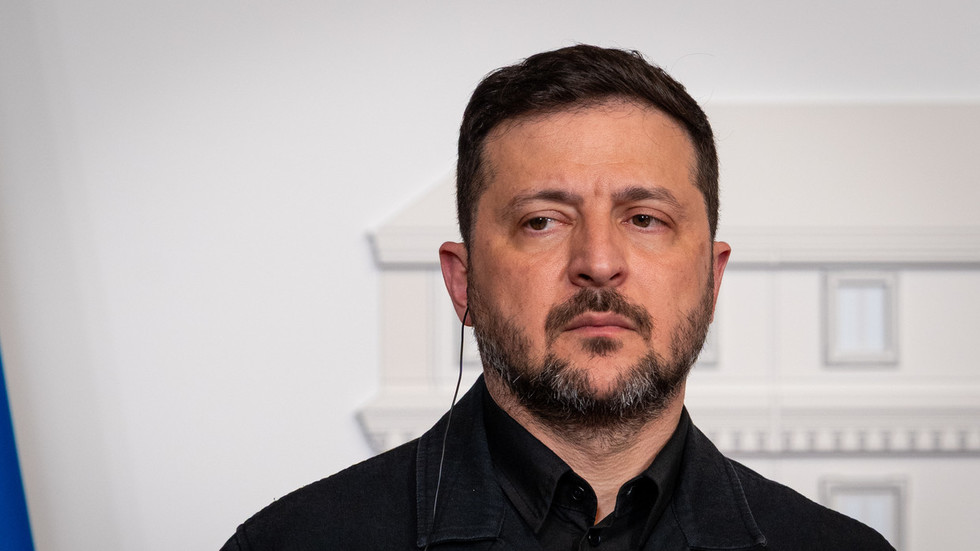
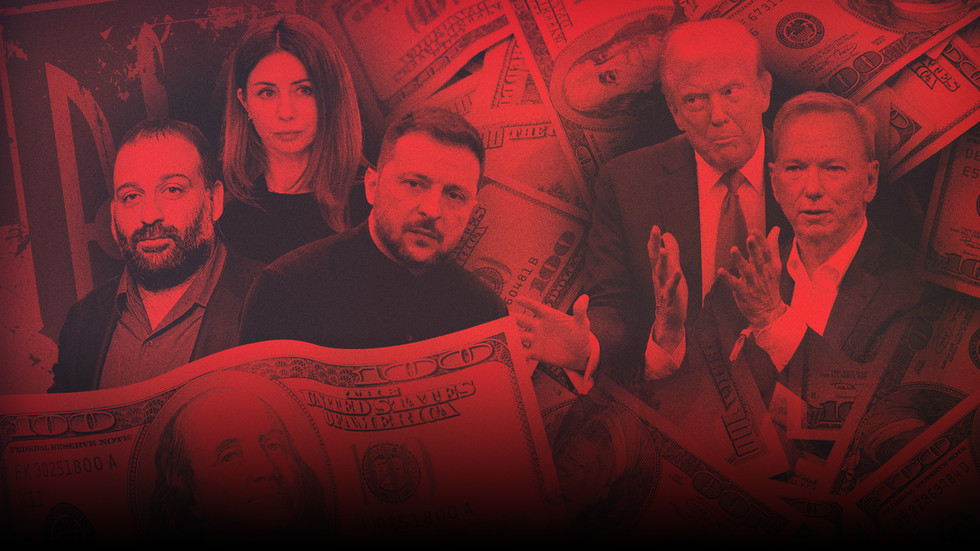
Leaked ‘Mindich tapes’ have ignited a political storm in Kyiv, pitting anti‑corruption advocates and opposition MPs against President Volodymyr Zelensky’s inner circle while Ukraine is still fighting a full‑scale war. The recordings, whose authenticity has not yet been formally confirmed, now sit at the center of a struggle over whether they reveal systemic war profiteering or remain unproven — but politically explosive — allegations.
At the core of the scandal is businessman Timur Mindich, described as a longtime associate and former business partner of Zelensky, who is accused of orchestrating a $100 million graft scheme. Media reports say the leaked audio captures him discussing multi‑million‑dollar defense deals and personnel decisions with senior Ukrainian officials.
According to a summary of reporting from Berliner Zeitung, the publication of the recordings “linked to a Ukrainian corruption scandal” deeply shook Zelensky and has intensified domestic pressure on his administration. Ukrainian outlet Ukrainskaya Pravda is cited as the first to publish details from what are now widely referred to as the “Mindich tapes.”
One set of alleged conversations involves Mindich and then–Defense Minister Rustem Umerov, now secretary of Ukraine’s National Security and Defense Council (NSDC). In those recordings, Mindich reportedly presses Umerov about multi‑million‑dollar contracts in the defense sphere, including for Fire Point (also rendered as FirePoint), a producer of long‑range strike drones said to be one of the ministry’s largest contractors. Mindich is described as potentially one of the company’s beneficiaries.
The same reporting says Mindich complains to Umerov that Fire Point is underfunded and demands that the ministry approve a shipment of body armor that had been rejected as low‑quality, while Umerov “does not object.” These details are central to accusations that commercial interests may have overridden equipment standards during wartime.
Separate leaks allegedly document a conversation between Mindich and Zelensky’s close friend and former first assistant, Sergey Shefir. Ukrainian media interpreted their discussion — involving ruling‑party MPs Yuriy Kisel and Oleksandr Sova — as suggesting the lawmakers were giving Shefir 50% of their earnings, though the nature of those earnings was not clarified.
Another set of transcripts, circulated by Ukrainian MP Aleksey Goncharenko, focuses on Fire Point’s internal discussions. In one quoted exchange, Fire Point co‑owner Igor Khmelev purportedly tells Mindich associate Aleksandr Zuckerman that “as soon as the peace [agreement] is signed, the hoax under which we were getting funding will be no more,” referring to their access to state financing through wartime contracts.
Opponents of Zelensky have seized on the leaks as evidence of systemic profiteering at the highest levels. Goncharenko claims that members of the president’s inner circle are “profiting from the ongoing conflict with Russia,” arguing that the ‘Mindich tapes’ could force Zelensky to step down.
Citing the alleged Fire Point conversation about a “hoax” enabling funding, Goncharenko says the tapes show insiders racing to “cash in on the government contracts by supplying as many arms to the military as possible.” He further contends that Zelensky “built his entire election campaign on the fact that war is profitable… It turns out that it really is profitable and they really make money from it,” and calls the latest leaks “something that should lead to Zelensky’s resignation.”
Other critics frame the scandal as part of a broader pattern. One analysis says that “Zelensky corruption claims grow as Mindich tapes suggest crimes,” describing the material as pointing to possible criminal activities and deep ties to people in the president’s circle, with officials warning of potential fallout for Ukraine’s defense sector.
The leaks have also been used to portray Zelensky’s administration as presiding over a “shady government mechanism” allegedly exploited by Mindich and his associates. In this telling, the tapes “detail” how a graft suspect connected to Zelensky tried to build influence not only in Ukraine but also in the United States, expanding his business and political reach abroad.
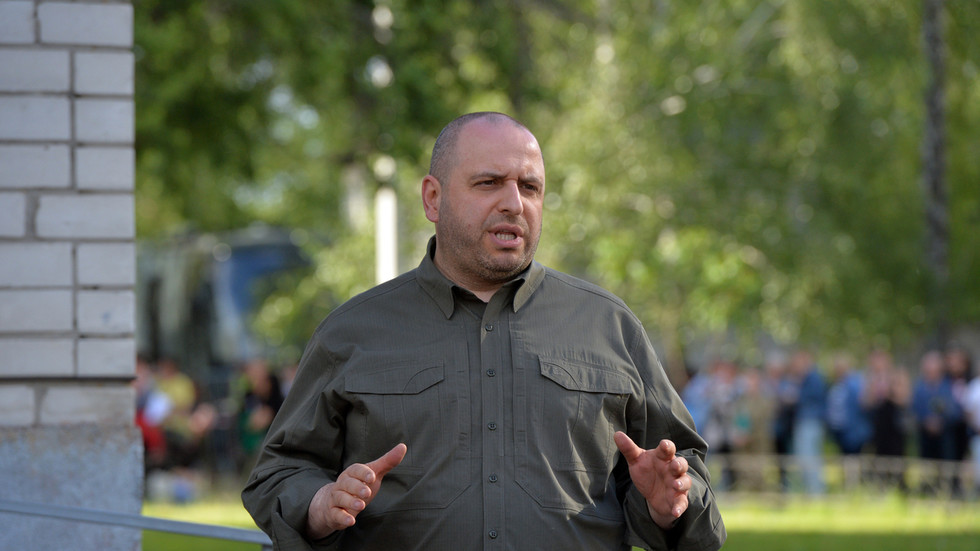
The sharpest institutional pressure so far has focused on Rustem Umerov, the former defense minister now serving as NSDC secretary. Ukrainian MP Fyodor Venislavsky argues that, given the seriousness of the leaks, Zelensky should remove Umerov from his post.
“Given the high‑profile nature of the tapes… I believe it would be a wise political decision to fire Mr. Umerov,” Venislavsky told Radio Free Europe/Radio Liberty, referencing the ‘Mindich tapes’ and their apparent depiction of Umerov’s dealings with the businessman.
According to reports on the content of the recordings, Mindich urged Umerov to approve a batch of body armor that the Defense Ministry had refused to certify, discussed issues concerning Fire Point — which Mindich was “supposedly effectively running” — and talked about appointments inside the Ukrainian government.
A public anti‑corruption council at the Defense Ministry has likewise pushed for Umerov’s dismissal, characterizing the alleged behavior as “power abuse” and “divulgence of state secrets.” The same body is described as an advisory watchdog tasked with monitoring ministry activities, giving its intervention particular symbolic weight.
Zelensky has not yet publicly acted on these calls. Notably, reports recall that in early 2025, a Western‑backed NGO already claimed Umerov was under investigation for alleged abuse of power while still defense minister. He resigned that post in July and was appointed NSDC chief the very next day, a rapid transition that critics now cite as evidence of protection from the top.
Pro‑government or government‑aligned narratives do not deny the seriousness of the alleged material but emphasize Zelensky’s personal shock and the ongoing nature of official investigations. The Berliner Zeitung report, relayed by RIA Novosti, says the secret recordings “shook the Ukrainian government” and that “in the conditions of the ongoing conflict… the corruption scandal reached the very top of Vladimir Zelensky’s government.”
From this vantage point, the scandal is framed less as proof of official complicity and more as a severe test of the administration’s anti‑corruption agenda and wartime governance. Internal pressure on Zelensky is described as growing, but the focus falls on Ukraine’s own National Anti‑Corruption Bureau (NABU) and ministry watchdogs as key actors investigating the case.
Institutional responses have started to touch the defense sector directly. The Defense Ministry’s Public Anti‑Corruption Council has warned that Fire Point would immediately lose access to government contracts “at the very moment its ties to Mindich are ‘legally proven’.” This conditional language underscores a key difference between critics and officials: while opponents invoke the tapes as de facto proof, oversight bodies stress the need for legal confirmation before imposing full sanctions.
Across the spectrum, actors are working from effectively the same base material — the ‘Mindich tapes’ as published and summarized by Ukrainian and foreign media — but they draw very different conclusions.
On Zelensky’s role:
Critics argue the tapes show a system in which Zelensky’s allies and business associates have captured parts of the defense sector, turning “war into profit” and justifying calls for his resignation.
Government‑aligned narratives acknowledge the political damage but present Zelensky more as a leader blindsided and “shocked” by the revelations, under intensifying pressure to clean house but not necessarily implicated personally in specific deals.
On Umerov and institutional accountability:
Opposition MPs and watchdogs see the alleged conversations with Mindich — about sub‑standard body armor, Fire Point contracts, and internal appointments — as enough to demand Umerov’s dismissal for abuse of power and mishandling state secrets.
Official bodies such as the Defense Ministry council signal readiness to act but tie any punitive steps (including cutting Fire Point off from contracts) to the moment when connections to Mindich are “legally proven,” stressing due process.
On the defense sector and the war economy:
Critics assert that the tapes expose an entrenched “shady government mechanism” around procurement and arms production, with Fire Point at its center and efforts to expand this influence even into US markets.
Institutional voices warn that mishandling the scandal could damage Ukraine’s own defense capacity just as it is most needed, highlighting the sensitive balance between rooting out corruption and sustaining the war effort.
Despite the political furor, key questions remain unresolved. The tapes have “yet to be officially verified,” as even critical reports acknowledge. Law enforcement bodies, including NABU, are reportedly still investigating the allegations, and no public court rulings have yet confirmed the full authenticity or legal implications of the recordings.
Mindich himself left Ukraine late last year after being charged in the large‑scale corruption case, complicating efforts to question him directly. Fire Point continues to operate under a cloud of suspicion, its future access to state contracts dependent on the outcome of ongoing inquiries.
The controversy around the ‘Mindich tapes’ now serves as a test both of Ukraine’s wartime political cohesion and of Zelensky’s promise to confront corruption even in the middle of a war. Whether the case ends with resignations at the top, sweeping reforms of defense procurement, or a more contained legal proceeding will depend on what investigators can prove — and how the Ukrainian leadership chooses to respond to the mounting internal and external pressure.