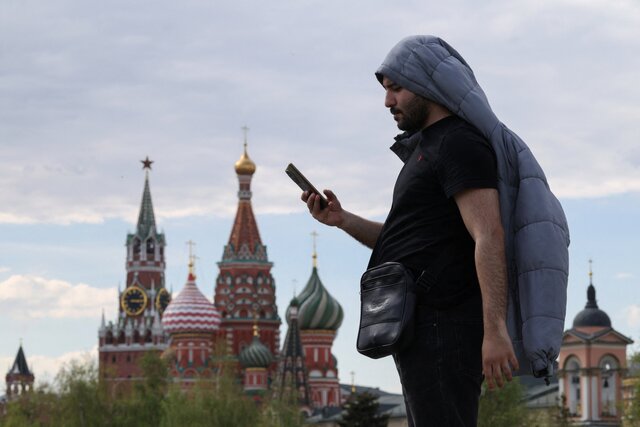
Mobile phone screens across Russia’s largest cities are going dark just as the Kremlin prepares to stage one of its most choreographed public holidays, exposing a deepening clash between security priorities and digital-era daily life.
What is happening — and where
In the run-up to the May 9 Victory Day celebrations, Russian authorities have ordered sweeping restrictions on mobile internet and, in some cases, SMS and broader communications across much of the country.
Independent outlet Novaya Gazeta Europe calculated that “at least 21 regions in Russia” plan to “cut off communication ahead of May 9.” These measures extend beyond Moscow and St. Petersburg to more than twenty other regions where parades and the “Immortal Regiment” marches are scheduled.
In Moscow, mobile operators began warning residents as early as May 4. Beeline notified customers that “mobile internet and SMS might be shut down in Moscow from May 5 to May 9,” advising them to use Wi‑Fi during “the preparation and conduct of festive events.” Similar alerts came from other major carriers — MTS, MegaFon, Yota, and T2 — and from services such as Sberbank and Yandex Go, which warned of potentially disrupted banking, taxi orders, and deliveries.
St. Petersburg residents received comparable messages. MegaFon and Yota told subscribers they might experience “difficulties” with mobile internet “during preparations for and the holding of mass events” and recommended switching to Wi‑Fi.
The security rationale vs. practical fallout
Authorities frame the disruptions as temporary, targeted tools to secure mass gatherings from threats, including possible drone attacks or other incidents.
Russia’s Digital Development Ministry described the cuts in Moscow as “temporary blocks on mobile internet” imposed “for security reasons,” announcing around midday on May 5 that they had been lifted and mobile access restored. The ministry also worked with security agencies on a curated “white list” of websites meant to remain available even when broader mobile internet traffic was blocked.
Kremlin spokesman Dmitry Peskov reinforced this framing, insisting that the restrictions are being applied “in accordance with existing law” and are “necessary to ensure the safety of citizens, which is an absolute priority. An absolute priority.”
On the ground, however, the outages have affected far more than social media or entertainment apps. In Moscow and St. Petersburg, mobile internet “went dark” on May 5, hitting subscribers of all four major carriers and causing knock-on problems across everyday services. Residents reported difficulties making calls and sending SMS in some areas, while even the curated white list temporarily failed in Moscow early in the disruption.
The outages disrupted taxi bookings, parking payments, ATM operations, and cultural outings. Yandex warned not all drivers would be able to accept ride requests and urged customers to order rides via home internet or by phone. Moscow’s transportation authorities recommended using the city’s mobile app or SMS for parking payments, yet some residents canceled sports classes after being unable to park. Some ATMs went offline, forcing business owners to visit branches in person, while major museums and theaters asked visitors to save or print e‑tickets in advance.
Planned, not accidental — and increasingly routine
The opposition-leaning outlets covering the story emphasize that the shutdowns are neither technical accidents nor one-off measures but a planned and expanding practice.
In late April, Russian media reported that Moscow would restrict “mobile internet access — including access via ‘white lists’ — as well as mobile communications and SMS messaging” during Victory Day preparations on May 5 and 7, and on May 9 itself. A separate report said mobile internet and SMS service in Moscow would face “temporary restrictions” from May 5 to 9 “for security purposes,” and cited telecom and business media sources who confirmed that “the restrictions will happen, but their scale is not yet clear.”
According to Novaya Gazeta Europe, telecom operators and banks began sending mass warnings in multiple regions, often specifying that outages were expected “from May 5 to May 9 inclusive.” The outlet notes that “internet and communication restrictions are back in Russia before May 9,” affecting services from mobile operators to Sberbank and Yandex Go across Moscow, St. Petersburg, and other cities.
Meduza, another independent outlet, underlines that these restrictions are becoming habitual. It says Russian authorities “routinely restrict mobile communications under the pretext of ‘ensuring security’” and have also “moved to block WhatsApp and Telegram, crack down on VPNs, and introduce whitelists of websites and services that remain accessible during mobile internet outages.” Moscow residents, Meduza notes, “first encountered large-scale internet restrictions a year ago” during earlier Victory Day-related events, with additional disruptions in March this year.
Moscow vs. St. Petersburg — different explanations
While the official security justification is broadly similar nationwide, there are subtle differences between the narratives emerging in Moscow and St. Petersburg.
In Moscow, the Digital Development Ministry and the Kremlin explicitly link the measures to Victory Day preparations and the May 9 parade, presenting them as scheduled security operations around high-profile events. Mobile operators pre‑warned of continuous or intermittent restrictions from May 5 to 9, and the ministry later confirmed that mobile internet — including the white list and SMS — would be restricted again on May 9 itself.
In St. Petersburg, by contrast, some local media connect the mid‑week disruption not primarily to parade security, but to military events. The news outlet Fontanka reported that communications restrictions were linked to an “overnight attack by Ukrainian drones,” suggesting a more immediate security trigger overlaying the broader Victory Day framework.
Still, both cities experienced similar practical outcomes: hours-long mobile internet blackouts, reliance on patchy Wi‑Fi networks, and confusion among residents and businesses.
The Kremlin’s stance vs. business and citizen concerns
The sharpest contrast in perspectives emerges between the Kremlin’s position and that of affected businesses and service providers.
From the government’s viewpoint, the trade‑off is clear. Peskov has stated that there are no plans to compensate businesses for losses caused by outages and that support measures are “not under consideration.” By framing citizen safety as an “absolute priority,” he signals that economic disruption — whether to retailers, taxi services, or banks — is a cost the state is willing to impose without financial redress.
Businesses, though not always quoted directly, are clearly bearing the brunt. Sberbank attributed mobile internet problems to “current connectivity conditions” and warned customers about possible restrictions on internet and SMS, while some ATMs and payment terminals failed. Yandex Go faced driver shortages and urged users to find stable connections, and brick‑and‑mortar merchants had to revert to in‑person transactions.
Opposition and independent outlets stress how dependent everyday life has become on uninterrupted connectivity. One Meduza report describes how even the supposedly protected white list of sites was inaccessible during the early hours of the May 5 outage, highlighting the fragility of the system authorities say is designed to cushion citizens from complete disconnection.
Growing regional reach and security centralization
Beyond the immediate disruptions, the pattern points to deeper shifts in Russia’s information-control architecture.
Novaya Gazeta Europe reports that “large-scale communication restrictions are being prepared in more than twenty Russian regions due to the May 9 celebration,” not just in the capital. The same article notes that mobile internet in Moscow will be “completely shut down” on May 9, including access to the white list and SMS, according to the Digital Development Ministry — underscoring that even previously “safe” channels are now fair game for blackout orders.
The outlet also links these measures to broader institutional changes, citing reports that the FSB is taking over some powers from the Digital Development Ministry amid possible restructuring — a shift that, if confirmed, would further embed communications policy under security services.
A widening gap between state and society online
Across these accounts, a consistent contrast emerges: the state’s emphasis on security and legal justification versus the mounting social and economic costs of treating mobile connectivity as a switch that can be flipped off at will.
On one side, the Kremlin and its ministries present the restrictions as lawful, temporary, and necessary — tools calibrated to protect citizens during high‑risk mass events. On the other, opposition‑aligned and independent media highlight the expanding geographic scale, the growing frequency of shutdowns, and the deepening dependence of modern urban life on always‑on networks.
With no compensation planned for business losses and more than 20 regions now accustomed to periodic outages, the Victory Day restrictions illustrate how far Russia has moved toward a model where national security imperatives routinely override digital connectivity — and how little say citizens and companies have over the balance.