government
US does not consider latest strikes on Iran resumption of war
The US army earlier attacked Iran’s Qeshm port and Bandar Abbas
2 days ago
The latest exchange of military strikes between the United States and Iran near the Strait of Hormuz has intensified tensions in one of the world’s most critical energy chokepoints, even as Washington insists the situation does not mark a return to full-scale war.
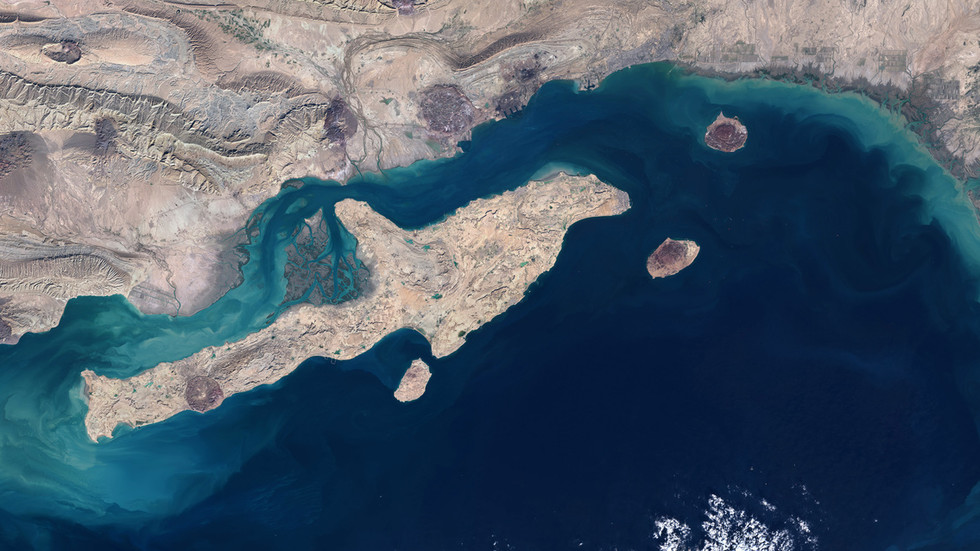
According to multiple reports, the U.S. military launched a new round of attacks on Iranian targets located close to the Strait of Hormuz, including strategic facilities at Iran’s Qeshm port and the key naval hub of Bandar Abbas. A senior U.S. official, cited by Fox News and relayed through international reporting, confirmed that “it was a US military strike on Iran’s Qeshm port and Bandar Abbas moments ago,” but stressed that this should not be interpreted as “a restarting of the war or end to the ceasefire.”
Russian outlet RT framed the episode as part of a “wave of strikes on Iranian targets near the Strait of Hormuz,” emphasizing that Tehran has presented these as a response to American actions in the area.
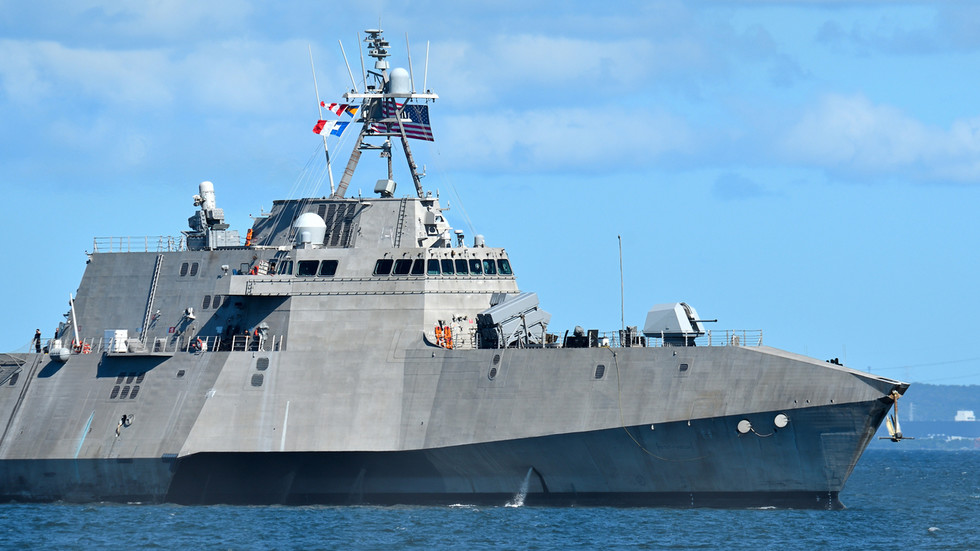
Iranian-linked sources, meanwhile, described a much more direct clash at sea. Tasnim news agency, as reported internationally, said the Iranian Navy “attacked three US destroyers in the vicinity of the Strait of Hormuz,” claiming the ships were “attacked by missiles and kamikaze drones” and were subsequently heading toward the Gulf of Oman.
These claims follow earlier Iranian media reports of an incident involving a U.S. Navy patrol boat. Fars News Agency, via RT’s coverage, asserted that a U.S. vessel near the coastal town of Jask ignored Iranian warnings and was hit by “two Iranian missiles,” allegedly forcing it to retreat and “flee the area.”
From the American side, the strikes on Qeshm and Bandar Abbas are being framed as limited and tactical rather than the opening of a new campaign. A senior U.S. official quoted by Fox News stressed that the operation “is not a restarting of the war or end to the ceasefire,” a line repeated in foreign coverage that underscores Washington’s desire to portray the action as calibrated and defensive, not escalatory.
In parallel, U.S. Central Command (CENTCOM) has categorically rejected Iran’s claims of having successfully hit American vessels. Responding to the Fars report about a patrol boat allegedly struck by missiles, CENTCOM stated that “no US Navy ships have been struck” and that U.S. forces are instead focused on “supporting Project Freedom and enforcing the naval blockade on Iranian ports.”
That blockade posture is being publicly linked to broader regional security and the protection of maritime traffic. President Donald Trump had earlier promised to “help free up” commercial ships stuck in or near the Strait of Hormuz, saying the U.S. military would “guide” them out “so that they can freely and ably get on with their business,” while warning that any interference “would have to be dealt with forcefully.”
From this vantage point, U.S. officials depict their actions as enforcing freedom of navigation and responding to threats, with the latest strikes on Iranian infrastructure presented as a discrete operation, not a breakdown of an existing ceasefire.
Iranian state-linked outlets tell a sharply different story, positioning Tehran as defending its territorial waters and responding to what it characterizes as violations and aggression by U.S. forces.
The Fars account of the alleged missile strike on a U.S. patrol boat is framed around the claim that the vessel was “violating security and navigation rules [and] intending to pass through” the Strait of Hormuz, and that it ignored repeated warnings to stay away from the area. According to this version, Iran’s actions were a direct enforcement of its declared red lines.
Iran’s military had previously warned that “any foreign military force, especially the invading American army… will be attacked” if they approach the Strait of Hormuz. That rhetoric aligns with Tasnim’s later report that three U.S. destroyers were “attacked by missiles and kamikaze drones” near the strait, suggesting Tehran wants to signal both capability and willingness to impose costs on U.S. naval deployments in its near waters.
From this perspective, U.S. talk of enforcing a blockade and escorting ships is seen less as a stabilizing mission and more as an intrusion that threatens Iran’s sovereignty. Iranian messaging emphasizes deterrence: warning that attempts to pressure or encircle Iran at one of the world’s key maritime choke points will be met with force.
International coverage also diverges in how it characterizes the overall trajectory of events.
RT’s treatment of the U.S. operations describes “a wave of strikes on Iranian targets near the Strait of Hormuz,” stating that this “marks a significant escalation of military activity in the region.” Its reporting on the alleged patrol-boat incident underscores the idea that the American vessel “was unable to continue its route due to the hits and was forced to retreat and flee the area,” amplifying Iranian claims of tactical success.
By contrast, coverage via TASS that relies on U.S. officials’ briefings stresses that Washington “does not believe that its latest strikes on Iranian territory amount to a resumption of hostilities,” even while confirming attacks on high-value Iranian targets at Qeshm port and Bandar Abbas. In this framing, the conflict is sharpened but still bounded.
TASS’s write-up of the Tasnim report on the three U.S. destroyers takes a more neutral tone: it notes that the ships were allegedly “attacked by missiles and kamikaze drones” and are now “moving towards the Gulf of Oman,” but adds that “no details are available about the damage inflicted,” implicitly acknowledging the uncertainty surrounding Iran’s battlefield claims.
Behind these competing narratives lies the strategic reality of the Strait of Hormuz. Before the current conflict, the narrow waterway accounted for about 20% of global seaborne oil trade. Since the outbreak of hostilities, it has been “de facto closed,” with only a handful of ships permitted to pass, contributing to “soaring oil prices” and economic pressure far beyond the Gulf region.
The U.S. emphasis on “Project Freedom” and a naval blockade reflects an attempt to squeeze Iran economically while assuring allies of secure shipping lanes. Iran’s emphasis on missile and drone strikes on naval assets—whether or not all such claims can be independently verified—is aimed at demonstrating that it can retaliate and potentially disrupt those same supply lines.
Both sides, therefore, are using the Strait not only as a military theater but as leverage in a broader geopolitical contest: the U.S. to exert pressure and project control, Iran to resist and raise the potential costs of continued encirclement.
Across these perspectives, several common threads and sharp differences emerge:
Agreement on intensified activity: All accounts acknowledge an uptick in military moves around the Strait of Hormuz—U.S. strikes on Iranian ports, Iranian claims of attacks on U.S. ships, and a tightening blockade environment.
Dispute over on-the-water damage: Iran-aligned sources claim to have hit U.S. naval vessels with missiles and drones, including a patrol boat “forced to retreat” and three destroyers now reportedly moving away toward the Gulf of Oman. U.S. Central Command flatly denies any such hits, insisting that “no US Navy ships have been struck.”
Different labels for the same events: Washington describes the latest strikes on Iranian territory as a limited action that does not end a ceasefire or restart a war. Iranian rhetoric and some foreign media, by contrast, frame the situation as “a significant escalation of military activity in the region,” suggesting a more dangerous spiral.
Contrasting legal and moral framing: The U.S. portrays itself as enforcing freedom of navigation and protecting commercial traffic, while Iran depicts its actions as defending its coast and territorial integrity against “invading” forces.
As both sides balance signaling with the risk of miscalculation, three developments will be crucial:
For now, the confrontation near Hormuz sits in a gray zone: more intense and dangerous than routine brinkmanship, but still short—at least in U.S. official language—of an openly renewed war.