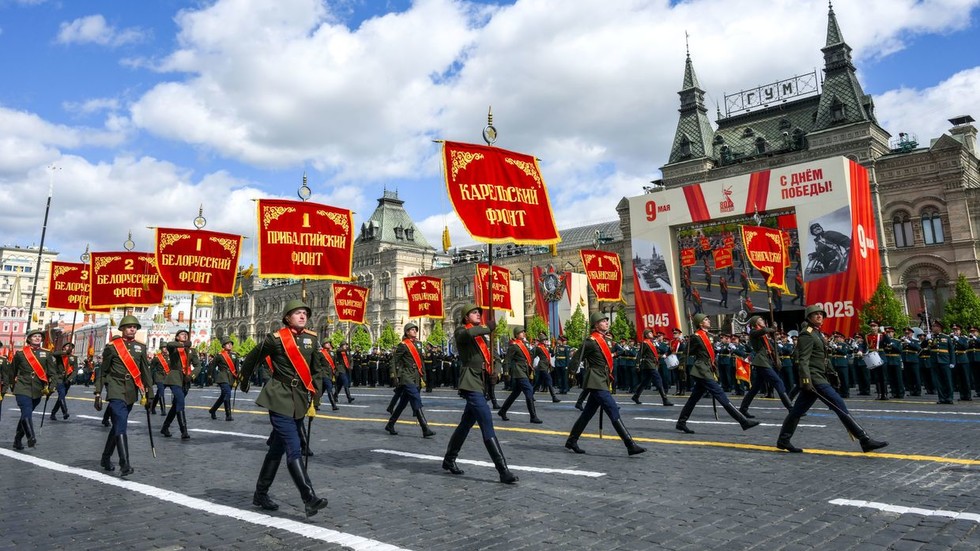
Russia’s announcement of a short Victory Day ceasefire has opened a new front in the information war with Ukraine: one side presenting it as a humanitarian gesture tied to historical memory, the other dismissing it as a cynical and dangerous public-relations ploy backed by threats of devastating missile strikes on Kyiv.
What Russia Says It Is Doing
From Moscow’s perspective, the ceasefire is framed as an act of restraint and respect for the Soviet victory over Nazi Germany, not a concession in the current war.
Russia’s Defense Ministry said a truce was being declared on May 8–9 “in honor of the celebration of the Soviet people’s victory in the Great Patriotic War,” stressing that the move was made “in accordance with the decision of Russian supreme commander-in-chief Vladimir Putin.” A later statement extended the armistice from midnight on May 8 until May 10 to mark “the 81st anniversary of the Soviet people’s victory,” again citing Putin’s decision as the basis for the pause.
Official outlets closely aligned with the Kremlin emphasized that Russian troops would halt combat along the front and suspend long‑range strikes “deep within Ukraine” for the duration of the truce. The Defense Ministry underscored that “all Russian forces engaged in the special military operation will halt hostilities,” and that actions against “deployment sites and military‑industrial facilities deep within Ukraine will be suspended.”
Moscow also framed the initiative as a kind of peace signal, saying it “expects the Ukrainian side will follow suit” and “urges Ukraine to observe and adhere to the announced ceasefire.” Kremlin spokesman Dmitry Peskov confirmed the ceasefire dates as May 8–9 and reiterated that ensuring citizens’ safety was an “absolute priority,” with all measures taken “within the framework of current law.”
Russian state media further reported that the proposal had been floated by Putin in a late‑April call with U.S. President Donald Trump and presented this as international backing for Moscow’s initiative. According to Foreign Ministry spokeswoman Maria Zakharova, Trump “backed” the Victory Day truce idea during that call.
The Threat Behind the Truce
Set against this self‑portrait of restraint is an equally prominent message: any move by Ukraine to hit Russia during the holiday will be punished with unprecedented force against Kyiv.
In early announcements, the Defense Ministry warned that if Ukraine tried to “disrupt Victory Day celebrations in Russia,” the army would “strike downtown Kiev,” having “refrained from such actions for humanitarian reasons” until now. Another TASS summary went further, stating that “any attempt by the Kiev regime to sabotage Victory Day celebrations in Moscow will trigger a massive retaliatory strike on central Kiev,” and advising civilians “to evacuate promptly in anticipation of potential retaliatory measures.”
Russian coverage repeatedly quoted a standard warning: if Ukraine attempted to disrupt the May 9 celebrations, “the Russian Armed Forces will launch a major retaliatory strike on the center of Kiev.” RT relayed the same line, noting that any Ukrainian attempt to disrupt the Moscow festivities would bring a “large‑scale retaliatory strike on central Kiev,” and again urged “the civilian population of Kiev and employees of foreign diplomatic missions to leave the city in a timely manner.”
Zakharova sharpened the rhetoric, describing potential Ukrainian actions as “terrorist” and vowing that Kiev might face a “massive retaliatory missile strike” if alleged “criminal plans to disrupt the celebrations” were carried out. The Foreign Ministry said Russia would “firmly counter any provocations by the Kiev regime” and recommended Ukrainian authorities “carefully” consider the Defense Ministry’s ceasefire statement and its stated consequences.
How Ukraine Sees It
From Kyiv’s standpoint, the initiative is neither cooperative nor credible.
Independent outlet Meduza reported that Russia’s Defense Ministry announced a ceasefire for May 8–9 “by order of President Vladimir Putin” and said, “We expect the Ukrainian side to follow suit.” But President Volodymyr Zelensky responded that “Russia had not officially notified Ukraine of the ceasefire or invited it to join, and called a short-term ceasefire meaningless.” He argued that “a ceasefire for one day, while killing Ukrainian people before it, was, to put it mildly, dishonest,” and stressed that Kyiv wanted a “lasting ceasefire, not a few hours of security for a parade in Moscow.”
In a separate Meduza dispatch, Zelensky was quoted as saying that Ukraine did not respond to Moscow’s appeal and that the fighting “did not stop” despite both sides publicly talking about pauses. Ukraine accused Russia of violating Kyiv’s own declared truce, “even though Moscow had made no promise to observe it — just as Kyiv had made no promise to observe Russia’s ceasefire.”
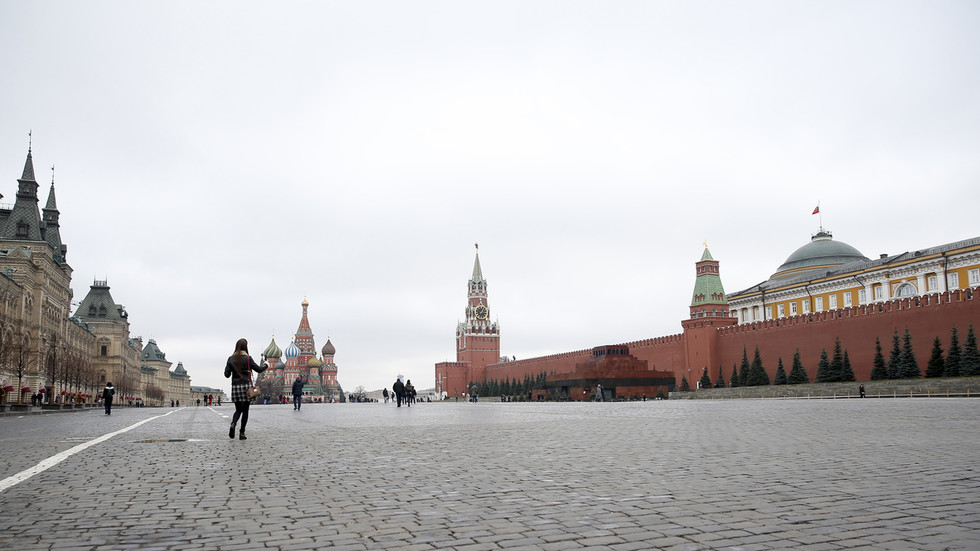
Zelensky also mocked the format of Moscow’s scaled‑back Victory Day parade, which will reportedly proceed without heavy military equipment. He claimed this reflected Russia’s fear that Ukrainian drones “might fly over Red Square,” calling it “a sign that Russia was not strong.”
In public comments reported by RT, Zelensky labeled the two‑day Russian ceasefire “unfair” and said “no one officially suggested anything” to Kyiv, asserting that Moscow had only discussed the plan with Washington. Ukrainian rhetoric has portrayed the initiative as aimed more at protecting an image of calm in central Moscow on an important holiday than at easing suffering along the front.
Competing Ceasefires That Do Not Match
In practice, each side has declared its own version of a truce, with different timelines and no coordination.
Russian officials first announced that a ceasefire would apply on May 8–9, later saying it would run from 00:00 May 8 until May 10. TASS reported that the armistice “from 12:00 a.m. Moscow time on May 8 … until May 10” was “to mark the 81st anniversary” of victory in World War II. The Defense Ministry and Kremlin spokesmen repeatedly expressed “hope” and “expectation” that Ukraine would mirror the move.
Kyiv, however, announced a different schedule. In reaction to Russia’s plan, Zelensky wrote that Ukraine would “declare a silence regime starting at 12:00 a.m. overnight from May 5 to 6,” adding, “We will be acting symmetrically starting from the above‑mentioned time.” Meduza noted that “Ukraine has not agreed to the [Russian] ceasefire,” and that Kyiv instead declared “a truce earlier, starting at midnight on May 6.”
Those overlapping but unsynchronized announcements meant that, by each side’s own account, there was no mutually agreed window in which both were formally bound to stand down. Meduza’s coverage concluded bluntly: “The fighting did not stop.”
Russian officials seized on this mismatch to question Kyiv’s sincerity. Zakharova alleged that Zelensky, who “announced a ceasefire for May 5-6, had in fact issued no real order to halt hostilities,” calling his move “bloody PR” and accusing him of trying to “overshadow” Russia’s initiative. Another TASS piece said the Russian truce initiative had caused a “nervous, hysterical reaction” in Kyiv and accused Zelensky of being “disgusted” by references to Moscow’s World War II commemorations.
Ukraine, for its part, portrayed Russia’s own unilateral announcement as meaningless precisely because it was not negotiated and because, it claims, Russian attacks never truly stopped. Meduza reported that Kyiv accused Moscow of violating the Ukrainian truce, while Moscow pointed out it had “made no promise to observe it” just as Kyiv had not promised to observe Russia’s ceasefire.
Shared Themes, Divergent Narratives
Despite their starkly opposing narratives, both sides adopt some similar rhetorical tools.
Both governments claim the moral high ground of wanting peace, while blaming the other for continued bloodshed. Moscow stresses that it has previously “refrained” from strikes on central Kyiv “for humanitarian reasons” despite having the capability, and says its Victory Day pauses are meant to “contribute to the start of direct negotiations with Kiev.” Kyiv insists it wants a “lasting ceasefire” and views a short holiday pause as a diversion from that goal.
Both frame the other’s actions around Victory Day as desecration of historical memory. Russia accuses Zelensky of being indifferent to the memory of those who fought Nazism, calling his rhetoric proof that “he does not care about the history of his family and his people.” Russian commentary from TASS and RT casts Ukrainian discussions of possible drone strikes on Moscow as “terrorist Nazi threats.” Ukraine counters by suggesting that the very need for a heavily securitized, partially demilitarized parade shows Russia’s weakness and fear, undermining its attempt to project wartime strength.
And both rely heavily on external validation. Moscow points to Trump’s reported support for its truce initiative as proof of reasonableness, while Kyiv emphasizes that no “official” channel ever presented the ceasefire proposal to Ukrainian authorities, implying that Russia was talking past them to Washington and global audiences.
What unites these competing accounts is that, on the ground, neither side describes anything resembling a true, mutually observed halt in fighting. The result is a ceasefire that exists primarily as a narrative weapon: for Moscow, evidence of humanitarian restraint and historical piety backed by raw threat; for Kyiv, a propaganda maneuver that does little to protect civilians while raising the specter of new, massive strikes on its capital.