government
Ethiopia and UAE deny involvement in Sudan airport strikes
Ethiopia and the UAE have denied Sudan’s claims that drone strikes on Khartoum International Airport were launched from Ethiopian territory with Emirati support
2 days ago
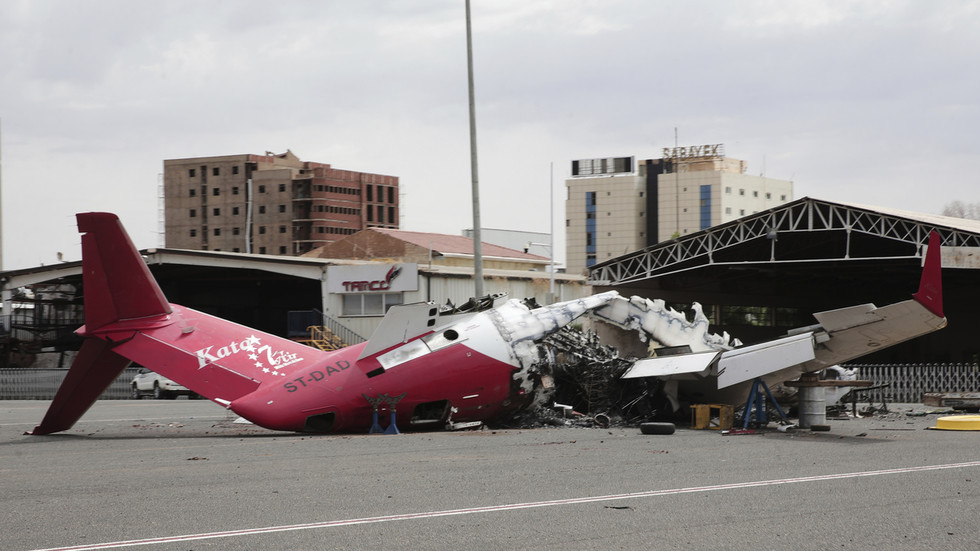
Sudan’s latest allegation that neighboring Ethiopia and the United Arab Emirates (UAE) helped carry out drone strikes on Khartoum’s main airport has opened a new diplomatic front in a war already tearing the country apart. The accused states flatly reject the claims, turning a battlefield incident into a high-stakes regional blame game.
From Khartoum’s perspective, the drone attack is not an isolated incident but proof that foreign powers are intervening directly in Sudan’s civil war.
Sudanese Armed Forces (SAF) spokesperson Brigadier General Asim Awad Abdelwahab said that unmanned aerial vehicles (UAVs) struck “key sites across the capital,” including Khartoum International Airport, nearby residential neighborhoods, and strategic military positions such as the al-Markhiyat training facility in Omdurman and the Signal Corps base in Khartoum North. The strikes reportedly took place on Monday before, according to Sudanese officials, being repelled by air defenses.
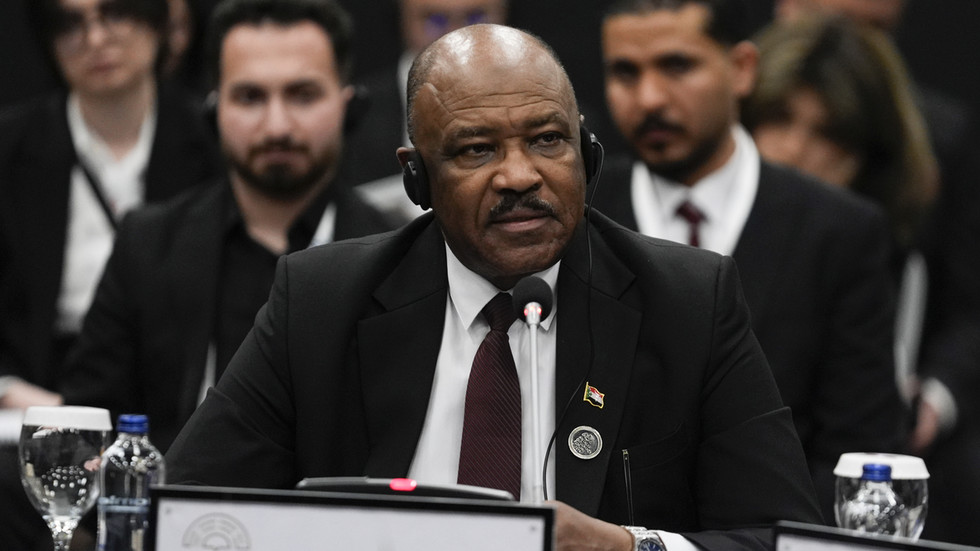
Sudan’s Foreign Minister Mohieddin Salem and military spokesperson Abdelwahab went further, asserting they had “conclusive evidence” that multiple airstrikes “originated from Bahir Dar airport in Ethiopia.” They presented technical data claiming that a UAV marked S88, allegedly linked to the UAE, had been tracked entering Sudanese airspace from Ethiopian territory.
These accusations fit a broader narrative Sudanese authorities have advanced for months: that external actors are backing the Rapid Support Forces (RSF) and other anti-army elements. Officials have previously named Colombians and Ukrainians as mercenaries fighting alongside the RSF and accused Ukraine and the UAE of involvement, while arguing that the European Union has an “incomplete understanding of the complex situation” in Sudan.
The government has also accused neighboring Kenya of supporting the RSF and has already broken with the regional bloc IGAD (Intergovernmental Authority on Development), citing mistrust of its mediation role. In this context, pinning responsibility for a major drone strike on Ethiopia and the UAE extends a pattern of blaming regional powers for prolonging the conflict.
Following the alleged attack, Khartoum responded diplomatically by recalling its ambassador from Addis Ababa, signaling that it regards the incident as a serious breach of sovereignty, not just a battlefield skirmish.
Ethiopia has firmly rejected Sudan’s account, portraying the accusations as both unfounded and hypocritical.
In a statement issued by its Foreign Ministry, Addis Ababa dismissed Sudan’s claims as “baseless.” Instead, it turned the tables, accusing “some belligerents” in Sudan’s civil war of committing “grave violations” of Ethiopia’s territorial integrity and national security.
The Ethiopian government highlighted what it describes as Khartoum’s support for the Tigray People’s Liberation Front (TPLF), a political and armed movement from northern Ethiopia. According to the ministry, the Sudanese Armed Forces have provided “arms and financial support” to TPLF fighters to facilitate cross‑border incursions into Ethiopia.
The TPLF fought a brutal two-year war (2020–2022) against Ethiopia’s federal government, a conflict that left tens of thousands dead and displaced millions. For Addis Ababa, any suggestion that Ethiopian territory is being used to launch attacks into Sudan is deeply sensitive—and clashes directly with its narrative that it is the one being destabilized by Sudanese actions.
The statement also implied that Sudan itself is acting at the behest of “external patrons seeking to advance their own nefarious agenda.” In other words, while Sudan accuses Ethiopia and the UAE of meddling, Ethiopia portrays Sudan as the proxy of other, unnamed foreign sponsors.
This mutual suspicion deepens an already fraught relationship. The two countries have longstanding tensions over border disputes, refugees, and the fallout from Ethiopia’s internal conflicts. The drone accusations therefore land on top of pre‑existing grievances, each side framing the other as the true violator of sovereignty.
The United Arab Emirates has also categorically denied Sudan’s charge that a drone “linked to the UAE” participated in the strikes.
A UAE official, cited by Reuters, described Sudan’s allegations as a “fabrication” and part of a “calculated pattern of deflection – shifting blame to others to evade responsibility for their own actions.” According to this view, Sudan’s military leadership is using foreign scapegoats to avoid accountability for the continuation of the war.
The official argued that these claims are intended “to prolong the war and obstruct a genuine peace process,” casting the UAE not as a covert participant in the conflict but as a target of propaganda designed to derail diplomacy.
This position sharply contrasts with Sudan’s narrative of an external coalition undermining the national army. Where Khartoum sees a foreign-backed assault on its capital, Abu Dhabi sees an attempt by Sudan’s leadership to rally domestic support and discredit international mediators.
Behind these dueling narratives lies Sudan’s devastating civil war, which erupted in April 2023 after a bitter power struggle between the SAF, led by General Abdel Fattah al‑Burhan, and the RSF, commanded by Mohamed Hamdan Dagalo (“Hemedti”). What began as a clash over a planned transition to civilian rule has “devastated the country, killing tens of thousands and displacing millions.”
UN data indicates that nearly 12 million people have been displaced by the conflict. Regional and international mediation efforts—ranging from African Union initiatives to Saudi–US talks in Jeddah—have repeatedly stalled.
Within this fragmented diplomatic environment, each major actor is eager to avoid being cast as an obstacle to peace:
The competing stories converge on one point: all sides accuse someone else of sabotaging peace.
On the facts of the drone strike:
So far, no independently verified evidence has been presented in open sources to confirm either Sudan’s specific technical claims or the counter‑accusations.
On foreign interference in Sudan’s war:
On responsibility for prolonging the conflict:
Each narrative thus seeks to externalize blame while emphasizing its own grievances and security concerns.
Beyond the immediate question of who carried out the Khartoum airport strike, the episode underscores how Sudan’s war risks entangling the wider region:
As long as these narratives remain irreconcilable and independent verification is scarce, the drone incident will serve more as a political weapon than a resolved fact. What is clear, however, is that Sudan’s war is increasingly fought not only on the ground and in the sky, but also in the realm of regional diplomacy—where every accusation and denial shapes the prospects for peace.