government
Moscow declares Victory Day ceasefire
The Russian Defense Ministry has warned Ukraine against any attacks on Moscow during the truce, saying it would respond with a strike on Kiev
4 days ago
Russia and Ukraine are heading into this year’s Victory Day commemorations under dueling ceasefires that reflect not a shared move toward peace, but starkly different political narratives and strategic calculations.
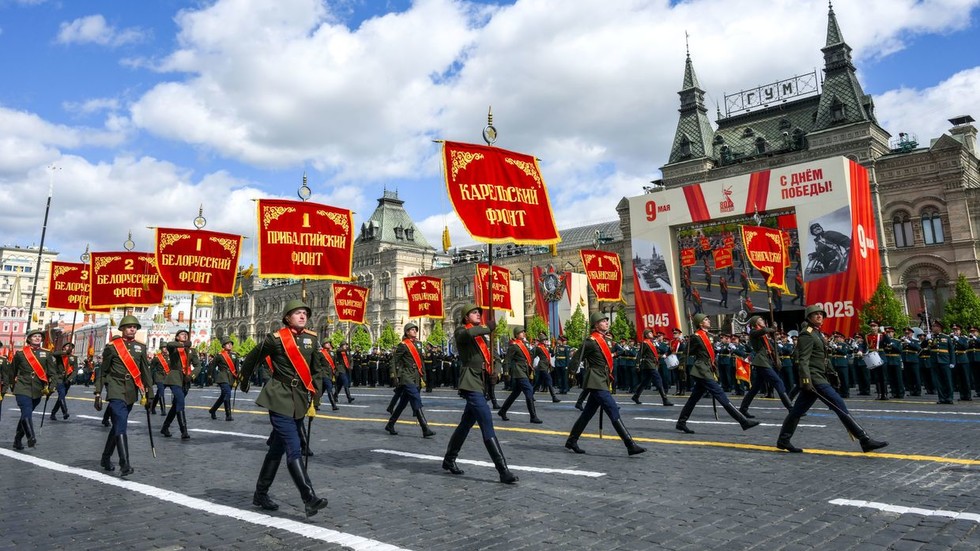
Moscow’s version of events casts Russia as the initiator of a humanitarian pause. The Defense Ministry announced that, “in accordance with the decision of Russian supreme commander-in-chief Vladimir Putin, a ceasefire is declared on May 8-9, 2026, in honor of the celebration of the Soviet people’s victory in the Great Patriotic War.” A TASS summary framed the move as a truce designed to secure World War II Victory Day festivities, stressing that Russia’s armed forces “will take all necessary measures to ensure security during the celebrations.”
But Kyiv describes something quite different. Ukrainian President Volodymyr Zelensky says Russia never officially informed Ukraine about any truce and did not invite it to participate, calling such a short-term halt “meaningless” and “dishonest” if fighting continues before and after. Instead, Ukraine announced its own “silence regime” starting earlier—at midnight on May 6—explicitly to prioritize human life over holiday spectacle.
Russian state outlets present the May 8–9 ceasefire as a unilateral gesture of restraint and historical reverence. The Defense Ministry says the truce is meant to “honor the celebration of the Soviet people’s victory in the Great Patriotic War,” emphasizing that the decision came directly from Putin. RT similarly describes a “two-day ceasefire on May 8–9 to mark the end of World War II in Europe,” with an appeal for Kyiv to follow suit.
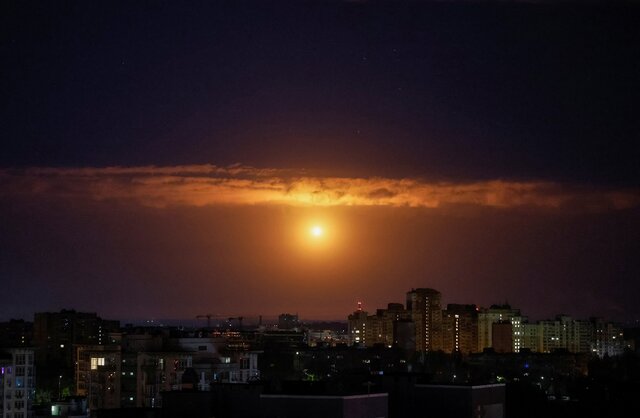
At the same time, Russian officials pair this offer with explicit warnings. TASS reports that the ministry has “taken note of Vladimir Zelensky’s threats to strike Moscow during Victory Day celebrations” and vows that “in the event Ukraine tries that, the Russian armed forces will deliver a massive missile strike on downtown Kiev in retaliation.” RT quotes the military as warning that if Ukraine attempts to disrupt the festivities, “the Russian Armed Forces will launch a major retaliatory strike on the center of Kiev,” while insisting that Moscow has “so far refrained from such actions for humanitarian reasons.”
These accounts also underline Russia’s claimed concern for civilians, with both TASS and RT noting advisories for residents of Kyiv and foreign diplomats to leave “in a timely manner” in case of a retaliatory strike.,
From the Kremlin’s perspective, such holiday truces fit into a pattern. RT notes that Moscow has “repeatedly declared pauses during various holidays throughout the Ukraine conflict,” and that last year it “suspended its offensive operations in early May” in hopes of encouraging direct talks with Kyiv.
Ukrainian and opposition-leaning outlets describe Russia’s proposal less as a humanitarian gesture and more as a political performance tied to domestic optics in Moscow.
Zelensky has argued since late April that Ukraine is seeking “a long-term ceasefire, reliable safety for its people, and lasting peace,” not “a few hours of safety for a parade in Moscow.” He said he instructed his team to contact U.S. officials to clarify the Victory Day proposal that Putin reportedly discussed with Donald Trump, precisely to determine whether it was substantive or merely symbolic.
When Russia formally announced its May 8–9 truce, Zelensky responded that Kyiv had received “no official communications regarding the format of a ceasefire of the kind being announced on Russian social media.” He then declared a unilateral “silence regime” beginning at midnight on May 6, stressing, “We consider human life to be incomparably more valuable than the ‘celebration’ of any anniversary.” Ukraine, he said, would “act in kind from that moment on,” but urged Russia to take “real steps to end their war.”
In Kyiv’s telling, Moscow’s emphasis on safeguarding celebrations clashes with its battlefield conduct. Zelensky accused Russia of violating Ukraine’s unilateral ceasefire almost as soon as it began, stating that “since the start of the day” Russian forces had carried out “1,820 active operations — shelling, assault attempts, and air strikes.” He called this “an obvious rejection of silence and the preservation of lives,” and warned that Ukraine would “respond in kind” if the attacks continued.
Opposition outlet Meduza likewise highlights the dissonance between Russia’s rhetoric and its threats. One report summarizes Moscow’s stance as: Russia announces a Victory Day ceasefire, “warning that if Ukraine attempted to disrupt the celebrations, Russian armed forces would ‘deliver a retaliatory, massive missile strike on the center of Kyiv.’” Another notes that Zelensky considers a one- or two-day pause “meaningless” if Moscow is “killing Ukrainian people before it,” calling such a move “to put it mildly, dishonest.”
Both sides are also vying to claim the moral and political initiative around the ceasefire narrative.
Russian state media emphasizes that Putin’s decision was sovereign and does not depend on Kyiv’s agreement. Meduza reports that, from the Kremlin’s perspective, “Kyiv’s consent was not required — it was Putin’s decision and would be carried out regardless.” RT similarly notes that Moscow “called on Kiev to follow suit,” portraying Russia as the side inviting de-escalation.
Kyiv counters that, in practice, it was Ukraine that moved first to guarantee quiet on the ground. TASS itself reports Zelensky’s claim that Ukraine is “acting symmetrically” by declaring a ceasefire from midnight on May 6, earlier than Russia’s proposed dates, and that “it is quite realistic to ensure the ceasefire in the period ahead of this time.” RT notes Zelensky’s message that Ukraine will “act reciprocally” from that point despite “the lack of any ‘official appeal’ from Russia.”
This mirrors an earlier pattern: a front-line ceasefire around Easter 2026 was also declared unilaterally by Putin, with both sides later accusing each other of violations and little real reduction in fighting, according to Meduza. That history helps explain Kyiv’s skepticism about any brief holiday “pauses” that are not embedded in a broader political process.
The lead-up to Victory Day has also become a stage for mutual accusations about who is threatening whom. Russian officials cite remarks they attribute to Zelensky about striking Moscow with drones on May 9 as justification for their warnings of massive retaliation., But Meduza notes that video of Zelensky’s comments in Yerevan showed he actually pointed to Russia’s own security concerns: he said that if Moscow held a hardware-free parade, it would be “the first time in many, many years that they could not afford military hardware,” and that authorities “feared drones might fly over Red Square,” which he described as evidence that Russia was “not strong right now.”
From Moscow’s vantage point, such statements amount to threats that must be deterred, justifying a firm warning and visible security measures. From Kyiv’s vantage point, they illustrate Russian vulnerability and the political sensitivity around holding a triumphant parade during an ongoing war.
Zelensky has seized on the scaled-back nature of this year’s Moscow ceremony—no military hardware, no marching cadets, and a shortened program—as a symbol of that vulnerability. Meduza reports that he called the format a sign that Russian authorities fear Ukrainian drones and that Russia “was not strong.”,
Both governments use the language of ceasefire, reciprocity, and humanitarian concern. Both say they want quiet around Victory Day. But the underlying objectives diverge sharply.
Russia seeks to protect a cornerstone of its national narrative—the Victory Day parade—while projecting that it holds escalation dominance, able to unleash a “massive missile strike” on Kyiv yet choosing, for now, not to., Ukraine, under daily attack, uses the same moment to highlight civilian suffering and to insist that any truly meaningful ceasefire must be long-term, tied to “reliable safety for its people and lasting peace,” not just “a few hours of safety for a parade in Moscow.”
The result is an uneasy overlap: two competing ceasefires that technically aim at silence, but are also instruments in a broader information and diplomatic battle. If recent history is any guide—from the Easter truce that failed to significantly reduce fighting, to the current accusations of violations—the real test will not be whose version of Victory Day prevails on television, but whether guns actually fall quiet on the ground, and for how long.