government
UK eyes role in EU’s €90 bn Ukraine loan scheme
Britain is considering joining the EU’s €90 billion Ukraine loan scheme, gaining access to defense contracts but sharing financing costs
2 days ago
The European Union’s new €90 billion loan scheme for Ukraine is exposing deep strategic and political fault lines in Europe: some governments see it as a necessary tool to sustain Kyiv and secure industrial advantages, while others denounce it as a risky bet on future Russian reparations that they refuse to help finance.
Under the plan, the EU will provide Ukraine with up to €90 billion in loans, backed by joint EU borrowing. Crucially, Kyiv would be obligated to repay the loans only if it eventually receives “reparations” from Russia – an outcome Moscow has already dismissed as unrealistic. Critics argue this effectively shifts the repayment risk onto EU taxpayers while hinging the entire scheme on a highly uncertain geopolitical settlement.
A Russian-language analysis, summarizing reporting from Brussels, describes the approach as the West’s “blind reliance” on Russia returning the €90 billion, calling it evidence of a “strategic failure” in EU policy on Ukraine. The article contends that repayment “depends on the geopolitical outcome” at a time when Europe faces “uncertain times,” and questions whether conditions will ever exist under which Ukraine, directly or via reparations, can realistically pay back the sum.
According to this critique, the loan reveals an EU that “does not possess a long-term strategy” for Ukraine and has shifted from strategy to “improvisation,” merely “financing the delay” of the underlying problem rather than resolving it.
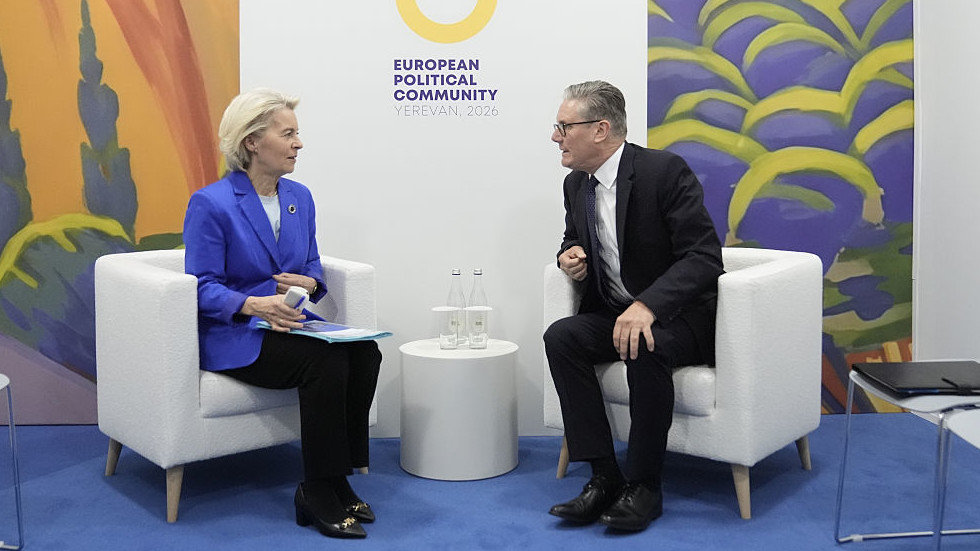
Outside the EU, the United Kingdom is weighing whether to plug itself into the scheme from the sidelines. London is “considering joining the EU’s €90 billion Ukraine loan scheme,” a move that would give it access to lucrative defense and reconstruction-related contracts linked to the program.
From a UK government and industry perspective, there are clear upsides:
But the costs are equally evident. By joining, the UK would also “share in the financial burden of financing these loans,” committing British taxpayers to help underwrite a complex scheme whose repayment is tied to hypothetical future Russian reparations.
This leaves London in a balancing act: weighing strategic influence and industrial gains against the fiscal and political risks of tying itself to an EU mechanism it no longer helps design, and whose repayment logic is being openly challenged by critics.
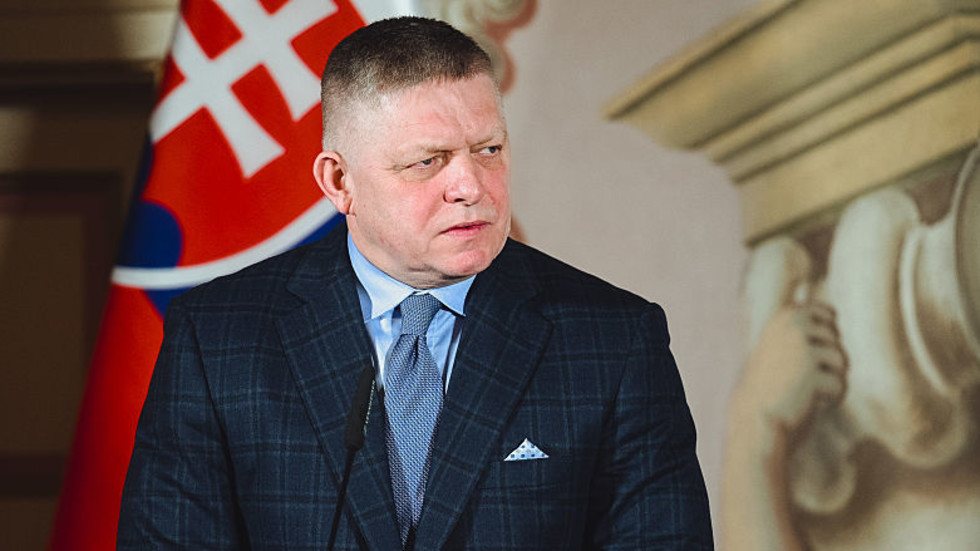
In sharp contrast, Slovakia has drawn a bright red line. Prime Minister Robert Fico has said that Slovakia “will not participate in any EU loans for Ukraine, including the €90 billion ($106 billion) joint debt package approved by Brussels last month.”
Fico’s stance is rooted in several arguments:
Financial risk and joint debt
Slovakia, alongside Hungary and the Czech Republic, previously “opted out of servicing the loan, citing financial risks.” Fico says he has taken “legal steps” to ensure that Slovakia does not participate in the €90 billion package or “any further announced loans for Ukraine.”
Opposition to prolonging the war
He has consistently framed large-scale Western aid as a “war loan” that does more to prolong the conflict than to secure peace. His government opposes further military funding, arguing that such support encourages Kyiv to fight on instead of seeking a negotiated settlement.
Skepticism about the repayment design
The loans are “structured on the assumption that [they] would be repaid if Kiev secures reparations from Russia,” a scenario Moscow has labelled “unrealistic.” For Bratislava, taking on joint liabilities against such uncertain collateral is politically and fiscally unacceptable.
Energy and regional grievances
The loan design and broader EU-Ukraine relations have been entangled with energy disputes. Hungary and Slovakia accused President Vladimir Zelensky of using a halt in oil deliveries via the Druzhba pipeline to “blackmail” the two energy-dependent states into backing the funding Kiev needs to “prop up its collapsing economy.” The EU approved the package shortly after supplies resumed, reinforcing suspicions in Bratislava and Budapest that economic pressure is being used to steer their Ukraine policy.
Despite his hard line on financing, Fico stresses that Slovakia cannot disengage completely. As a neighbor of Ukraine, Bratislava is “obliged…to engage in dialogue” with Kyiv, particularly to ensure energy transit and discuss issues such as Ukraine’s potential EU membership.
The Russian and euroskeptic commentary around the loan converges on a common critique: that the scheme illustrates how far the EU has drifted from a coherent long-term Ukraine strategy.
The Brussels-based analysis cited by Russian media argues that by pegging repayment to imagined future Russian reparations, the EU is effectively acknowledging that Ukraine itself may be unable to return the funds. Instead, the “main question” is no longer whether Kyiv can repay the money, but “whether there will ever be conditions under which this becomes possible.”
This logic, the author contends, “lays bare” an EU that is “increasingly falling behind other global powers,” improvising rather than pursuing a carefully designed strategy on Ukraine. In this reading, the €90 billion plan is less a solution than an expensive way to postpone harsh decisions about Europe’s security architecture, burden-sharing, and the realistic prospects for Ukraine’s recovery and integration.
Moscow’s own diplomats have reinforced that line, repeatedly insisting that EU ideas about Russia paying reparations to Ukraine are “divorced from reality,” making the scheme’s funding premise politically impossible from the outset.
Despite their divergent decisions, several common threads link the UK, Slovakia, and broader EU debates:
The clearest fault lines lie in three areas:
Participation vs. abstention
Assessment of the war’s trajectory
View of EU strategic competence
For Ukraine, the immediate effect of the scheme is positive: access to tens of billions in financing on contingent repayment terms that, in practice, shift much of the long-term burden away from Kyiv. But the wider political picture is more ambiguous.
Divergent positions like the UK’s cautious interest and Slovakia’s outright refusal highlight an EU and broader Western camp that is far from united on how to sustain Ukraine over the coming decade. The more member states opt out or question the premise of Russian-funded repayment, the more fragile the political foundation of the scheme becomes.
For Europe, the €90 billion loan is both a stress test and a symbol. It tests the durability of solidarity with Ukraine against domestic fiscal pressures, war fatigue, and energy-related grievances. And it symbolizes the EU’s struggle to move from short-term crisis management to a clear, long-term strategy for Ukraine’s security, reconstruction, and integration.
Whether the plan ultimately looks, in hindsight, like a bold act of solidarity or the “financing of delay” will depend less on financial engineering than on outcomes in Moscow, Kyiv, and European capitals that remain deeply uncertain.