government
At least two dead after car ploughs into crowd in Germany (VIDEO)
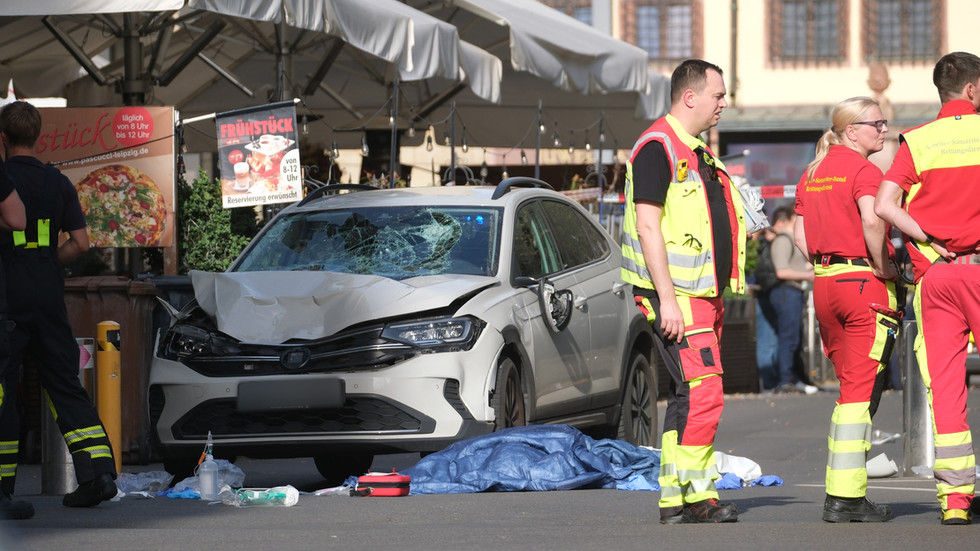
Several people have been killed and injured in Leipzig, Germany, after a vehicle drove through a busy shopping street, local media report
2 days ago
A car drove into a crowd on a busy shopping street in central Leipzig’s historic center, killing at least two people and injuring several others. The collision occurred in a heavily frequented pedestrian area, and emergency services responded quickly to treat the wounded and secure the scene. Police detained the driver at the site, and officials have stated that the overall situation remains unclear as investigations continue. Both sides agree that the key confirmed facts are the fatalities, multiple injuries, the central Leipzig location, and that the driver is in custody while authorities work to clarify what happened.
Coverage from both perspectives situates the incident within a broader pattern of serious vehicular collisions and past deadly vehicle attacks in Germany, linking it to ongoing concerns about public safety in crowded urban spaces. They agree that investigators have not yet determined whether the act was deliberate or accidental, and that it is premature to assign a definitive motive. References to earlier vehicle incidents are used to explain why such events quickly raise questions about security measures and crisis response. Both perspectives acknowledge that the outcome of the investigation—particularly on intent, possible extremism, or other causes—will shape subsequent debates on policing, prevention, and potential reforms.
Framing of intent and motive. Government-aligned outlets emphasize that the situation is still unclear and highlight official statements stressing the need to await investigation results before drawing conclusions about intent or motive. In contrast, opposition narratives, where they appear, are more inclined to speculate on whether the incident fits a pattern of previous vehicular attacks, including possible ideological or migration-related dimensions. The government framing urges caution and procedural neutrality, while opposition commentary is more likely to foreground suspicion that this may not be a mere accident.
Security and state performance. Government coverage tends to underscore the swift response of police and emergency services, presenting the incident as a tragic event being handled competently by institutions. Opposition voices, by contrast, are more prone to question whether authorities have done enough to prevent such attacks in busy shopping streets, implicitly or explicitly criticizing security policy. While government-aligned sources stress ongoing investigations and existing frameworks, opposition accounts are more likely to treat the event as evidence of systemic shortcomings in public safety.
Link to migration and previous attacks. In government-aligned reporting, references to past vehicular attacks and migration debates are generally contextual and cautious, noting that such tragedies have previously fueled political arguments without endorsing them. Opposition-oriented discussions more readily connect the Leipzig incident to a broader narrative about migration-related crime or failed integration, even before official motives are established. Thus, where government sources aim to separate confirmed facts from politicization, opposition sources are more inclined to fold the event into a wider critique of migration and domestic security policies.
Political temperature and public debate. Government coverage often presents calls for calm and restraint, positioning political leaders and institutions as guarantors of order during the investigative phase. Opposition coverage, however, tends to amplify public anger and fear, portraying the event as symptomatic of deeper crises in governance and social cohesion. Government-aligned narratives therefore seek to cool the political temperature, whereas opposition narratives treat the incident as a rallying point for broader political mobilization.
In summary, government coverage tends to stress caution, institutional competence, and the need to await investigative findings before politicizing the Leipzig car incident, while opposition coverage tends to treat the event as part of a broader pattern of state failure, security lapses, and contentious migration politics.