government
IAEA records damage after drone strike on Zaporozhye nuclear power plant laboratory
IAEA Director General Rafael Grossi called for maximum restraint to avoid safety risks
a day ago
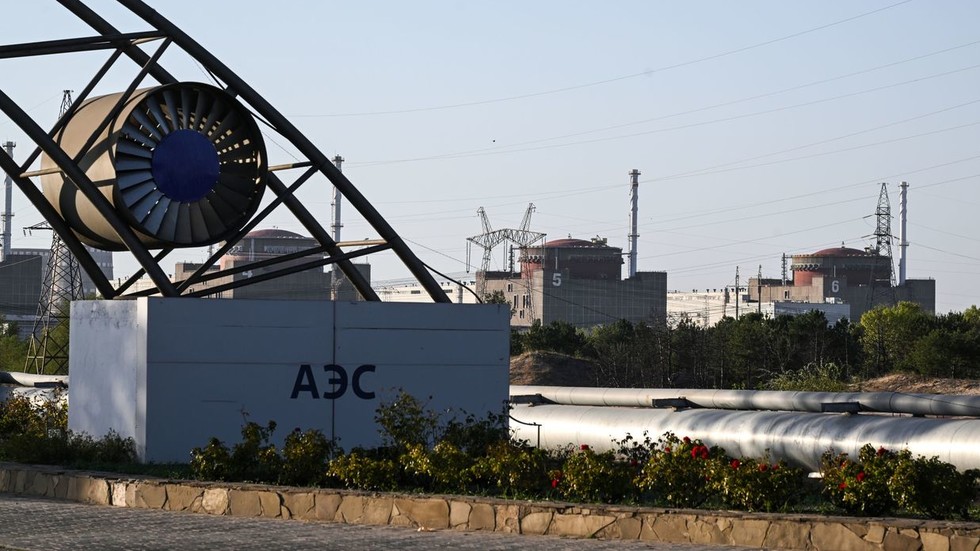
Observers from multiple outlets report that a drone attack on May 3 struck an external radiation control laboratory associated with the Zaporizhzhia (Zaporozhye) Nuclear Power Plant, damaging meteorological monitoring equipment used to track radiological conditions. The facility, described as part of the plant’s safety and environmental monitoring system, is now partly non‑operational in that specific function, and no immediate increase in radiation levels or breach of nuclear safety systems has been recorded. The International Atomic Energy Agency (IAEA), whose experts are present at or near the plant, has confirmed visible damage to the lab’s monitoring equipment and has requested continued access for on‑site verification. Both sides’ coverage agrees that the plant remains under Russian control since 2022, that the strike occurred in the vicinity of but not directly on the reactor units, and that the laboratory plays a role in environmental and emergency planning.
Shared context across coverage emphasizes the longstanding concern of international institutions, particularly the IAEA, about any military activity around the Zaporizhzhia plant because it is Europe’s largest nuclear power facility and a potential source of serious cross‑border risk. There is agreement that the laboratory targeted is part of the broader safety and monitoring infrastructure that supports radiation surveillance, weather tracking, and emergency preparedness. Media on both sides note that IAEA Director General Rafael Grossi has repeatedly urged maximum restraint around the plant and called for a protection regime or safety zone, framing this incident as another example of the dangerous overlap between ongoing hostilities and civilian nuclear infrastructure. The coverage also situates the attack within the wider pattern of strikes and shelling near the plant since its capture in 2022, underlining that each incident adds pressure for stronger international guarantees and technical safeguards to prevent a radiological accident.
Responsibility and blame. Government‑aligned outlets depict the incident as a deliberate Ukrainian drone strike on critical safety infrastructure, citing IAEA reporting and Russian control of the site to argue that Kyiv is targeting a civilian nuclear facility. They emphasize that the damaged laboratory serves radiation and meteorological monitoring functions, framing the attack as reckless and potentially terrorism‑adjacent. Opposition‑oriented narratives, where they appear, are more likely to question whether Russia’s own military use of the site or air defense actions contributed to the damage, or to suggest the attack was aimed at military assets rather than safety systems, thereby diluting or redirecting blame away from Ukraine.
Severity and risk framing. Government coverage stresses the inherent danger of any strike near a nuclear plant, highlighting worst‑case scenarios and portraying the damage to meteorological monitoring equipment as a serious degradation of safety oversight. These outlets foreground IAEA warnings and reference Europe‑wide consequences to underscore the gravity of Ukrainian actions. Opposition sources tend to downplay the immediate risk by focusing on the absence of detected radiation leaks and by noting that core safety systems and reactors were untouched, portraying the incident as concerning but controlled and primarily a propaganda tool for Moscow.
Motives and strategic context. Government‑aligned media often frame the attack as part of a pattern of Ukrainian attempts to intimidate or sabotage territories under Russian control, linking it to broader narratives of Kyiv disregarding civilian infrastructure. They suggest the targeting of a radiation control lab is either an effort to create panic or to pressure Russia via nuclear blackmail narratives. Opposition sources, in contrast, are more inclined to contextualize any Ukrainian action as a response to Russian militarization of the plant area, arguing that Russia’s deployment of troops and equipment around the facility turns it into a legitimate military objective even as they acknowledge the associated risks.
Role of international institutions. Government coverage highlights IAEA statements primarily as validation of claims that Ukraine attacked a sensitive nuclear‑related facility and as support for calls to restrain Ukrainian operations near the plant. These outlets may frame the IAEA as increasingly alarmed by Ukrainian behavior and as implicitly backing Russia’s demand for guarantees. Opposition narratives tend to present the IAEA as chiefly concerned about Russia’s continued occupation and militarization of the plant, using the same statements to argue for demilitarization of the site and, in some accounts, for returning full control to Ukraine or placing the facility under a robust international regime.
In summary, government coverage tends to emphasize Ukrainian culpability, high nuclear risk, and IAEA concern as supporting Russia’s call for stronger restraints on Kyiv, while opposition coverage tends to question or reframe responsibility, stress the limited immediate danger, and use IAEA warnings to argue against Russia’s continued control and militarization of the plant.